
What measures do precision parts processing require for their lifespan
author: Hansheng Automation
2023-05-11
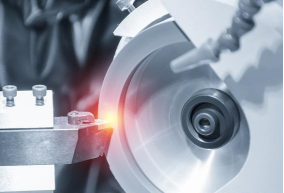
What measures do precision parts processing require for their lifespan? The lifespan requirement is to ensure that the parts maintain normal operation during the expected working period without being scrapped. This requirement is mainly for parts that are subjected to wear or corrosion during operation under variable stress.
The main factors that affect the fatigue limit of part materials in precision parts processing are stress concentration, size, surface quality, and environmental conditions. Therefore, the main measures to improve the lifespan of parts are:;
1. Properly involving precision component processing structures to reduce stress concentration;
2. Using processed or surface strengthened treatment to improve the quality of the working surface of the parts;
3. Reasonable selection of friction pair matching materials, lubricants, and lubrication methods to improve the wear resistance of parts;
4. Select corrosion-resistant materials to manufacture parts that work in corrosive media;
5. Utilize heat treatment to improve the mechanical properties of component materials, or use processes such as rolling and shot peening to generate favorable residual stresses on the surface of the component.
Analysis of the Reasons for the Failure of Precision Parts Processing
Do you know the chip removal method for deep hole drilling at Dongguan CNC Precision Machining Factory
Related Article

Let us go over the foundations of the electroplating procedure. Electroplating involves several phases, and from pre-treatment to post-treatment there are several really significant ones.
The basic principle of surface treatment of precision parts in CNC machining

Audio panels, electronic cigarette shells, nameplateLOG, watch shells, etc. are among the CNC processing of high surface texture needs components.
CNC machining aluminum alloy parts high-quality surface texture process explained in detail

Metallic finishing, sometimes known as metallic finishing, is the process of using several techniques to change the surface of an object in order to improve appearance and performance, such as corrosion resistance, discoloration resistance, chemical resistance, abrasion resistance, and hardness, modify electrical conductivity, remove burrs, or apply a specific color to a machined part.
Metal CNC finishing surface treatment process and its working principle
