
What is the source of milling force in precision machining
author: Hansheng Automation
2023-05-17
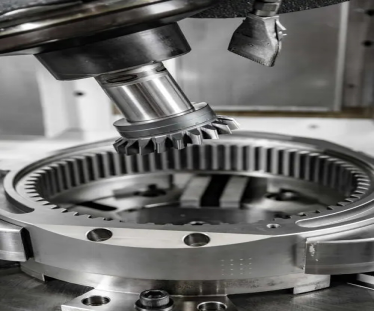
In precision parts processing, the milling process involves the interaction between the milling cutter and the workpiece, which consumes power. The milling force directly affects the generation of cutting heat and further affects tool wear, tool life, and the quality of the machined surface. In production, milling force is also a necessary basis for calculating machine power and determining clamping force. Therefore, studying the variation law of milling force and estimating milling force and milling power has practical significance.
There are two sources of milling force: one is the resistance generated by the elastic and plastic deformation of the cutting layer metal of the workpiece, the cutting layer metal, and the surface layer metal of the workpiece; The second is the frictional resistance between the milling cutter, chips, and the surface of the workpiece. Due to the continuous changes in the number of teeth, cutting thickness, and milling position involved in the milling process of precision parts, the magnitude, direction, and point of action of the cutting force are also constantly changing. For the convenience of analysis, the total milling force on a pair of load-bearing bodies (milling cutters and workpieces) is generally decomposed in a certain direction, and the changes in each milling component force are analyzed to further grasp the variation law of milling force.
Types of CNC machine tools in precision parts processing
How to observe fault phenomena and analyze their causes in precision machining
Related Article

Let us go over the foundations of the electroplating procedure. Electroplating involves several phases, and from pre-treatment to post-treatment there are several really significant ones.
The basic principle of surface treatment of precision parts in CNC machining

Audio panels, electronic cigarette shells, nameplateLOG, watch shells, etc. are among the CNC processing of high surface texture needs components.
CNC machining aluminum alloy parts high-quality surface texture process explained in detail

Metallic finishing, sometimes known as metallic finishing, is the process of using several techniques to change the surface of an object in order to improve appearance and performance, such as corrosion resistance, discoloration resistance, chemical resistance, abrasion resistance, and hardness, modify electrical conductivity, remove burrs, or apply a specific color to a machined part.
Metal CNC finishing surface treatment process and its working principle
