
What is the reason for workpiece deformation during machining in Dongguan
author: Hansheng Automation
2023-04-03
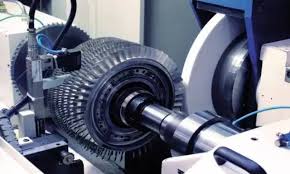
When making workpieces in precision machining factories, improper operation by operators often leads to workpiece deformation, which affects production efficiency. So how to avoid or reduce the occurrence of this issue, we need to first understand the reasons that cause deformation of the machined workpiece, in order to find the right solution.
Clamping too tightly: During precision mechanical processing, the workpiece often needs to be clamped with auxiliary tools to avoid vibration during processing. However, sometimes the workpiece may deform due to excessive pressure due to improper selection of clamping point positions. Therefore, when clamping, we should select the clamping point based on the position of the workpiece's support point, adjust the clamping force according to the position of the clamping point, and try to increase the contact area between the fixture and the workpiece as much as possible.
Tool cutting: Due to insufficient rigidity of the workpiece or tool, it is affected by cutting forces, resulting in deformation of the workpiece's upper thickness and lower thickness, which is called the phenomenon of tool yielding. The method to deal with this phenomenon is to improve the sharpness of the cutting edge and reduce the friction resistance between the cutting edge and the workpiece.
Structural materials: Due to the relative rigidity and stability of the workpiece material, the amount of deformation is also relative to the complexity of the structural shape, length, width, and thickness. Therefore, when designing and processing, it is necessary to pay attention to the impact of these factors on the workpiece to reduce the probability of deformation. When designing, attention should be paid to assuming the structure of the workpiece within a reasonable range, and the selection of materials should also follow relevant processes.
Can the CNC machining center workbench bear multiple workpieces
What are the requirements for selecting blanks in Dongguan machining
Related Article

Let us go over the foundations of the electroplating procedure. Electroplating involves several phases, and from pre-treatment to post-treatment there are several really significant ones.
The basic principle of surface treatment of precision parts in CNC machining

Audio panels, electronic cigarette shells, nameplateLOG, watch shells, etc. are among the CNC processing of high surface texture needs components.
CNC machining aluminum alloy parts high-quality surface texture process explained in detail

Metallic finishing, sometimes known as metallic finishing, is the process of using several techniques to change the surface of an object in order to improve appearance and performance, such as corrosion resistance, discoloration resistance, chemical resistance, abrasion resistance, and hardness, modify electrical conductivity, remove burrs, or apply a specific color to a machined part.
Metal CNC finishing surface treatment process and its working principle
