
What is the difference between CNC machining and 3D printing
author: Hansheng Automation
2023-05-22
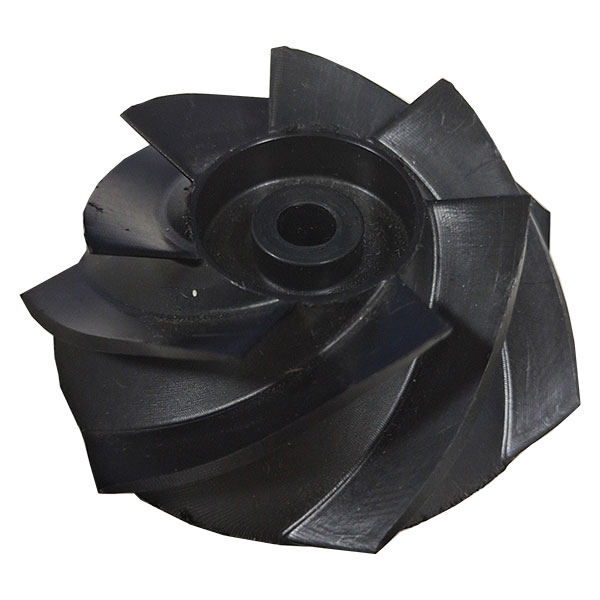
CNC machining is a process method for machining parts on CNC machine tools, which uses digital information to control the displacement of parts and cutting tools. An effective way to solve the problems of small batch size, complex shape, and high precision of parts. So what is the difference between CNC machining and 3D printing? Below is an introduction by the editor.
1. Material differences
3D printing materials mainly include liquid resin (SLA), nylon powder (SLS), metal powder (SLM), gypsum powder (full color printing), sandstone powder (full color printing), wire (DFM), sheet (LOM), and many more. Liquid resin, nylon powder, and metal powder account for the vast majority of industrial 3D printing.
The materials used in CNC machining are all sheet metal, which is a plate-like material. By measuring the length, width, height, wear, etc. of the parts, cut corresponding sized plates for processing. CNC machining materials have more options than 3D printing. General hardware and plastic sheets can be CNC processed, and the density of the formed parts is better than 3D printing.
2. Post processing differences
There are not many options for post-processing 3D printed parts, such as polishing, spraying, deburring, dyeing, etc.
There are various post-processing options for CNC machining parts, including grinding, oil spraying, deburring, electroplating, screen printing, transfer printing, metal oxidation, laser engraving, sandblasting, etc.
3. Differences in operating software
Most 3D printing slicing software is easy to operate, and even laypeople can master slicing software with professional guidance in the next two days. Because slicing software is currently optimized very simply and can automatically generate support, which is why 3D printing can be popularized to individual users.
CNC programming software is much more complex and requires professional operation. People with zero foundation usually need to study for about six months. In addition, a CNC operator is required to operate the CNC machine.
Due to the complexity of programming, a part can have multiple CNC machining schemes, while 3D printing is relatively objective due to the low consumption of materials during processing.
4. Part differences caused by forming principles
As we mentioned earlier, 3D printing is a type of additive manufacturing. Its principle is to cut the model into N layers/N multiple points, and then pile them up one by one, just like building blocks. same. Therefore, 3D printing can efficiently process parts with complex structures, such as hollow parts, while CNC machining hollow parts is relatively difficult.
CNC machining is a material reduction manufacturing process that uses various high-speed running tools to cut the required parts according to the programmed tool path. Therefore, CNC machining can only produce rounded corners with a certain curvature, and cannot directly process inner right angles. This is achieved through processes such as wire cutting/spark cutting. There is no problem with CNC machining of the outer right angle. Therefore, it is possible to consider using inner right angle components for 3D printing.
Summarize the machining accuracy and reduce failure rate of a five axis machining center
What are the advantages of CNC precision automatic lathe processing in work
Related Article

Let us go over the foundations of the electroplating procedure. Electroplating involves several phases, and from pre-treatment to post-treatment there are several really significant ones.
The basic principle of surface treatment of precision parts in CNC machining

Audio panels, electronic cigarette shells, nameplateLOG, watch shells, etc. are among the CNC processing of high surface texture needs components.
CNC machining aluminum alloy parts high-quality surface texture process explained in detail

Metallic finishing, sometimes known as metallic finishing, is the process of using several techniques to change the surface of an object in order to improve appearance and performance, such as corrosion resistance, discoloration resistance, chemical resistance, abrasion resistance, and hardness, modify electrical conductivity, remove burrs, or apply a specific color to a machined part.
Metal CNC finishing surface treatment process and its working principle
