
What is generative milling in precision parts processing
author: Hansheng Automation
2023-05-16
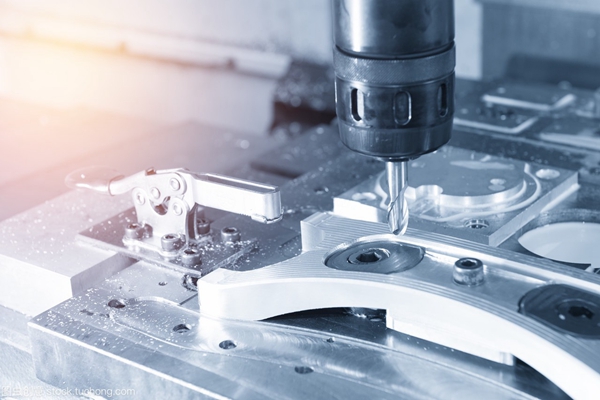
In the process of precision parts machining, irregular curves and surface contours are often encountered. If the equipment used is limited, profiling milling, forming milling, and developing milling methods can be used to solve the problem. The protagonist we are introducing today is to showcase milling and see what's special about him.
The key to solving machining problems through generative milling on ordinary milling machines is to analyze the principle of generative milling, design schemes and auxiliary tools for generative milling. Because all parts that can be developed into milling processing usually must meet the motion conditions of the meshing process. For example, in the process of precision parts processing, the roller sleeve chain sprocket is developed and processed. A vertical milling machine is used to use a vertical milling cutter as the roller of the chain, and the workpiece is installed on a rotary table and a worktable in a longitudinal composite motion for generative milling. When the configured exchange gear makes the composite motion conform to the meshing motion law of the chain roller and sprocket, the generating motion can mill the tooth profile of the roller chain sprocket that meets the drawing requirements. For another example, the auxiliary device is used on the milling machine to simulate the function of the spiral bevel gear milling machine and generate and mill the spiral bevel gear. The basic principle of gear processing by generating and generating is to maintain the motion relationship between the cutter and the wheel blank according to the meshing of the involute gear, that is, to process the gear by using the principle that the conjugate tooth profiles are mutually envelope. When machining gears, as long as the modulus and pressure angle of the cutter and the gear being machined are equal, they can be processed with the same cutter, which brings great convenience to production, so they are widely used.
What is Forming Milling in Precision Parts Processing
Two tips can significantly improve your turning and milling composite processing technology
Related Article

Let us go over the foundations of the electroplating procedure. Electroplating involves several phases, and from pre-treatment to post-treatment there are several really significant ones.
The basic principle of surface treatment of precision parts in CNC machining

Audio panels, electronic cigarette shells, nameplateLOG, watch shells, etc. are among the CNC processing of high surface texture needs components.
CNC machining aluminum alloy parts high-quality surface texture process explained in detail

Metallic finishing, sometimes known as metallic finishing, is the process of using several techniques to change the surface of an object in order to improve appearance and performance, such as corrosion resistance, discoloration resistance, chemical resistance, abrasion resistance, and hardness, modify electrical conductivity, remove burrs, or apply a specific color to a machined part.
Metal CNC finishing surface treatment process and its working principle
