
What is Forming Milling in Precision Parts Processing
author: Hansheng Automation
2023-05-16
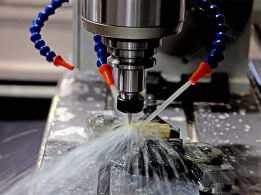
In the processing of precision parts, forming milling is a method of using forming cutters to mill the formed surface. When using this method to solve processing problems, the focus is on designing and manufacturing a dedicated template gauge for measuring the formed surface of the forming milling cutter.
The design of forming milling cutters includes profile design, structural design, and geometric angle design. As the accuracy of forming surface processing is ensured by the profile of the forming milling cutter, and the position of the forming surface is ensured by the adjustment of the forming milling cutter during processing, the data and method of tool alignment should be designed and completed at the same time as designing the forming milling cutter to achieve the required geometric accuracy in milling the forming surface.
The profile design of forming milling cutters in precision parts processing can also be designed using CAD/CAM technology, and the tooth structure of relief milling cutters can refer to the relevant data of standard forming milling cutters.
In the process of milling the formed surface, it involves measuring the formed surface. Usually, irregular curve contours and straight formed surfaces can be detected using a dedicated template gauge.
How to Conduct Fixture Inspection and Detection in Precision Parts Processing
What is generative milling in precision parts processing
Related Article

Let us go over the foundations of the electroplating procedure. Electroplating involves several phases, and from pre-treatment to post-treatment there are several really significant ones.
The basic principle of surface treatment of precision parts in CNC machining

Audio panels, electronic cigarette shells, nameplateLOG, watch shells, etc. are among the CNC processing of high surface texture needs components.
CNC machining aluminum alloy parts high-quality surface texture process explained in detail

Metallic finishing, sometimes known as metallic finishing, is the process of using several techniques to change the surface of an object in order to improve appearance and performance, such as corrosion resistance, discoloration resistance, chemical resistance, abrasion resistance, and hardness, modify electrical conductivity, remove burrs, or apply a specific color to a machined part.
Metal CNC finishing surface treatment process and its working principle
