
What are the two common ways of rotating axes in a five axis machining center factory
author: Hansheng Automation
2022-12-02
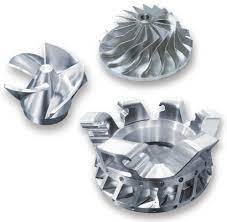
There are two ways to rotate the axis of the 5-axis machining center in the 5-axis machining center factory. One is the workbench rotation axis, which is set on the bed and can rotate around the X-axis. It is defined as the A-axis, and the general working range of the A-axis is 30 degrees to 120 degrees.
There is also a rotary table in the middle of the workbench, defined as the C-axis, which rotates 360 degrees. In this way, by combining the A-axis and C-axis, the workpiece fixed on the workbench can be processed on all five surfaces except for the bottom surface by a vertical spindle. The small graduation values for the A-axis and C-axis are generally 0.001 degrees, which can subdivide the workpiece into any angle and process inclined surfaces, inclined holes, etc.
If the A-axis and C-axis are linked with the XYZ three linear axis, complex spatial surfaces can be machined, which requires the support of CNC systems, servo systems, and software. The advantage of this setting method is that the structure of the spindle is relatively simple, the spindle has good rigidity, and the manufacturing cost is relatively low. However, in general, workbenches cannot be designed too large and have a small load-bearing capacity, especially when the A-axis rotation is greater than or equal to 90 degrees, the workpiece cutting will bring a significant load-bearing torque to the worktable.
Another type of five axis machining center relies on the rotation of the vertical spindle head. The front end of the spindle is a rotating head that can rotate 360 degrees around the Z-axis, becoming the C-axis. The rotating head also has an A-axis that can rotate around the X-axis, which can generally reach ± 90 degrees or more, achieving the same function as above. The advantage of this setting method is that the spindle processing is flexible, and the workbench can also be designed to be large.
What are the important roles of CNC machining center spindles in the machining process
What are the reasons for workpiece defects in turning parts processing
Related Article

Let us go over the foundations of the electroplating procedure. Electroplating involves several phases, and from pre-treatment to post-treatment there are several really significant ones.
The basic principle of surface treatment of precision parts in CNC machining

Audio panels, electronic cigarette shells, nameplateLOG, watch shells, etc. are among the CNC processing of high surface texture needs components.
CNC machining aluminum alloy parts high-quality surface texture process explained in detail

Metallic finishing, sometimes known as metallic finishing, is the process of using several techniques to change the surface of an object in order to improve appearance and performance, such as corrosion resistance, discoloration resistance, chemical resistance, abrasion resistance, and hardness, modify electrical conductivity, remove burrs, or apply a specific color to a machined part.
Metal CNC finishing surface treatment process and its working principle
