
What are the requirements for cutting tools at Dongguan CNC Precision Machining Factory
author: Hansheng Automation
2023-05-11
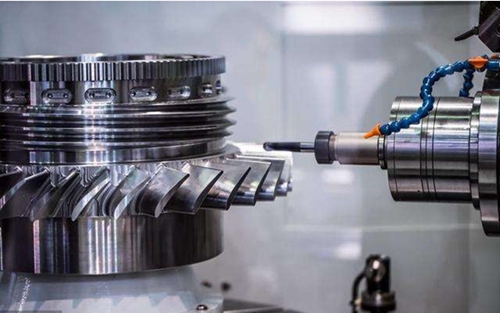
The product quality and labor productivity of Dongguan CNC Precision Machining Factory are to a considerable extent constrained by cutting tools during CNC turning processing. Although the cutting principle of CNC turning is basically the same as that of ordinary lathes, due to the requirements of CNC machining characteristics, the selection of cutting tools, especially the geometric parameters of the cutting part, requires special treatment of the shape of the cutting tools in order to meet the machining requirements of CNC lathes and fully utilize the benefits of CNC lathes. Pay attention to the requirements of CNC lathes for cutting tools
(1) Requirements for cutting tools in CNC lathes
1. High strength. In order to adapt to the cutting depth and fast feed of the tool during rough machining or parts processing of high hardness materials, it is required that the tool must have high strength; For tools with slender tool stems (such as deep hole turning tools), they should also have good vibration resistance.
2. High precision. In order to meet the requirements of high-precision and automatic tool changing in CNC machining, both the tool and its holder must have high accuracy.
3. High cutting and feed speeds. In order to improve production efficiency and meet the needs of some special processing, the cutting tool should be able to meet the requirements of high cutting speed. When using polycrystalline diamond composite turning tools to process glass or carbon fiber composite materials, the cutting speed can reach over 100m/min.
4. High reliability. In order to ensure that accidental damage and potential defects of the cutting tool will not affect the smooth progress of CNC machining, it is required that the cutting tool and its combined accessories must have good reliability and strong adaptability.
5. Long service life. The continuous wear of the tool in the cutting process will cause changes in the processing size. With the wear of the tool, the cutting edge (or tip) will become blunt, which will increase the cutting resistance. This will not only greatly reduce the surface accuracy of the parts to be processed, but also increase the tool wear, forming a vicious cycle. Therefore, the cutting tools in CNC lathes, whether in rough machining, precision machining, or special machining, should have a higher service life than the cutting tools used in ordinary lathe machining, in order to minimize the frequency of replacing or grinding the cutting tools and aligning them, thereby ensuring the processing quality of the parts and improving production efficiency. Tools with a long service life should complete at least 1-2 shifts of machining.
Good chip cutting and removal performance. The effective performance of chip breaking and chip removal is of great significance for Dongguan CNC Precision Machining Plant to ensure the smooth and safe operation of CNC lathes.
Division of processing stages at Dongguan CNC Precision Processing Plant
How to determine the position of tool alignment and tool change points at Dongguan CNC Precision Machining Factory
Related Article

Let us go over the foundations of the electroplating procedure. Electroplating involves several phases, and from pre-treatment to post-treatment there are several really significant ones.
The basic principle of surface treatment of precision parts in CNC machining

Audio panels, electronic cigarette shells, nameplateLOG, watch shells, etc. are among the CNC processing of high surface texture needs components.
CNC machining aluminum alloy parts high-quality surface texture process explained in detail

Metallic finishing, sometimes known as metallic finishing, is the process of using several techniques to change the surface of an object in order to improve appearance and performance, such as corrosion resistance, discoloration resistance, chemical resistance, abrasion resistance, and hardness, modify electrical conductivity, remove burrs, or apply a specific color to a machined part.
Metal CNC finishing surface treatment process and its working principle
