
What are the process design principles for Dongguan turning and milling composite processing
author: Hansheng Automation
2023-05-17
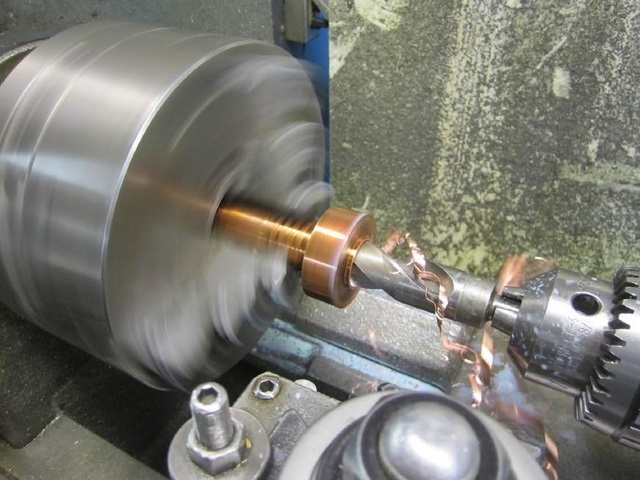
1. Turning and milling process
The Dongguan turning and milling composite machining process consists of one or more sequentially arranged programs, which can be subdivided into steps or tool paths. Process refers to a part of the process in which a worker (or group of workers) continuously completes the same (or multiple) workpieces on a machine tool (or work site). The process flow is the basic component of the process flow and the basic unit of production planning.
2. Steps and cutting
A process is a continuous process completed under the same machining surface, same machining tool, and same cutting amount conditions. A process includes one or several steps. If a thick metal layer needs to be cut in one process step, it must be cut multiple times, each time as one. A step can include one or more passes.
3. Installation and workstation
Installation refers to the process of completing a workpiece (or assembly unit) through clamping. A process can include one or more installations. A workstation refers to the process of completing each position occupied by a machine tool at once. When using indexing fixtures, turntables, or multi axis machine tools in Dongguan turning and milling composite processing, the workpiece needs to pass through multiple workstations for one clamping.
How to observe fault phenomena and analyze their causes in precision machining
Three Classifications of Dongguan Turning and Milling Composite Processing Methods
Related Article

Let us go over the foundations of the electroplating procedure. Electroplating involves several phases, and from pre-treatment to post-treatment there are several really significant ones.
The basic principle of surface treatment of precision parts in CNC machining

Audio panels, electronic cigarette shells, nameplateLOG, watch shells, etc. are among the CNC processing of high surface texture needs components.
CNC machining aluminum alloy parts high-quality surface texture process explained in detail

Metallic finishing, sometimes known as metallic finishing, is the process of using several techniques to change the surface of an object in order to improve appearance and performance, such as corrosion resistance, discoloration resistance, chemical resistance, abrasion resistance, and hardness, modify electrical conductivity, remove burrs, or apply a specific color to a machined part.
Metal CNC finishing surface treatment process and its working principle
