
What are the factors that affect machining accuracy in precision parts processing
author: Hansheng Automation
2023-05-16
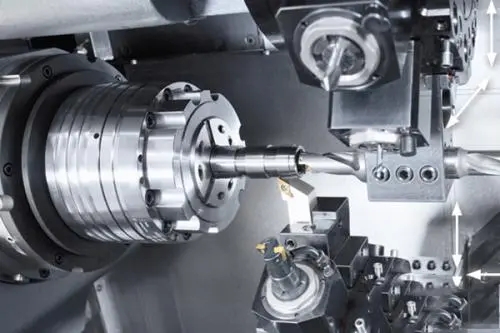
A complete system composed of machine tools, fixtures, workpieces, and cutting tools in the field of precision parts processing is called a process system. During the machining process, the relative position between the workpiece and the tool determines the size, shape, and position of the part being processed. Therefore, the issue of machining accuracy also involves the accuracy of the entire process system. The various errors of the process system will be reflected in different ways and programs during the processing process as geometric errors of the processing system. According to the nature of process system errors, they can be summarized as geometric errors of the process system, errors caused by force deformation of the process system, and errors caused by internal stress in the workpiece.
In the field of precision parts processing, geometric errors caused by process systems include principle errors of machining methods, geometric errors of machine tools, adjustment errors, manufacturing errors of tools and fixtures, clamping errors of workpieces, and errors caused by process system wear.
How to Choose a Suitable Tool Handle for Dongguan Turning and Milling Compound Processing
Process factors and improvement measures affecting surface roughness in precision parts processing
Related Article

Let us go over the foundations of the electroplating procedure. Electroplating involves several phases, and from pre-treatment to post-treatment there are several really significant ones.
The basic principle of surface treatment of precision parts in CNC machining

Audio panels, electronic cigarette shells, nameplateLOG, watch shells, etc. are among the CNC processing of high surface texture needs components.
CNC machining aluminum alloy parts high-quality surface texture process explained in detail

Metallic finishing, sometimes known as metallic finishing, is the process of using several techniques to change the surface of an object in order to improve appearance and performance, such as corrosion resistance, discoloration resistance, chemical resistance, abrasion resistance, and hardness, modify electrical conductivity, remove burrs, or apply a specific color to a machined part.
Metal CNC finishing surface treatment process and its working principle
