
What are the differences and processing forms of machining production methods
author: Hansheng Automation
2023-03-17
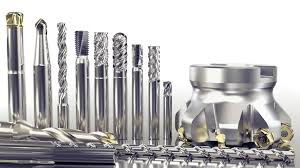
For machining, through previous learning, we know that it refers to using some mechanical equipment to change the overall dimensions or performance of the workpiece, in order to achieve the expected results or objectives. So, besides this, what else should we know and master in machining? Below, the specific answer will be provided immediately.
Is there a difference between small-scale and large-scale production in machining? On this issue, machining believes that there must be differences, so the answer to this question is yes. Because if it is small-scale production, milling cutters and other methods can be used, but their processing speed is relatively slow. For large-scale production, lathe boring is used, and its processing speed is relatively fast.
2. Whether there are cold processing and hot working for machining? According to machining, machining can be divided into cold processing and hot working. And it can be easily distinguished by definition. Cold machining is generally carried out at room temperature and does not cause physical or chemical changes to the workpiece. However, hot working is not carried out at room temperature, and it will cause physical or chemical changes in the workpiece. So, the difference between these two processing methods is very obvious.
3. What are the common methods of machining? And, what are the millimeters we usually talk about? The commonly used methods of mechanical processing are turning, pliers, milling, planing, inserting, grinding, drilling, boring, punching, and sawing. In addition, it can also be used for powder processing, electroplating, wire cutting, casting, forging, and electrical corrosion, as well as various heat treatments. So, there are various ways and methods.
Introduction to the system requirements for aluminum alloy machining process
Have you ever understood the development background of CNC machining
Related Article

Let us go over the foundations of the electroplating procedure. Electroplating involves several phases, and from pre-treatment to post-treatment there are several really significant ones.
The basic principle of surface treatment of precision parts in CNC machining

Audio panels, electronic cigarette shells, nameplateLOG, watch shells, etc. are among the CNC processing of high surface texture needs components.
CNC machining aluminum alloy parts high-quality surface texture process explained in detail

Metallic finishing, sometimes known as metallic finishing, is the process of using several techniques to change the surface of an object in order to improve appearance and performance, such as corrosion resistance, discoloration resistance, chemical resistance, abrasion resistance, and hardness, modify electrical conductivity, remove burrs, or apply a specific color to a machined part.
Metal CNC finishing surface treatment process and its working principle
