
What are the cleaning methods used in the processing of hardware parts
author: Hansheng Automation
2022-07-06
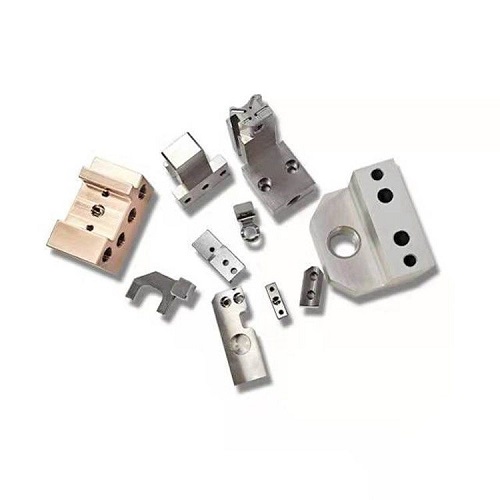
Hardware parts need to be cleaned before leaving the factory, during assembly and use, and after assembly. Cleaning after trial operation as needed can better carry out high-precision production. The cleanliness level of non-standard hardware parts processing and cleaning will directly affect the assembly quality and the service life of engineering machinery. This is a very important link in the assembly of construction machinery. The processing and cleaning of non-standard hardware parts can have functions such as anti-corrosion, rust prevention, and carbon removal.
Based on its materials, structural characteristics, pollution situation, and cleanliness requirements, the correct selection of cleaning methods is currently what we need to achieve. The cleaning principle for non-standard hardware parts processing is to wet the surface of the parts, and the cleaning agent penetrates into the contact interface between the dirt and the parts, causing the dirt to fall off, disperse, or dissolve from the surface of the parts. Forming emulsions and suspensions on the surface of parts to achieve cleaning purposes. What are the cleaning methods used in the processing of non-standard hardware parts?
(1) Scrub, place the parts in a container of cleaning agent, and wipe with cotton yarn or brush with a brush. This method is easy to operate and has simple equipment, but it has low efficiency and is suitable for single small batch small non-standard hardware parts. In general, gasoline should not be used as it has fat solubility, which can harm human health and easily cause fires.
(2) Boil and wash, place the cleaning agent and the cleaned non-standard hardware parts together in a cleaning pool welded with steel plates of appropriate size. Use a stove under the pool to heat them to 80-90℃, and boil and wash for 3-5 minutes.
(3) Spray cleaning: Spray a cleaning agent with a certain pressure and temperature onto the surface of the part to remove oil stains. This method has good cleaning effect and high production efficiency, but the equipment is complex and suitable for cleaning parts with less complex shapes and severe oil stains on the surface.
(4) Vibration cleaning involves placing the parts to be cleaned on the cleaning basket or rack of the vibration cleaning machine and immersing them in the cleaning agent. The vibration generated by the cleaning machine simulates manual rinsing action and the chemical action of the cleaning solution to remove oil stains.
(5) Ultrasonic cleaning relies on the chemical action of the cleaning agent and the combined action of ultrasonic oscillation introduced into the cleaning solution to remove oil stains.
What are the main contents of CNC machining process analysis
What are the requirements for the working environment of large CNC machining centers
Related Article

Let us go over the foundations of the electroplating procedure. Electroplating involves several phases, and from pre-treatment to post-treatment there are several really significant ones.
The basic principle of surface treatment of precision parts in CNC machining

Audio panels, electronic cigarette shells, nameplateLOG, watch shells, etc. are among the CNC processing of high surface texture needs components.
CNC machining aluminum alloy parts high-quality surface texture process explained in detail

Metallic finishing, sometimes known as metallic finishing, is the process of using several techniques to change the surface of an object in order to improve appearance and performance, such as corrosion resistance, discoloration resistance, chemical resistance, abrasion resistance, and hardness, modify electrical conductivity, remove burrs, or apply a specific color to a machined part.
Metal CNC finishing surface treatment process and its working principle
