
What are the advantages of CNC precision machining differential guide rails
author: Hansheng Automation
2023-05-16
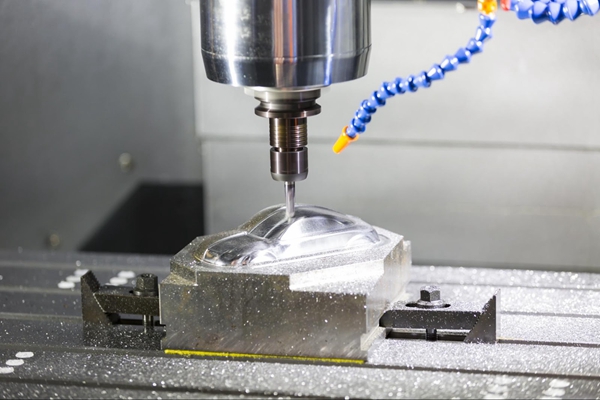
Let's take a look at the advantages of different guide rails in CNC precision machining.
1、 The two working surfaces of the hydrostatic guide rail have oil chambers. After entering a certain pressure of lubricating oil, a static pressure oil film can be formed, causing the working surface of the guide rail to be in a pure liquid conflict state, without wear and tear, and with good accuracy persistence; At the same time, lubricating oil without necessary pressure can form a static pressure oil film, making the working surface of the guide rail clean and has good anti attack function. Static pressure guide rails can be divided into liquid static pressure guide rails and solid static pressure guide rails.
2、 The slide rail has a simple structure, convenient production, high stiffness, and high vibration resistance. Commonly used in polytetrafluoroethylene guide rail soft belts and epoxy wear-resistant guide rail coatings. Plastic sliders have the characteristics of good performance, good wear resistance, smooth movement, good vibration reduction function, and good craftsmanship.
3、 A flip guide rail is a device that places rolling balls, rollers, needles, and other flip bodies between the surface of the guide rail, causing sliding conflicts between the surface of the guide rail to become rolling conflicts. Compared with sliding guide rails, flip guide rails have high sensitivity, high dynamic performance, small difference between dynamic and static conflict coefficients, and are not easy to crawl when moving at low speeds (high positioning accuracy, high repeated positioning accuracy, small wear, low accuracy requirements, and easy wear), low accuracy requirements, and long service life. But the anti vibration function of the rolling guide rail is poor, and the protection requirements are high.
How to Check the Error of Cutting Tools in Precision Part Processing
How to Prepare Tool Inspection and Measurement in Precision Part Processing
Related Article

Let us go over the foundations of the electroplating procedure. Electroplating involves several phases, and from pre-treatment to post-treatment there are several really significant ones.
The basic principle of surface treatment of precision parts in CNC machining

Audio panels, electronic cigarette shells, nameplateLOG, watch shells, etc. are among the CNC processing of high surface texture needs components.
CNC machining aluminum alloy parts high-quality surface texture process explained in detail

Metallic finishing, sometimes known as metallic finishing, is the process of using several techniques to change the surface of an object in order to improve appearance and performance, such as corrosion resistance, discoloration resistance, chemical resistance, abrasion resistance, and hardness, modify electrical conductivity, remove burrs, or apply a specific color to a machined part.
Metal CNC finishing surface treatment process and its working principle
