
Troubleshooting Common Mechanical Faults in Precision Parts Processing
author: Hansheng Automation
2023-05-16
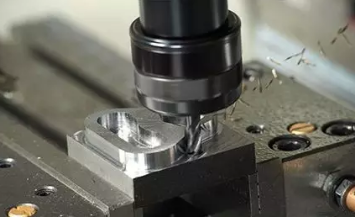
In the process of precision parts processing, except for a small number of self diagnosis functions that can display faults, most of the faults often cannot determine the specific cause. We have listed several common troubleshooting methods for reference.
Due to the widespread use of rolling friction pairs in guide rails, most feed transmission faults are caused by a decrease in motion quality, such as mechanical components not reaching the specified position, motion interruption, decreased positioning accuracy, and excessive reverse clearance. If similar faults occur, the pre tension of each motion pair can be adjusted, the loosening link can be adjusted, the motion accuracy can be improved, and the compensation link can be adjusted.
The machine tool returns to zero due to a malfunction. When the machine tool returns to the reference point, an over long alarm occurs without any subtraction action. This type of fault usually occurs when the subtractive signal is not input to the CNC system, and the limit stop and signal line can be checked.
Automatic tool change device failure is a common type of failure, manifested as: tool magazine movement failure, large positioning error, inadequate tool change action, tool change action jamming, complete machine stop working, etc. This type of failure can generally be eliminated by detecting cylinder pressure, adjusting the position of each limit switch, detecting feedback signal lines, and adjusting machine parameters related to tool change action.
During the processing of precision parts, the machine tool cannot move or the machining accuracy is poor, which are some comprehensive faults. When such faults occur, they can be eliminated by readjusting and changing the gap compensation, detecting whether there is crawling during axis feeding, and other methods.
What is the usage method of flat jaw vice in precision parts processing
Two Methods to Reduce Friction Error in Dongguan Turning and Milling Composite Processing
Related Article

Let us go over the foundations of the electroplating procedure. Electroplating involves several phases, and from pre-treatment to post-treatment there are several really significant ones.
The basic principle of surface treatment of precision parts in CNC machining

Audio panels, electronic cigarette shells, nameplateLOG, watch shells, etc. are among the CNC processing of high surface texture needs components.
CNC machining aluminum alloy parts high-quality surface texture process explained in detail

Metallic finishing, sometimes known as metallic finishing, is the process of using several techniques to change the surface of an object in order to improve appearance and performance, such as corrosion resistance, discoloration resistance, chemical resistance, abrasion resistance, and hardness, modify electrical conductivity, remove burrs, or apply a specific color to a machined part.
Metal CNC finishing surface treatment process and its working principle
