
The Positioning Method of Workpieces in Precision Parts Processing
author: Hansheng Automation
2023-05-10
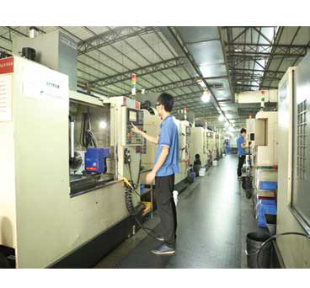
When using a plane as the positioning reference for precision parts processing, the plane of the workpiece and the surface of the positioning part cannot be an absolute ideal plane, and can only be contacted by the three most protruding points. The positions of the three most protruding points are different for each workpiece, and it is possible that the distance between these three points is very close, making the positioning of the workpiece unstable. In order to ensure stable and reliable positioning, three-point positioning is generally used when the workpiece is positioned in a plane. When using the processed plane as the positioning reference, due to the reduced flatness error, in order to improve the rigidity and stability of the positioning, the contact area of the positioning surface can be appropriately increased.
The main positioning components used in fixtures for planar positioning in precision parts processing include support nails, support plates, etc. There are three types of support nails: flat headed, spherical, and toothed. Flat headed support nails are suitable for positioning on machined surfaces, while the other two are suitable for positioning on unprocessed surfaces. The support plate is suitable for positioning on precision machined surfaces or when the positioning reference plane is large.
What is the difference between CNC lathes and CNC machining centers in Dongguan CNC Precision Machining Factory
Methods for Preventing Deformed Workpieces from Deformation in Precision Parts Processing
Related Article

Let us go over the foundations of the electroplating procedure. Electroplating involves several phases, and from pre-treatment to post-treatment there are several really significant ones.
The basic principle of surface treatment of precision parts in CNC machining

Audio panels, electronic cigarette shells, nameplateLOG, watch shells, etc. are among the CNC processing of high surface texture needs components.
CNC machining aluminum alloy parts high-quality surface texture process explained in detail

Metallic finishing, sometimes known as metallic finishing, is the process of using several techniques to change the surface of an object in order to improve appearance and performance, such as corrosion resistance, discoloration resistance, chemical resistance, abrasion resistance, and hardness, modify electrical conductivity, remove burrs, or apply a specific color to a machined part.
Metal CNC finishing surface treatment process and its working principle
