
The machining principle of non circular curves in precision parts machining
author: Hansheng Automation
2023-05-11
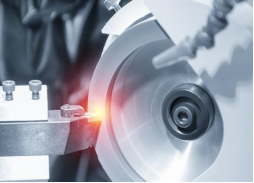
In the processing of precision parts, non circular curves are divided into analytical curves and non analytical curves similar to list curves. For manual programming, the general solution is to process analytical curves. Therefore, this section mainly analyzes the processing error of analytical curves. The mathematical expression of analytical curve can be given in the form of Cartesian coordinate system of y=(x), polar coordinates of p=p (), or parametric equations. Through coordinate transformation, the latter two forms of mathematical expressions can be converted into Cartesian coordinate system expressions. This type of parts and various rotating parts processed on CNC lathes with non circular curves as the generatrix are mainly used.
The programming method in precision part machining is as follows: Firstly, it should be decided whether to use straight line segments to approximate non circular curves or arc segments to approximate non circular curves. If a straight line segment is used to approximate a non circular curve, there are sharp corners at the connection between each straight line segment. Due to the inability of the tool to continuously cut the part at the sharp corners, hard points or cutting marks will appear on the surface of the part, resulting in poor surface quality.
How to proficiently master the determination of cutting parameters during turning processing at Dongguan CNC Precision Machining Factory
The Concept of Reliability in Precision Parts Processing
Related Article

Let us go over the foundations of the electroplating procedure. Electroplating involves several phases, and from pre-treatment to post-treatment there are several really significant ones.
The basic principle of surface treatment of precision parts in CNC machining

Audio panels, electronic cigarette shells, nameplateLOG, watch shells, etc. are among the CNC processing of high surface texture needs components.
CNC machining aluminum alloy parts high-quality surface texture process explained in detail

Metallic finishing, sometimes known as metallic finishing, is the process of using several techniques to change the surface of an object in order to improve appearance and performance, such as corrosion resistance, discoloration resistance, chemical resistance, abrasion resistance, and hardness, modify electrical conductivity, remove burrs, or apply a specific color to a machined part.
Metal CNC finishing surface treatment process and its working principle
