
The Concept of Reliability in Precision Parts Processing
author: Hansheng Automation
2023-05-11
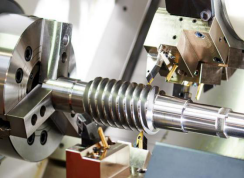
Reliability in precision component processing is a performance that reflects the durability and reliability of a product. It is assigned to sub products during design and manufacturing. The definition of reliability is the ability of a product to complete specified functions under specified conditions and within a specified time.
The so-called "specified conditions" in precision parts processing refer to the environmental conditions considered during design (such as temperature, pressure, humidity, vibration, atmospheric corrosion, etc.), load conditions (load, voltage, current, etc.), working methods (continuous or intermittent work), transportation conditions, storage conditions, and usage and maintenance conditions. The reliability of CNC machine tools varies under different conditions. The stronger the adaptability of CNC machine tools to various conditions mentioned above, the better their reliability. Several indicators for measuring reliability are as follows:
1. Mean Time Between Failures (MTBF) is the average time that a product can function normally between two failures, which is the ratio of the total working time of the product within its lifespan to the total number of failures. The longer the MTBF, the better
2. Mean Time To Restore (MTTR) refers to the average time taken by a CNC machine tool to repair from a malfunction until it can function normally within its lifespan. The shorter this time, the better.
3. Validity A
The probability that a repairable CNC machine tool can maintain its performance for a certain period of time, A is less than 1, and the closer it is to 1, the better.
The machining principle of non circular curves in precision parts machining
Common Instruments for CNC Machine Tool Maintenance in Precision Parts Processing
Related Article

Let us go over the foundations of the electroplating procedure. Electroplating involves several phases, and from pre-treatment to post-treatment there are several really significant ones.
The basic principle of surface treatment of precision parts in CNC machining

Audio panels, electronic cigarette shells, nameplateLOG, watch shells, etc. are among the CNC processing of high surface texture needs components.
CNC machining aluminum alloy parts high-quality surface texture process explained in detail

Metallic finishing, sometimes known as metallic finishing, is the process of using several techniques to change the surface of an object in order to improve appearance and performance, such as corrosion resistance, discoloration resistance, chemical resistance, abrasion resistance, and hardness, modify electrical conductivity, remove burrs, or apply a specific color to a machined part.
Metal CNC finishing surface treatment process and its working principle
