
Seven Factors Influencing Milling in Precision Parts Processing
author: Hansheng Automation
2023-05-17
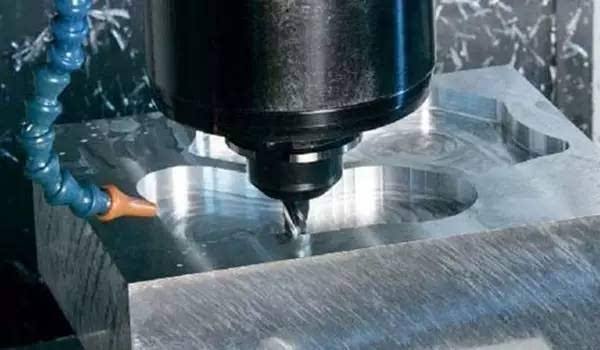
In the processing of precision parts, milling, as a common processing form, is mainly applied in the process of flat machining. Compared to grinding, milling has a higher effect and can reduce machining difficulties caused by complex parts during the milling process. In the industrial milling process, due to the influence of machine tools and other factors, the milling accuracy is affected and cannot meet the standard quality of processing. But what factors will affect milling processing?
1. The impact of milling vibration on machining accuracy is caused by factors such as the intermittent cutting characteristics of milling, milling methods (forward or backward milling), and the rigidity of the process system. Milling vibration directly affects milling accuracy.
2. Intermittent multi blade cutting tools cut into the surface of the workpiece, causing continuous changes in cutting force during precision part machining, causing periodic vibrations in the process system.
3. During reverse milling, there is a sliding distance when the milling cutter cuts into the machining surface of the workpiece, causing the cutter bar to lift. After cutting into the machining surface, the cutter bar is pulled down, causing periodic milling vibration.
4. The vibration of the milling machine caused by clearances such as the spindle, workbench guide rail, and transmission mechanism affects the machining accuracy.
5. The milling fixture causes milling vibration due to insufficient rigidity during milling.
6. Long milling cutter shank, large milling cutter diameter or length size cause milling vibration.
7. Insufficient rigidity of the workpiece or improper positioning or clamping can cause milling vibration.
Six Process Characteristics of Precision Parts Processing Plane
What are the commonly used fixtures for precision parts processing disc parts
Related Article

Let us go over the foundations of the electroplating procedure. Electroplating involves several phases, and from pre-treatment to post-treatment there are several really significant ones.
The basic principle of surface treatment of precision parts in CNC machining

Audio panels, electronic cigarette shells, nameplateLOG, watch shells, etc. are among the CNC processing of high surface texture needs components.
CNC machining aluminum alloy parts high-quality surface texture process explained in detail

Metallic finishing, sometimes known as metallic finishing, is the process of using several techniques to change the surface of an object in order to improve appearance and performance, such as corrosion resistance, discoloration resistance, chemical resistance, abrasion resistance, and hardness, modify electrical conductivity, remove burrs, or apply a specific color to a machined part.
Metal CNC finishing surface treatment process and its working principle
