
Processing principles for precision parts processing
author: Hansheng Automation
2023-05-11
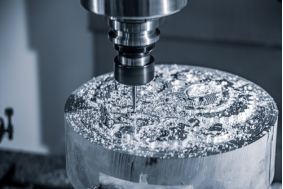
In order to ensure machining accuracy in precision parts processing, it is best to separate the processing of coarse and fine mechanical parts. Because of the large cutting amount, the large cutting force, clamping force and heat generation of the workpiece during the processing of rough mechanical parts, and the obvious work hardening phenomenon on the machining surface of the mechanical parts, there is a large internal stress in the workpiece. If the processing of rough and rough mechanical parts continues, the precision of the finished parts will be lost quickly due to the redistribution of stress.
Reasonable selection of equipment is necessary in the processing of precision parts. Rough machining of mechanical parts mainly involves cutting off most of the machining allowance, and does not require high machining accuracy. Therefore, rough machining should be carried out on machine tools with high power and low accuracy, while precision machining, machining, and processes require the use of high-precision machine tools. Rough and fine machining are processed on different machine tools, which can fully utilize equipment capabilities and extend the service life of precision machine tools.
Do you know several chip removal methods for sound controlled drilling at Dongguan CNC Precision Machining Factory
Analysis of the Reasons for the Failure of Precision Parts Processing
Related Article

Let us go over the foundations of the electroplating procedure. Electroplating involves several phases, and from pre-treatment to post-treatment there are several really significant ones.
The basic principle of surface treatment of precision parts in CNC machining

Audio panels, electronic cigarette shells, nameplateLOG, watch shells, etc. are among the CNC processing of high surface texture needs components.
CNC machining aluminum alloy parts high-quality surface texture process explained in detail

Metallic finishing, sometimes known as metallic finishing, is the process of using several techniques to change the surface of an object in order to improve appearance and performance, such as corrosion resistance, discoloration resistance, chemical resistance, abrasion resistance, and hardness, modify electrical conductivity, remove burrs, or apply a specific color to a machined part.
Metal CNC finishing surface treatment process and its working principle
