
What is Casting
2025-08-06
What is Casting?
From ancient bronze statues to modern engine blocks, casting has been a cornerstone of manufacturing for millennia. But for those new to the field, a fundamental question arises: What is casting? At its core, casting is a manufacturing process where molten material—typically metal—is poured into a mold, allowed to cool and solidify, and then removed to form a part with a specific shape. This versatile technique enables the creation of complex, custom components that would be difficult or impossible to produce with other methods like machining or forging. In this blog, we’ll dive into the details of casting, explore its various forms, compare key techniques, and examine why it remains indispensable in industries ranging from automotive to aerospace.
The Basics of Casting: How It Works
To understand “what is casting,” let’s break down the process into its essential steps. While specific methods vary, most casting processes follow a similar workflow:
- Pattern Creation: A pattern—a replica of the final part (often slightly larger to account for material shrinkage)—is made from wood, metal, or plastic. This pattern is used to shape the mold.
- Mold Making: The pattern is placed in a material (such as sand, metal, or ceramic) that forms the mold cavity. Once the mold material sets, the pattern is removed, leaving a hollow cavity that matches the part’s shape.
- Melting and Pouring: The chosen material (e.g., aluminum, iron, or bronze) is heated until it melts, then poured into the mold cavity.
- Solidification: The molten material cools and hardens inside the mold, taking on the cavity’s shape.
- Demolding and Finishing: The solidified part (called a casting) is removed from the mold. It may undergo additional processes like trimming, grinding, or painting to meet final specifications.
This process is valued for its ability to produce intricate shapes with minimal waste, making casting a cost-effective choice for both small batches and mass production.
Common Casting Methods: A Comparative Overview
Casting is not a one-size-fits-all process. Over time, various techniques have been developed to suit different materials, part complexities, and production volumes. Here’s a closer look at the most widely used methods, along with their strengths, weaknesses, and typical applications.
1. Sand Casting
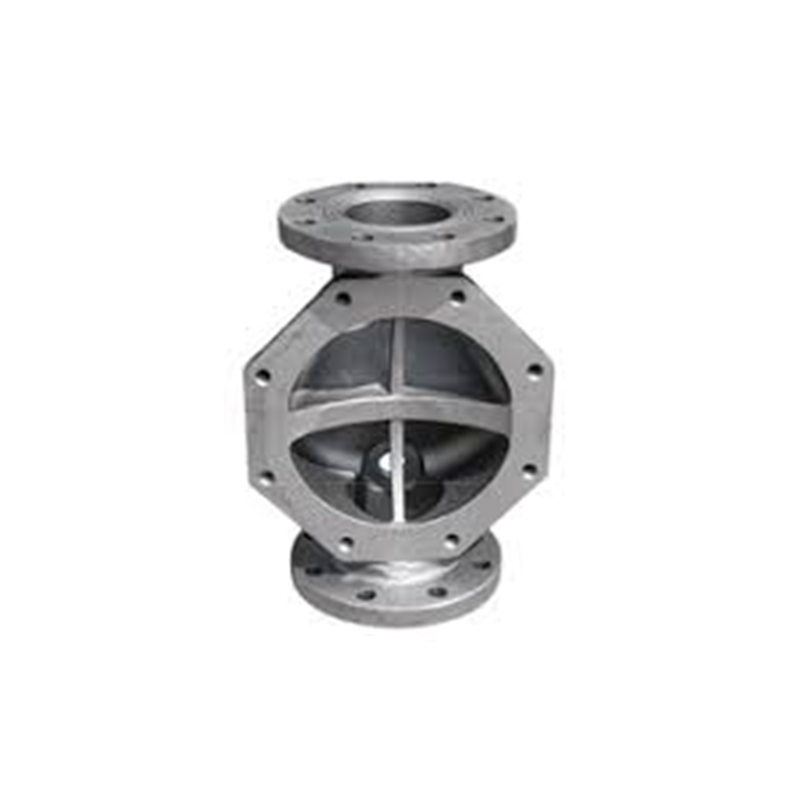
Sand casting is one of the oldest and most versatile casting methods, dating back over 6,000 years. As the name suggests, it uses sand as the primary mold material.
- Process: A pattern is pressed into a mixture of sand and a binder (to hold the shape), creating a mold cavity. For complex parts, the mold is split into two halves (cope and drag) for easy removal of the pattern. Molten metal is poured into the cavity, and once solidified, the sand mold is broken to release the casting.
- Advantages: Low tooling costs, ability to handle large parts (up to several tons), compatible with most metals (iron, steel, aluminum, bronze).
- Disadvantages: Lower dimensional accuracy compared to other methods, rough surface finish, and sand molds are single-use (requiring new molds for each casting).
- Applications: Engine blocks, large machinery components, decorative metalwork.
Sand casting remains popular for its flexibility, making it a go-to for both prototyping and low-volume production.
2. Die Casting
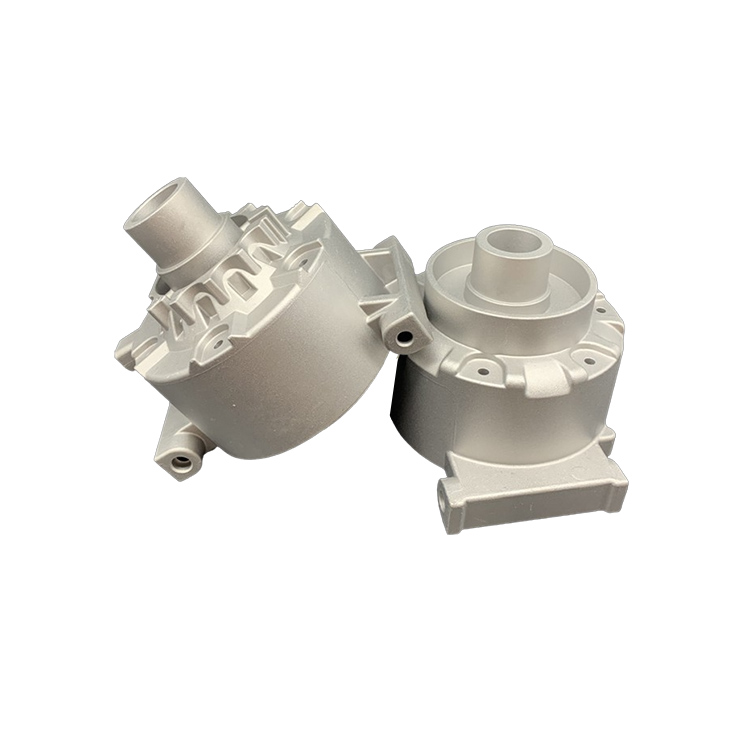
Die casting is a high-pressure process used primarily for non-ferrous metals like aluminum, zinc, and magnesium. It’s ideal for mass-produced, small to medium-sized parts with tight tolerances.
- Process: A permanent mold (called a die) made of steel is used repeatedly. Molten metal is injected into the die under high pressure (100–2,000 psi) and held until solidification. The die then opens, and the casting is ejected.
- Advantages: High dimensional accuracy, smooth surface finish, fast production rates (hundreds to thousands of parts per hour), and reusable dies.
- Disadvantages: High initial tooling costs (due to precision steel dies), limited to low-melting-point metals, and thick walls can be challenging to cast without defects.
- Applications: Automotive parts (e.g., gearboxes, valve covers), consumer electronics (e.g., laptop frames, smartphone housings), and household appliances.
Die casting shines in industries where consistency and speed are critical, offsetting its high upfront costs with long-term production efficiency.
3. Investment Casting (Lost-Wax Casting)
Investment casting, also known as lost-wax casting, is prized for producing parts with intricate details, thin walls, and excellent surface finishes. It has been used since ancient times to create detailed jewelry and art, and today remains vital for aerospace and medical components.
- Process: A wax pattern (often made by injecting wax into a metal die) is created in the shape of the final part. Multiple wax patterns are attached to a wax “tree,” which is dipped in a ceramic slurry and coated with sand to form a shell. The wax is melted and drained (hence “lost-wax”), leaving a ceramic mold. Molten metal is poured into the mold, and once solidified, the ceramic shell is broken away.
- Advantages: Exceptional detail and accuracy, smooth surface finish (reducing the need for post-processing), ability to cast complex geometries and thin walls.
- Disadvantages: Labor-intensive process, high per-unit costs (especially for small batches), and ceramic molds are single-use.
- Applications: Turbine blades, medical implants, jewelry, and aerospace components with complex contours.
Investment casting is the method of choice when precision and detail are non-negotiable, even at a higher cost.
4. Gravity Die Casting (Permanent Mold Casting)
Gravity die casting is similar to die casting but uses gravity instead of high pressure to fill the mold. It’s often used for aluminum and magnesium parts requiring better strength than sand castings.
- Process: A permanent metal die (usually iron or steel) is preheated, and molten metal is poured into the die under gravity. After solidification, the die is opened, and the casting is removed.
- Advantages: Better dimensional accuracy than sand casting, reusable dies, and improved mechanical properties due to controlled cooling.
- Disadvantages: Slower production than high-pressure die casting, limited to simpler part geometries, and higher tooling costs than sand casting.
- Applications: Cylinder heads, wheel rims, and agricultural machinery parts.
This method strikes a balance between cost, speed, and quality, making it suitable for medium-volume production.
5. Centrifugal Casting
Centrifugal casting uses centrifugal force to distribute molten metal in the mold, creating cylindrical parts with uniform walls. It’s commonly used for pipes, tubes, and sleeves.
- Process: A rotating mold (horizontal or vertical) is spun at high speeds (300–3,000 RPM). Molten metal is poured into the mold, and centrifugal force pushes the metal against the mold wall, forming a hollow cylinder as it solidifies.
- Advantages: Excellent material density (reducing porosity), uniform wall thickness, ideal for large cylindrical parts.
- Disadvantages: Limited to rotational symmetry (e.g., pipes, rings), and specialized equipment is required.
- Applications: Water pipes, oil well casings, bearing sleeves, and flywheels.
Centrifugal casting is unmatched for producing strong, hollow cylindrical components efficiently.
Materials Used in Casting
Casting’s versatility extends to the range of materials it can handle, each with unique properties that influence the choice of casting method:
- Ferrous Metals: Cast iron and cast steel are valued for their strength and durability. Cast iron, with its excellent wear resistance, is used in engine blocks and manhole covers. Cast steel, stronger and more ductile, finds applications in heavy machinery and automotive parts.
- Non-Ferrous Metals: Aluminum, zinc, and magnesium are lightweight and corrosion-resistant. Aluminum is widely used in die casting for automotive and aerospace parts, while zinc is favored for small, detailed components like hardware and toys. Magnesium, even lighter than aluminum, is used in high-performance applications like racing car parts.
- Alloys: Bronze (copper-tin) and brass (copper-zinc) are classic casting alloys, prized for their malleability and aesthetic appeal. They’re used in decorative items, valves, and marine hardware.
The choice of material depends on the part’s intended use—whether strength, weight, corrosion resistance, or cost is the priority.
Modern Innovations in Casting
While casting is an ancient technique, modern technology has transformed its capabilities:
- 3D Printing for Patterns: 3D-printed patterns (using plastics or wax) have revolutionized prototyping, allowing for quick, cost-effective creation of complex patterns without the need for traditional tooling.
- Computer-Aided Design (CAD) and Simulation: Software tools simulate the casting process, predicting issues like shrinkage, porosity, or incomplete filling before production begins, reducing waste and improving quality.
- Sustainable Practices: Recycled metals are increasingly used in casting, and new binders for sand molds reduce environmental impact. Additionally, energy-efficient melting processes (e.g., induction furnaces) lower carbon footprints.
These innovations have made casting more precise, efficient, and environmentally friendly than ever before.
FAQ
Q: What is casting in simple terms?
A: Casting is a manufacturing process where molten material (usually metal) is poured into a mold, allowed to solidify, and then removed to form a part with a specific shape.
Q: How does casting differ from forging?
A: Casting uses molten material poured into a mold, while forging shapes solid metal using heat and pressure. Casting is better for complex shapes, while forging produces stronger, more durable parts.
Q: Which casting method is best for small, detailed parts?
A: Investment casting (lost-wax casting) is ideal for small, intricate parts with fine details and smooth surfaces, such as jewelry or turbine blades.
Q: Is sand casting still relevant today?
A: Yes, sand casting remains widely used due to its low cost, flexibility with large parts, and compatibility with most metals, making it essential for prototyping and low-volume production.
Q: What causes defects in castings?
A: Common defects include porosity (air bubbles), shrinkage (voids from uneven cooling), and incomplete filling (molten metal not reaching all parts of the mold). These can be minimized with proper mold design and process control.
Q: Can non-metallic materials be cast?
A: Yes, casting is used for non-metals like plastics (injection molding, a type of casting) and ceramics. Plastic casting is common for toys, containers, and medical devices.
Q: How accurate is casting?
A: Accuracy depends on the method: sand casting has tolerances of ±0.5mm or more, while die casting and investment casting can achieve tolerances as tight as ±0.1mm, reducing the need for post-processing.
Q: What is the future of casting?
A: The future of casting lies in automation, 3D printing integration, and sustainable practices, with a focus on improving precision, reducing waste, and expanding material compatibility for advanced industries like electric vehicles and renewable energy.
What is Metal Casting
What is Gravity Casting
Related Article

Gears are the backbone of mechanical transmission systems, converting rotational motion and torque between shafts to power everything from household appliances to industrial machinery.
What are the 4 types of gears

CNC machines (Computer Numerical Control machines) have transformed manufacturing by delivering unmatched precision, repeatability, and efficiency across material types—from metals to plastics and composites.
Which Industries Mostly Use CNC Machines

CNC machining is celebrated for its precision and versatility in shaping metals, plastics, and composites—but its subtractive nature (removing material from a solid workpiece to create parts) raises a critical question: “Is CNC machining wasteful?” At first glance, the piles of metal shavings, plastic chips, and scrapped parts from CNC operations might suggest yes.
Is CNC machining wasteful
