
What Are Bevel Gears Used For
2025-06-16
What Are Bevel Gears Used For?
In the intricate world of mechanical engineering, gears play a pivotal role in power transmission, and among them, bevel gears stand out for their unique ability to transmit motion and power between intersecting shafts. Bevel gears have been integral to countless mechanical systems, from automotive transmissions to industrial machinery, owing to their versatility and efficiency. This blog post will explore in detail what bevel gears are used for, with a specific focus on two main types: straight bevel gears and spiral bevel gears.
Understanding Bevel Gears: An Introduction
Definition and Basic Characteristics
Bevel gears are conical - shaped gears that transmit rotational motion and torque between two shafts that intersect at an angle, typically 90 degrees, although other angles are also possible. The teeth of bevel gears are cut on the conical surface, allowing them to mesh with another bevel gear to change the direction of rotation. The design of bevel gears enables a compact and efficient transfer of power, making them suitable for a wide range of applications where space is limited and a change in the direction of motion is required.
Importance in Mechanical Systems
Bevel gears are essential components in many mechanical systems as they provide a reliable means of changing the direction of rotational force. They are used to transfer power from one axis to another, enabling complex mechanical movements and operations. Whether it's in vehicles to distribute power from the engine to the wheels or in industrial equipment to drive different parts of a machine, bevel gears ensure smooth and efficient power transmission, contributing to the overall performance and functionality of the systems they are a part of.
Types of Bevel Gears and Their Applications
Straight Bevel Gears
Design and Characteristics
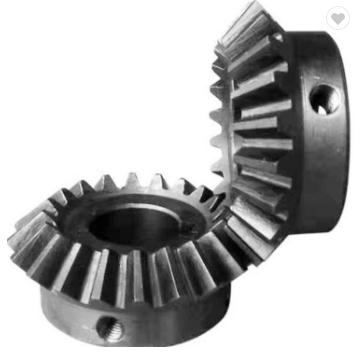
Straight bevel gears have teeth that are straight and taper towards the cone vertex. Their teeth are cut parallel to the axis of the gear, resulting in a simple and straightforward design. This design makes them relatively easy to manufacture, which often translates to lower production costs. However, due to the nature of their tooth engagement, straight bevel gears tend to produce more noise and vibration during operation, especially at higher speeds. They also have a lower load - carrying capacity compared to some other types of bevel gears.
Applications
- Light - Duty Machinery: Straight bevel gears are commonly used in light - duty machinery where the power requirements are not extremely high and noise levels can be tolerated. For example, in small - scale woodworking tools like handheld routers or table saws, straight bevel gears are used to change the direction of the motor's rotation to drive the cutting blades. Their simplicity and cost - effectiveness make them a practical choice for such applications.
- Home Appliances: In various home appliances, straight bevel gears play a role in power transmission. In some models of blenders, they are used to transfer the rotational motion from the motor to the blending blades, changing the direction of the power flow as needed. Similarly, in certain types of washing machines, straight bevel gears help in the operation of the drum - drive mechanisms, ensuring the drum rotates in the correct direction.
- Low - Speed Industrial Equipment: For industrial equipment that operates at relatively low speeds, straight bevel gears can be an appropriate option. In small - scale conveyor systems used in food processing plants or packaging facilities, straight bevel gears are employed to change the direction of the conveyor belt's movement, allowing for the efficient transfer of products along different paths.
Spiral Bevel Gears
Design and Characteristics
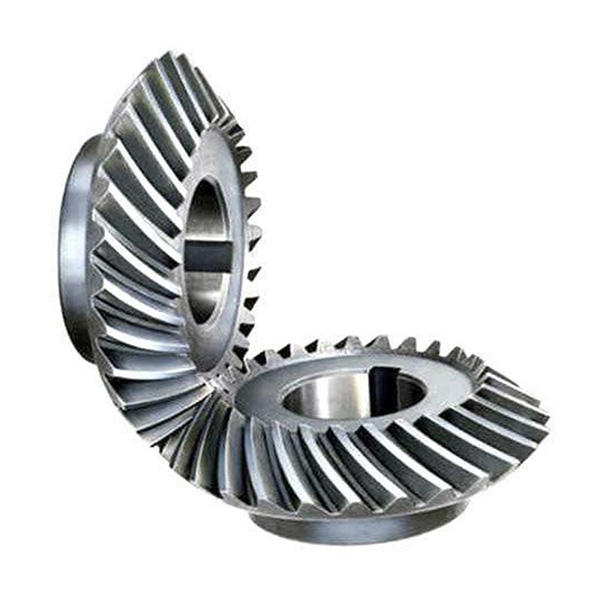
Spiral bevel gears feature teeth that are curved and arranged in a spiral pattern. This unique design allows for a gradual engagement between the teeth, resulting in smoother operation, reduced noise, and vibration. The spiral shape of the teeth also enables a higher load - carrying capacity, as the load is distributed more evenly across multiple teeth during meshing. Additionally, spiral bevel gears can operate at higher speeds compared to straight bevel gears without sacrificing performance. However, their more complex design makes them more difficult and expensive to manufacture.
Applications
- Automotive Transmissions: One of the most prominent applications of spiral bevel gears is in automotive transmissions, particularly in the differential. The differential uses spiral bevel gears to distribute power from the driveshaft to the wheels while allowing the wheels to rotate at different speeds during turns. The smooth operation and high load - carrying capacity of spiral bevel gears are crucial for ensuring the reliable and efficient performance of the vehicle's drivetrain.
- Aerospace Industry: In the aerospace industry, where precision, reliability, and low noise levels are of utmost importance, spiral bevel gears are widely used. They are found in aircraft engines, where they are used to transfer power between different components, such as the compressor and the turbine. The ability of spiral bevel gears to handle high speeds and heavy loads while maintaining smooth operation makes them indispensable in aerospace applications.
- Heavy - Duty Industrial Machinery: Spiral bevel gears are also commonly used in heavy - duty industrial machinery, such as construction equipment, mining machinery, and large - scale manufacturing plants. In excavators, for example, spiral bevel gears are used in the drivetrain to transmit power from the engine to the tracks or wheels, enabling the machine to move and perform heavy - duty tasks. Their high load - carrying capacity and durability make them suitable for withstanding the harsh operating conditions of these industries.
Other Applications of Bevel Gears
Robotics
In the field of robotics, bevel gears are used to achieve precise and controlled movements. They are employed in robotic arms to change the direction of motion and transmit power between different joints. The ability of bevel gears to provide a compact and efficient means of power transmission is essential for creating robotic systems that are agile, accurate, and capable of performing complex tasks. Whether it's in industrial robots used for manufacturing or service robots used in healthcare or hospitality, bevel gears contribute to the overall functionality and performance of the robots.
Marine Applications
In the marine industry, bevel gears are used in various applications, including ship propulsion systems and marine machinery. They are used to transfer power from the engine to the propellers, changing the direction of rotation as required. The harsh marine environment, with its high humidity, saltwater exposure, and heavy loads, demands gears that are durable and reliable. Bevel gears, especially spiral bevel gears, are well - suited for these applications due to their ability to withstand such conditions and provide efficient power transmission.
Future Trends and Developments
As technology continues to advance, the applications of bevel gears are likely to expand and evolve. New materials and manufacturing techniques are being developed to improve the performance, durability, and efficiency of bevel gears. For example, the use of advanced alloys and heat - treatment processes can enhance the strength and wear resistance of bevel gears, allowing them to operate in more demanding environments. Additionally, the integration of sensors and smart technologies into bevel gears may enable real - time monitoring of their performance, facilitating predictive maintenance and reducing downtime in mechanical systems.
Bevel gears, with their unique design and functionality, have a wide range of applications across various industries. Whether it's the simple yet cost - effective straight bevel gears or the more advanced and efficient spiral bevel gears, each type plays a crucial role in power transmission and mechanical operation. As we move forward, the continued development and innovation in bevel gear technology will undoubtedly lead to even more diverse and sophisticated applications, further enhancing the capabilities of mechanical systems in the modern world.
Can Helical Gears Be Used at Any Angle
what is a bevel gear
Related Article

Gears are the backbone of mechanical transmission systems, converting rotational motion and torque between shafts to power everything from household appliances to industrial machinery.
What are the 4 types of gears

CNC machines (Computer Numerical Control machines) have transformed manufacturing by delivering unmatched precision, repeatability, and efficiency across material types—from metals to plastics and composites.
Which Industries Mostly Use CNC Machines

CNC machining is celebrated for its precision and versatility in shaping metals, plastics, and composites—but its subtractive nature (removing material from a solid workpiece to create parts) raises a critical question: “Is CNC machining wasteful?” At first glance, the piles of metal shavings, plastic chips, and scrapped parts from CNC operations might suggest yes.
Is CNC machining wasteful
