
How Does a Differential Gear Work
2025-07-05
How Does a Differential Gear Work?
When you steer a car around a curve, have you ever wondered why the wheels rotate at different speeds without skidding? The answer lies in one of the most critical components of a vehicle's drivetrain: the differential gear. Far more than just a set of gears, the differential enables smooth cornering by allowing the left and right wheels to turn at different rates while still transmitting power from the engine to the wheels. In this in-depth guide, we'll unravel the mechanics of how differentials work, explore their key components, and explain why they're essential for safe and efficient driving.
Understanding the Purpose of a Differential Gear
The Basic Problem: Wheel Speed Mismatch in Turns
Imagine driving a go-kart without a differential—every time you turn, the inside wheel would skid and scrub against the pavement, causing tire wear, loss of traction, and poor handling. This happens because:
- The inside wheel travels a shorter distance than the outside wheel during a turn.
- Without a mechanism to compensate for this distance difference, both wheels would be forced to rotate at the same speed, creating mechanical stress and friction.
What a Differential Does
The differential's primary role is to:
- Split Engine Torque: Transmit power from the driveshaft to the wheels.
- Allow Speed Differentials: Let the left and right wheels rotate at different speeds when cornering.
- Maintain Traction: Distribute torque appropriately to maximize grip, especially in uneven or slippery conditions.
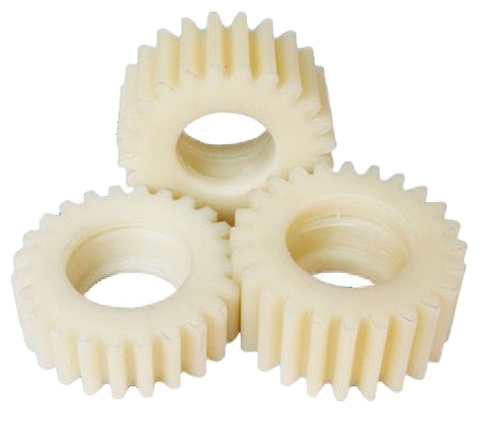
Key Components of a Standard Differential
1. Ring and Pinion Gear (Final Drive)
- Function: Connects the driveshaft to the differential and reduces engine speed while increasing torque (gear reduction).
- Design: The pinion gear (small, driven by the driveshaft) meshes with the ring gear (large, attached to the differential case).
- Ratio Importance: A higher gear ratio (e.g., 4.10:1) provides more torque for acceleration (common in trucks), while lower ratios (e.g., 3.23:1) optimize highway efficiency.
2. Differential Case (Carrier)
- Housing: Encloses all internal differential components and is driven by the ring gear.
- Mounting: Connected to the vehicle's axle housing, supporting the rotational movement of the gears.
3. Planetary Gear Set (Spider Gears and Side Gears)
- Spider Gears (Pinion Gears): Mounted on a cross-shaped carrier (spider) inside the differential case. They rotate around their own axes and mesh with the side gears.
- Side Gears: Connected to the axle shafts, which drive the wheels. Each side gear corresponds to a wheel (left and right).
4. Axle Shafts
- Function: Transmit power from the side gears to the wheels.
- Type: Solid or hollow, depending on the vehicle's load capacity (e.g., heavy-duty trucks use stronger solid shafts).
The Step-by-Step Working Mechanism of a Differential
Scenario 1: Driving Straight (Equal Wheel Speed)
- Power Flow: Engine torque travels through the driveshaft to the pinion gear, which spins the ring gear and differential case.
- Gear Interaction:
-
- The spider gears rotate with the differential case but do not spin on their own axes (since both side gears experience equal resistance).
-
- Both side gears and axle shafts turn at the same speed, driving the wheels equally.
Scenario 2: Turning a Corner (Unequal Wheel Speed)
- Physics at Play: The outside wheel must rotate faster than the inside wheel to cover the longer arc of the turn.
- Differential Action:
-
- Resistance Difference: The inside wheel encounters more resistance (shorter path), while the outside wheel has less resistance (longer path).
-
- Spider Gear Rotation: The spider gears pivot on their axles, allowing them to rotate around the slower-moving side gear (inside wheel) and spin the faster-moving side gear (outside wheel).
Speed Calculation: The speed difference depends on the turn radius:\( \text{Outside Wheel Speed} = \text{Inside Wheel Speed} \times \frac{\text{Turn Radius} + \text{Track Width/2}}{\text{Turn Radius} - \text{Track Width/2}} \)
Scenario 3: One Wheel Losing Traction (Open Differential Limitation)
- Problem: In an open differential, torque is sent to the wheel with the least resistance. If one wheel is on ice (low traction), it will spin freely, while the other wheel gets no power.
- Why It Happens: The differential prioritizes speed equality over torque distribution, a flaw addressed by limited-slip or locking differentials (covered later).
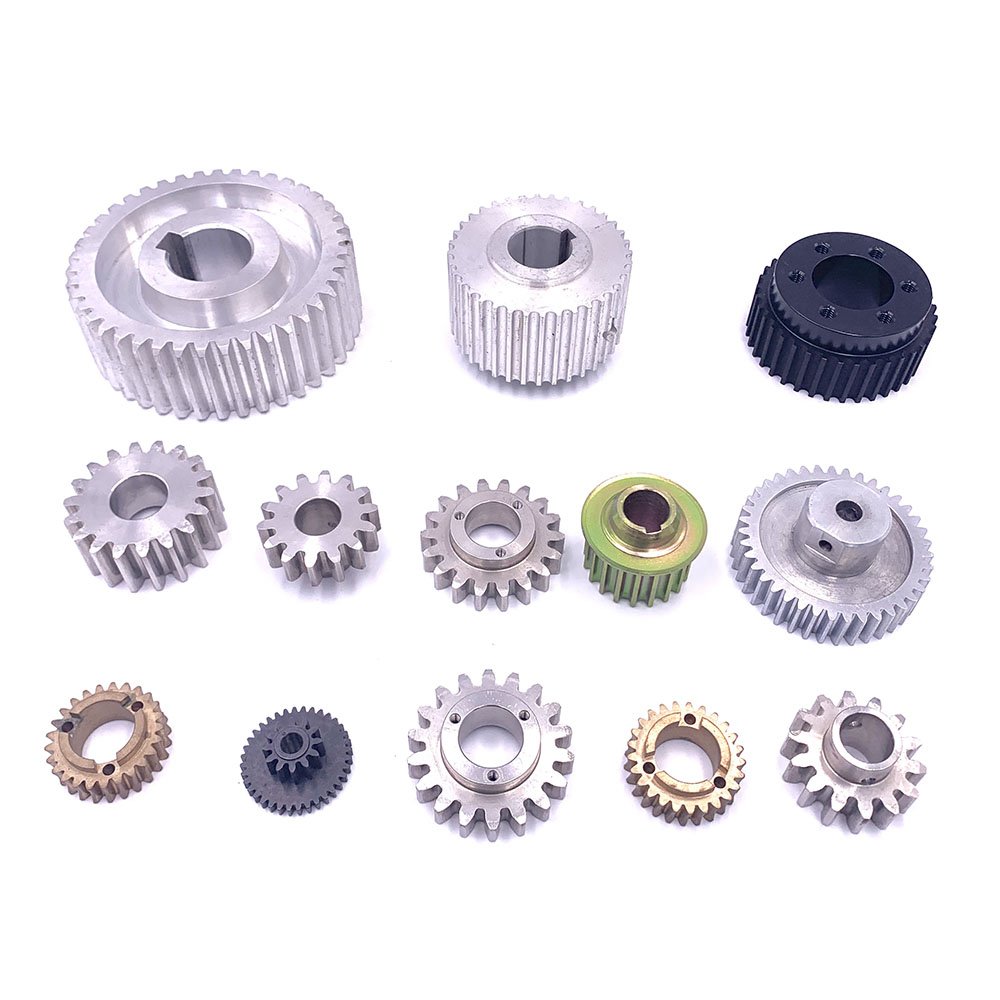
Types of Differentials and Their Specialized Mechanics
1. Open Differential (Standard Differential)
- Design: Simplest and most common type, used in most passenger cars.
- How It Works:
-
- Allows maximum speed differentiation between wheels.
-
- Transmits equal torque to both wheels under normal conditions (but sends all torque to the wheel with least resistance when traction is lost).
- Pros: Inexpensive, lightweight, smooth operation in turns.
- Cons: Poor performance in slippery conditions (e.g., mud, snow), as it can't prevent wheel spin.
2. Limited-Slip Differential (LSD)
- Design: Uses clutches, gears, or a viscous coupling to limit speed differences between wheels.
- How It Works:
-
- When a wheel slips (spins faster), friction plates or gears engage to transfer torque to the grounded wheel.
-
- Example: A clutch-type LSD uses spring-loaded plates that apply pressure as wheel speed difference increases, forcing torque to the slower wheel.
- Pros: Better traction in uneven conditions, balances performance and cost.
- Cons: More complex than open differentials, requires maintenance (e.g., special gear oil).
3. Locking Differential (Locker)
- Design: Mechanically locks both wheels to rotate at the same speed, overriding the differential action.
- How It Works:
-
- A lever, air pressure, or electronic signal engages a lock mechanism (e.g., a dog clutch) that connects the side gears to the differential case.
-
- Ideal for off-road use, where both wheels need equal torque to climb obstacles.
- Pros: Maximum torque to both wheels, excellent for extreme terrain.
- Cons: Causes tire scrub and handling issues when locked on dry pavement, requires driver input or automatic activation.
4. Torque-Vectoring Differential (Modern High-Tech Design)
- Design: Used in performance cars and EVs, actively distributes torque between wheels for optimal cornering.
- How It Works:
-
- Electric motors or clutches independently control torque to each wheel.
-
- During a turn, it sends more torque to the outside wheel to enhance grip and reduce understeer.
- Pros: Improves handling and stability, adapts to real-time driving conditions.
- Cons: Expensive, complex electronics required.
Differential Gear Ratios and Their Impact on Performance
What Is a Gear Ratio?
The differential's gear ratio (set by the ring and pinion) defines the relationship between engine RPM and wheel speed:\( \text{Gear Ratio} = \frac{\text{Number of Ring Gear Teeth}}{\text{Number of Pinion Gear Teeth}} \)
How It Affects Driving:
- Low Ratios (e.g., 3.08:1):
-
- Higher top speed, lower engine RPM at highway speeds (better fuel efficiency).
-
- Less torque multiplication, slower acceleration.
-
- Common in sedans and economy cars.
- High Ratios (e.g., 4.88:1):
-
- Lower top speed, higher engine RPM at highway speeds (more power for towing/hauling).
-
- More torque multiplication, faster acceleration.
-
- Used in trucks, SUVs, and performance vehicles.
Matching Ratios to Vehicle Needs
A truck hauling a trailer needs a high ratio for low-end torque, while a sports car might use a medium ratio for balanced acceleration and top speed.
Advantages and Limitations of Differential Gears
Key Advantages:
- Smooth Cornering: Enables natural wheel speed differentiation, preventing tire scrub and mechanical stress.
- Traction Management: Modern differentials (LSD, torque-vectoring) optimize power distribution for slippery or uneven surfaces.
- Mechanical Efficiency: The planetary gear design minimizes energy loss compared to older drivetrain systems.
Common Limitations:
- Open Differential Weakness: Prone to wheel spin in low-traction situations, as torque goes to the wheel with least resistance.
- Complexity in Specialized Types: Locking and torque-vectoring differentials require more maintenance and are costlier to repair.
- Noise and Vibration: Worn gears or improper lubrication can cause whining, clunking, or vibrations.
Maintaining Your Differential for Longevity
1. Regular Gear Oil Changes
- Role of Lubrication: Differential fluid cools and lubricates gears, preventing wear and reducing friction.
- Interval: Check manufacturer guidelines (typically 30,000–60,000 miles), but off-road vehicles may need more frequent changes (15,000–20,000 miles).
- Fluid Type: Use specified oil (e.g., 75W-90 for LSDs, which require friction modifiers).
2. Inspect for Leaks and Damage
- Check Seals: Leaking fluid indicates worn axle seals or case gaskets, which can lead to gear damage if ignored.
- Visual Inspection: Look for cracks in the differential case or bent axle shafts after hitting potholes or curbs.
3. Listen for Unusual Noises
- Whining at Speed: May indicate worn ring/pinion gears or insufficient lubrication.
- Clunking on Acceleration/Deceleration: Signals loose gears or worn spider gear pins.
4. Proper Break-In for New Differentials
- If replacing gears or the entire differential, follow a break-in procedure (e.g., avoid heavy loads for the first 500 miles) to ensure proper gear meshing.
Conclusion: The Unsung Hero of Vehicle Maneuverability
The differential gear is a masterpiece of mechanical engineering that solves a fundamental problem in vehicle dynamics: allowing wheels to rotate at different speeds while transmitting power efficiently. From the simple elegance of the open differential to the high-tech precision of torque-vectoring systems, each type serves a unique purpose in balancing traction, performance, and drivability.
Understanding how differentials work not only helps you appreciate the complexity of your vehicle but also enables smarter maintenance decisions. Whether you're a daily commuter, an off-road enthusiast, or a performance driver, the differential ensures your wheels work together—even when they need to go at different speeds. By respecting its design limits and keeping up with regular care, you'll ensure this critical component continues to deliver smooth, safe, and reliable driving for years to come.
So the next time you take a sharp turn and feel your car hug the road effortlessly, remember: beneath the rear axle or front differential, a symphony of gears is hard at work, making the physics of motion look easy—all so you can focus on the joy of the drive.
What Is a Pulley
How Do Gears Work
Related Article

Gears are the backbone of mechanical transmission systems, converting rotational motion and torque between shafts to power everything from household appliances to industrial machinery.
What are the 4 types of gears

CNC machines (Computer Numerical Control machines) have transformed manufacturing by delivering unmatched precision, repeatability, and efficiency across material types—from metals to plastics and composites.
Which Industries Mostly Use CNC Machines

CNC machining is celebrated for its precision and versatility in shaping metals, plastics, and composites—but its subtractive nature (removing material from a solid workpiece to create parts) raises a critical question: “Is CNC machining wasteful?” At first glance, the piles of metal shavings, plastic chips, and scrapped parts from CNC operations might suggest yes.
Is CNC machining wasteful
