
Maintenance of milling cutters in precision parts processing
author: Hansheng Automation
2023-05-10
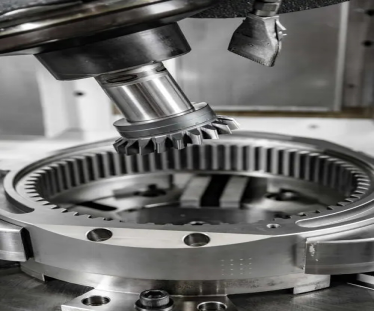
The effect is closely related to maintenance. Before using the milling cutter, it should be checked for obvious damage, deformation, cracks, etc. If there are any, they cannot be used. After using the milling cutter, it should be cleaned in a timely manner to remove milling chips, oil stains, rust, and other substances to avoid unnecessary damage to the milling cutter. During the use of milling cutters, regular lubrication and maintenance are required to ensure their normal operation. In work, it is important to pay attention to the reasonable setting of parameters such as tool speed and feed rate to avoid excessive wear.
In the processing of precision parts, the milling cutter also needs to be regularly sharpened. After using the milling cutter for a period of time, the edge will gradually wear out. At this time, it is necessary to perform sharpening treatment to restore its sharp state, in order to ensure processing efficiency and accuracy. Proper maintenance and upkeep can extend the service life of milling cutters, improve processing quality and efficiency. Meanwhile, the maintenance and upkeep of milling cutters should be carried out by professional personnel to ensure their correctness and safety.
Is CNC machining tiring in precision parts machining
Main equipment in precision parts processing
Related Article

Let us go over the foundations of the electroplating procedure. Electroplating involves several phases, and from pre-treatment to post-treatment there are several really significant ones.
The basic principle of surface treatment of precision parts in CNC machining

Audio panels, electronic cigarette shells, nameplateLOG, watch shells, etc. are among the CNC processing of high surface texture needs components.
CNC machining aluminum alloy parts high-quality surface texture process explained in detail

Metallic finishing, sometimes known as metallic finishing, is the process of using several techniques to change the surface of an object in order to improve appearance and performance, such as corrosion resistance, discoloration resistance, chemical resistance, abrasion resistance, and hardness, modify electrical conductivity, remove burrs, or apply a specific color to a machined part.
Metal CNC finishing surface treatment process and its working principle
