
Machine Clamping Indexable Blades in Precision Parts Processing
author: Hansheng Automation
2023-05-11
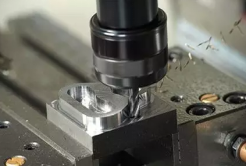
The national standard for hard alloy indexable inserts in precision parts processing adopts the S0 international standard. The representation method, variety specifications, size series, manufacturing tolerances, and measurement methods of product models are the same as those of the S0 standard. In addition, in order to adapt to China's national conditions, a short horizontal line is added after the 9 numbers specified in international standards, and a letter and a number are used to represent the form and width of the blade chip cutting groove. Therefore, the models of indexable blades in China share 10 numbers to represent the characteristics of the main parameters.
According to regulations in precision parts processing, any model of blade must use the first 7 digits, and the last 3 digits can only be used when necessary. But for car blades, the tenth position belongs to the part required by the standard to be marked. Regardless of whether there are eighth or ninth digits, the tenth digit must be separated from the preceding digit by a dash "one", and its letters must not use the letters (E, F, T, S, R, L, N) that have already been used in the eighth or ninth digits. If only one of the eight or nine digits is used, it should be written on the eighth digit without a space between them.
Quality problems and solutions for turning slender shafts at Dongguan CNC Precision Machining Factory 1
Classification of CNC Machine Tool Faults in Precision Parts Processing
Related Article

Let us go over the foundations of the electroplating procedure. Electroplating involves several phases, and from pre-treatment to post-treatment there are several really significant ones.
The basic principle of surface treatment of precision parts in CNC machining

Audio panels, electronic cigarette shells, nameplateLOG, watch shells, etc. are among the CNC processing of high surface texture needs components.
CNC machining aluminum alloy parts high-quality surface texture process explained in detail

Metallic finishing, sometimes known as metallic finishing, is the process of using several techniques to change the surface of an object in order to improve appearance and performance, such as corrosion resistance, discoloration resistance, chemical resistance, abrasion resistance, and hardness, modify electrical conductivity, remove burrs, or apply a specific color to a machined part.
Metal CNC finishing surface treatment process and its working principle
