
How to solve the problem of surface accuracy and size control in precision parts machining
author: Hansheng Automation
2022-11-09
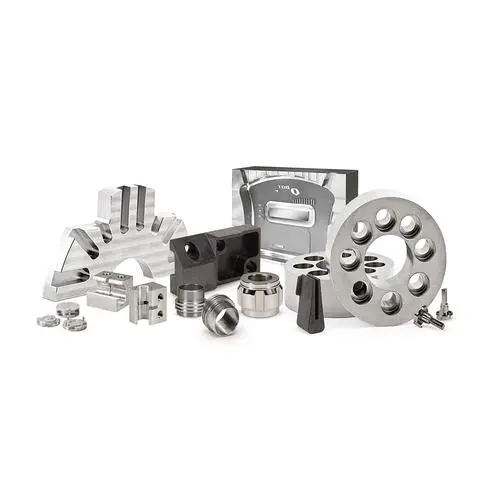
Precision parts processing products have already completed their expected shape and size, often requiring a certain type of surface precision to enable them to perform their functions well. In some cases, it is necessary to improve the physical properties of the surface material in order to resist scratches and abrasions. In many manufacturing processes, dirt, chips, grease, or other harmful substances are left on the surface of products. Precision parts processing consists of a mixture of different materials, and the same material processed in different ways may require some special surface treatment to provide a uniform appearance.
Surface polishing may sometimes become an intermediate processing procedure. For example, cleaning and polishing are usually essential before various electroplating processes. Some cleaning procedures are also used to improve the surface smoothness of mating parts and to remove burrs, which are harmful in future use. Another important reason for surface polishing treatment is anti-corrosion protection in various environments.
The type of protection program mainly depends on the expected exposure, and fully considers material protection and economic factors. In order to meet the above purposes, the main method of surface polishing must be used. The chemical changes of surface mechanics affect the performance of the working face. Various methods are used to clean and protect the application of coatings and organic metals.
In early engineering, matching parts were processed as close as possible to the required size, matching parts were processed to similar sizes, and then processing was completed. Other parts were continuously matched with it until the desired relationship was achieved.
If it is not convenient to match one part with another during processing, the final task is for the fitter to sit on the bench and scrape the matching parts until the ideal fit is achieved. Therefore, as a fitter, it literally means J, and it is obvious that the two parts are still together and M has to be replaced, and must be matched again. In these days, we expect to purchase a replacement for damaged parts, which function normally and do not require scraping or other modification processes.
Precision parts machining is when a part can be used to replace another part of the same size and material specification, and we call these parts interchangeable. Swapping systems can usually reduce production costs, as it is not necessary for an expensive operation, which is beneficial for customers to replace abrasive parts when needed
Analysis of Nine Major Reasons for "Dimensional Instability" of CNC Machining Machine Tools
What is the difference between CNC milling and turning
Related Article

Let us go over the foundations of the electroplating procedure. Electroplating involves several phases, and from pre-treatment to post-treatment there are several really significant ones.
The basic principle of surface treatment of precision parts in CNC machining

Audio panels, electronic cigarette shells, nameplateLOG, watch shells, etc. are among the CNC processing of high surface texture needs components.
CNC machining aluminum alloy parts high-quality surface texture process explained in detail

Metallic finishing, sometimes known as metallic finishing, is the process of using several techniques to change the surface of an object in order to improve appearance and performance, such as corrosion resistance, discoloration resistance, chemical resistance, abrasion resistance, and hardness, modify electrical conductivity, remove burrs, or apply a specific color to a machined part.
Metal CNC finishing surface treatment process and its working principle
