
How to solve the problem of blackening after processing copper materials for precision parts
author: Hansheng Automation
2023-02-20
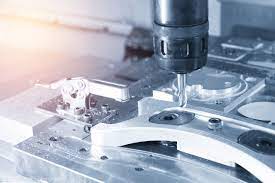
In our daily lives, precision parts are often processed around us, and its existence has brought great convenience to our lives and work. Sometimes, we may find that precision parts turn black after processing copper materials. What exactly is this? How should we solve it. So, how to solve the problem of blackening after processing copper materials for precision parts?
Because copper is an active metal atom, it is prone to chemical reactions when exposed to oxygen in the air. Most metals turn black after oxidation, generating copper oxide. The chemical reaction formula is: 2cu+o2=2cuo.
Many times, it often leads to brass components processed from precision parts being oxidized and blackened before being sent to the customer, resulting in reduced quality, aesthetic impact, and even rework, increasing costs.
At this point, passivation treatment should be carried out by attaching an upper layer of chemical conversion film. As it is a chemical conversion film, it cannot be touched by hand and does not affect conductivity, weldability, workpiece size, and hardness.
The treatment process is as follows: fill a stainless steel container with passivation solution, soak the workpiece to be treated for about 5 minutes, take out the workpiece, rinse it with water, and dry it; It should be noted that before passivation, the workpiece must undergo pre-treatment to prevent oil stains or oxides on the surface of the workpiece. It is necessary to first remove oil or clean for oxidation. Cleaning agents or degreasing agents can be used to remove stains, and then the surface can be cleaned thoroughly for passivation protection.
To increase the brightness of the parts, a polishing agent can also be used to polish the surface before processing. The polishing process does not require any equipment during the entire process and can be directly soaked.
What types of surface finish can CNC machining be divided into
What are the differences between CNC machining and traditional machining
Related Article

Let us go over the foundations of the electroplating procedure. Electroplating involves several phases, and from pre-treatment to post-treatment there are several really significant ones.
The basic principle of surface treatment of precision parts in CNC machining

Audio panels, electronic cigarette shells, nameplateLOG, watch shells, etc. are among the CNC processing of high surface texture needs components.
CNC machining aluminum alloy parts high-quality surface texture process explained in detail

Metallic finishing, sometimes known as metallic finishing, is the process of using several techniques to change the surface of an object in order to improve appearance and performance, such as corrosion resistance, discoloration resistance, chemical resistance, abrasion resistance, and hardness, modify electrical conductivity, remove burrs, or apply a specific color to a machined part.
Metal CNC finishing surface treatment process and its working principle
