
How to reduce the noise during machining of mechanical parts in Dongguan
author: Hansheng Automation
2023-04-24
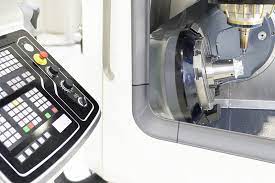
There is inevitably noise during the processing of mechanical parts in Dongguan, which not only interferes with the normal work of relevant personnel, but also constitutes a form of pollution. So, how to reduce the noise during the processing of mechanical parts in Dongguan? Below, the editor will tell everyone!
1. Civilized production:
More than 30% of gear transmission noise is caused by burrs and bumps. Some precision mechanical parts processing factories remove burrs and bumps before gearbox assembly, which is a passive approach.
2. Ensure the accuracy of the tooth blank:
The accuracy of the size of the gear hole is required to be distributed around the middle difference of the deviation value of the hole, set at ± 0.003~± 0.005mm; If it exceeds the tolerance and falls within the design requirements of the hole, it must be classified and transferred to the cutting process separately.
3. Control gear accuracy:
Basic requirements for gear accuracy: After practical verification, the gear accuracy must be controlled within GB10995-887~8 levels, with a linear speed higher than 20m/s for gears, and the tooth pitch limit deviation, gear ring radial runout tolerance, and tooth orientation tolerance must be stable to reach level 7 accuracy.
What are the requirements for superhard abrasive machining of precision parts
Introduction to Dynamic and Static Optimization Design of Spindle Characteristics in CNC Machining
Related Article

Let us go over the foundations of the electroplating procedure. Electroplating involves several phases, and from pre-treatment to post-treatment there are several really significant ones.
The basic principle of surface treatment of precision parts in CNC machining

Audio panels, electronic cigarette shells, nameplateLOG, watch shells, etc. are among the CNC processing of high surface texture needs components.
CNC machining aluminum alloy parts high-quality surface texture process explained in detail

Metallic finishing, sometimes known as metallic finishing, is the process of using several techniques to change the surface of an object in order to improve appearance and performance, such as corrosion resistance, discoloration resistance, chemical resistance, abrasion resistance, and hardness, modify electrical conductivity, remove burrs, or apply a specific color to a machined part.
Metal CNC finishing surface treatment process and its working principle
