
How to observe fault phenomena and analyze their causes in precision machining
author: Hansheng Automation
2023-05-17
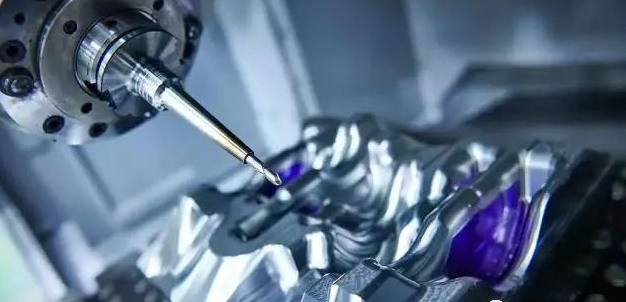
In the process of precision parts processing, there are some obvious malfunctions in the milling machine fixture, such as the inability to guarantee the machining accuracy of the parts, unstable clamping of the parts, damage and severe wear of certain components of the fixture, and the inability of the device and mechanism to achieve operational functions. At this point, it is mainly through detection, observation, and experimental operations to preliminarily determine the main cause of the fault.
Fault cause analysis: If various faults of the milling machine fixture are caused by a single cause, the analysis can be carried out according to general rules. For example, if the part undergoes displacement during the processing, the cause may be a fault in the clamping part; The dimensional accuracy of precision parts processing undergoes regular deviations, which may be caused by a decrease in the accuracy and looseness of the positioning components of the parts; The machining accuracy deviation of the parts is consistent, which may be caused by faults in the tool setting device, etc. If it is caused by multiple reasons, it is necessary to analyze the above single cause before further analyzing the relevant reasons. For example, when a planar milling fixture is found to have a decrease in positional accuracy, it may be due to multiple reasons such as wear on the top of the support limit element and misalignment of the linkage clamping mechanism.
What is the source of milling force in precision machining
What are the process design principles for Dongguan turning and milling composite processing
Related Article

Let us go over the foundations of the electroplating procedure. Electroplating involves several phases, and from pre-treatment to post-treatment there are several really significant ones.
The basic principle of surface treatment of precision parts in CNC machining

Audio panels, electronic cigarette shells, nameplateLOG, watch shells, etc. are among the CNC processing of high surface texture needs components.
CNC machining aluminum alloy parts high-quality surface texture process explained in detail

Metallic finishing, sometimes known as metallic finishing, is the process of using several techniques to change the surface of an object in order to improve appearance and performance, such as corrosion resistance, discoloration resistance, chemical resistance, abrasion resistance, and hardness, modify electrical conductivity, remove burrs, or apply a specific color to a machined part.
Metal CNC finishing surface treatment process and its working principle
