
How much do you know about the working principle of gear reducers?
author: Hansheng Automation
2019-02-25
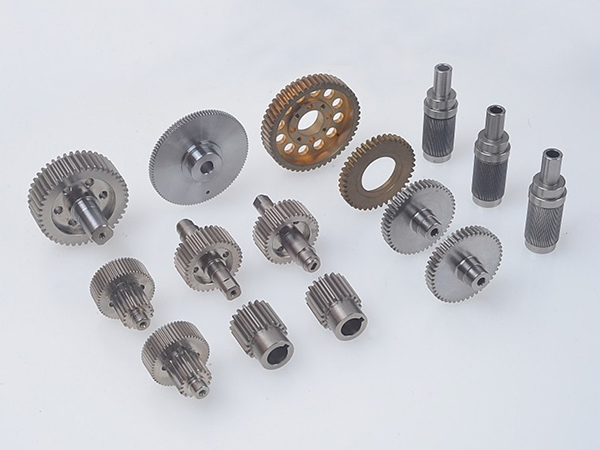
When it comes to gear reducers, I believe many people are familiar with them and often use them. However, according to relevant departments recently, many customers who have purchased gear reducers do not have a good understanding of their working principles and other aspects before starting to use their products, which has led to many mechanical devices being unable to function normally in the later stage. Therefore, precision gear manufacturers will provide a brief introduction to the relevant working principles of gear reducers, Let's get to know each other in detail together!
Gear reducers are a type of machine with high power transmission, which can use the speed converter of gears to reduce the motor to the required number of revolutions, so they are widely used. Nowadays, its traces can be seen in almost all types of mechanical transmission systems. From ships, cars, locomotives in transportation, heavy machinery used in construction, processing machinery used in the mechanical industry, and so on. Its applications range from high-power transmission to small loads and precise angle transmission, and in industrial applications, gear reducers have functions of reducing speed and increasing torque. Therefore, it is widely used in speed and torque conversion equipment. It can effectively reduce speed while increasing output torque. The torque output ratio is multiplied by the motor output by the reduction ratio, while reducing the inertia of the load. The reduction of inertia is the square of the reduction ratio.
Its working mode is generally used for low speed and high torque transmission equipment, where the power of electric motors, internal combustion engines, or other high-speed operation is reduced by meshing the small number of teeth on the input shaft of the gear reducer with the large gear on the output shaft. Ordinary gears also have several pairs of gears with the same principle to achieve the ideal reduction effect, and the ratio of the number of teeth of the large and small gears is the transmission ratio.
To help you understand the requirements and conditions for feed motion in CNC machining centers
How to deal with the wear phenomenon of the gear reducer?
Related Article

Let us go over the foundations of the electroplating procedure. Electroplating involves several phases, and from pre-treatment to post-treatment there are several really significant ones.
The basic principle of surface treatment of precision parts in CNC machining

Audio panels, electronic cigarette shells, nameplateLOG, watch shells, etc. are among the CNC processing of high surface texture needs components.
CNC machining aluminum alloy parts high-quality surface texture process explained in detail

Metallic finishing, sometimes known as metallic finishing, is the process of using several techniques to change the surface of an object in order to improve appearance and performance, such as corrosion resistance, discoloration resistance, chemical resistance, abrasion resistance, and hardness, modify electrical conductivity, remove burrs, or apply a specific color to a machined part.
Metal CNC finishing surface treatment process and its working principle
