
High speed cutting in precision parts machining
author: Hansheng Automation
2023-05-26
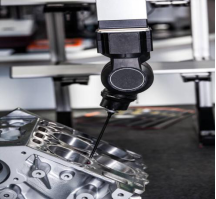
High speed cutting (HSM or HSC) in precision parts processing usually refers to end milling at high spindle speeds and high feed speeds. It is an advanced machining technology that quickly entered practical application in the 1990s and has been widely used in aerospace manufacturing, mold processing, automotive parts processing, and precision parts processing.
High speed milling technology in precision parts processing can be used not only for easy cutting metals such as aluminum alloys and copper, but also for difficult to machine materials such as quenched steel, titanium alloys, high-temperature alloys, and non-metallic materials such as carbon fiber plastics. For example, in the processing of aircraft parts such as aluminum alloys, there are many curved surfaces and complex structures, with material removal rates of up to 90% to 95%. The use of high-speed milling can greatly improve production efficiency and machining accuracy. In mold processing, high-speed milling can process steel parts with quenching hardness greater than HRC50. Therefore, in many cases, electric discharge machining and manual grinding can be omitted. After heat treatment, high-speed milling can be used to meet the requirements of part size, shape, and surface roughness.
What are the components of the frequency converter? Components and functions of frequency converters
What are the issues related to precision parts processing, machining accuracy, and surface quality
Related Article

Let us go over the foundations of the electroplating procedure. Electroplating involves several phases, and from pre-treatment to post-treatment there are several really significant ones.
The basic principle of surface treatment of precision parts in CNC machining

Audio panels, electronic cigarette shells, nameplateLOG, watch shells, etc. are among the CNC processing of high surface texture needs components.
CNC machining aluminum alloy parts high-quality surface texture process explained in detail

Metallic finishing, sometimes known as metallic finishing, is the process of using several techniques to change the surface of an object in order to improve appearance and performance, such as corrosion resistance, discoloration resistance, chemical resistance, abrasion resistance, and hardness, modify electrical conductivity, remove burrs, or apply a specific color to a machined part.
Metal CNC finishing surface treatment process and its working principle
