
Four Advantages of Dongguan Turning and Milling Composite Processing
author: Hansheng Automation
2023-05-16
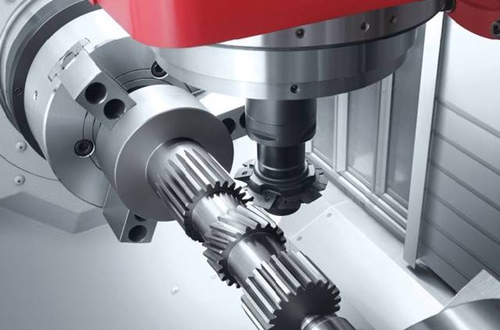
Dongguan turning and milling composite machining can achieve the machining of all or most typical aviation parts through one clamping, providing a new approach for precision machining of complex aviation parts. Its application advantages are mainly reflected in the following aspects
(1) Significantly reduce the number of card loading times, improve processing efficiency, and eliminate errors caused by changes in machine tools and card loading methods.
(2) More concentrated processes can significantly shorten the processing process chain, reduce waiting time and machine non working time.
(3) The machining process of turning, milling, drilling and other processing methods can be achieved without changing the positioning status, reducing the number of fixtures and ensuring consistency in dimensional accuracy.
(4) At present, most turn-milling composite machining has online measurement function, which can measure the machining results in situ during and between processes, achieving the accuracy control of the entire machining process. It can be seen that these advantages of turning and milling composite processing equipment can effectively compensate for the shortcomings of the current complex aerospace parts manufacturing process, and can significantly improve the accuracy and efficiency of Dongguan turning and milling composite processing of products.
What are the application prospects and development trends of Dongguan turning and milling composite processing technology
How to design fixtures and positioning components in precision parts processing
Related Article

Let us go over the foundations of the electroplating procedure. Electroplating involves several phases, and from pre-treatment to post-treatment there are several really significant ones.
The basic principle of surface treatment of precision parts in CNC machining

Audio panels, electronic cigarette shells, nameplateLOG, watch shells, etc. are among the CNC processing of high surface texture needs components.
CNC machining aluminum alloy parts high-quality surface texture process explained in detail

Metallic finishing, sometimes known as metallic finishing, is the process of using several techniques to change the surface of an object in order to improve appearance and performance, such as corrosion resistance, discoloration resistance, chemical resistance, abrasion resistance, and hardness, modify electrical conductivity, remove burrs, or apply a specific color to a machined part.
Metal CNC finishing surface treatment process and its working principle
