
Discussion on the Application Industry of High Precision Mechanical Parts
author: Hansheng Automation
2023-05-16
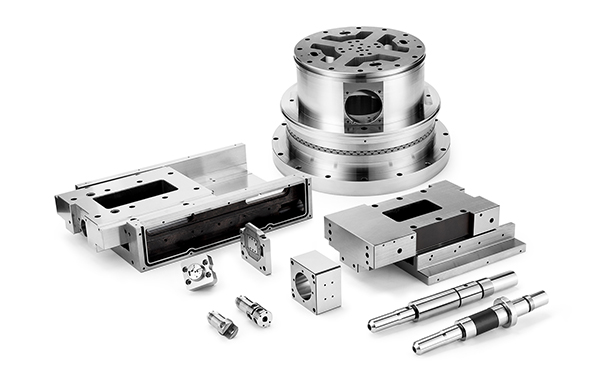
High precision mechanical parts are applied in various industries such as testing equipment and scientific instruments, and are also widely used in civil fields such as medical, aerospace, and electronics. The processing of precision mechanical parts has the advantages of high precision, low energy consumption, flexible production, and high efficiency.
With the advancement of CNC machine tool technology, composite processing technology is becoming increasingly mature, including milling turning composite, turning milling composite, turning boring drilling gear processing, turning grinding composite, forming composite processing, special composite processing, etc., greatly improving the efficiency of precision mechanical processing.
Hansheng Automation Precision Technology Co., Ltd., with years of professional knowledge and unique manufacturing breadth and production depth, provides customers with a wide range of precision machining technology support, precision machining various types of copper, iron, aluminum, stainless steel, plastic and other parts of different materials. Its products are suitable for supporting various electrical appliances, automobiles, instruments, vacuum equipment and other projects.
What are the common faults of milling machine fixtures in precision parts processing
What is profile cutting and its model making in precision parts machining
Related Article

Let us go over the foundations of the electroplating procedure. Electroplating involves several phases, and from pre-treatment to post-treatment there are several really significant ones.
The basic principle of surface treatment of precision parts in CNC machining

Audio panels, electronic cigarette shells, nameplateLOG, watch shells, etc. are among the CNC processing of high surface texture needs components.
CNC machining aluminum alloy parts high-quality surface texture process explained in detail

Metallic finishing, sometimes known as metallic finishing, is the process of using several techniques to change the surface of an object in order to improve appearance and performance, such as corrosion resistance, discoloration resistance, chemical resistance, abrasion resistance, and hardness, modify electrical conductivity, remove burrs, or apply a specific color to a machined part.
Metal CNC finishing surface treatment process and its working principle
