
Development Trend of Precision Parts Processing
author: Hansheng Automation
2023-05-20
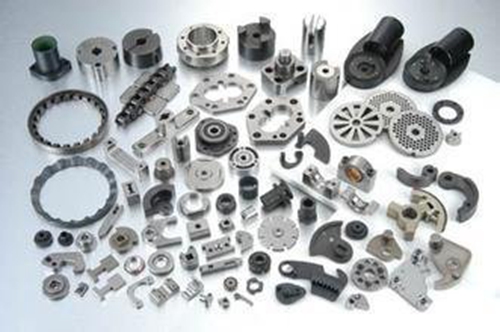
What is the future development trend of precision parts processing? "Single variety, large batch" has become a new feature of many Fortune 500 enterprises' production methods, and at the same time, the production method led by producers is gradually shifting towards customized production method led by consumers. Personalization of services has become an important factor in the success or failure of competition. Below, Hansheng Automation will briefly introduce to you the future development trend of precision parts processing.
Firstly, the globalization of precision parts manufacturing has undergone new changes
There are two traditional ways of globalization: one is to use the home country as the production base and sell products to other countries. The second is to invest and establish production and manufacturing bases overseas, manufacture products abroad, and sell them to the host country or other countries. Its characteristic is that it has its own manufacturing facilities and technology, and the products are completely manufactured by itself. In terms of resource utilization, it is limited to utilizing raw materials, personnel, or funds from the host country.
With the information technological revolution, the fundamental changes in management ideas and methods, and the changes in enterprise organizational forms, these changes have occurred in multinational companies, and will become a new way of globalization. The main feature of this change is the widespread utilization of production facilities and technological capabilities from other countries. Produce the final product and sell it globally without having ownership of production facilities and manufacturing technology. Machinery manufacturing companies establish a global processing network for components and are responsible for the final assembly and marketing of their own products. The globalization of raw material allocation and component procurement has become a development trend in the world machinery manufacturing industry.
Secondly, the intensification of cross-border mergers and acquisitions in the precision parts processing industry
Modern mergers and acquisitions no longer blindly emphasize competition, but are the main means for strong alliances to establish enterprises and gain competitive advantages. At this time, it is a major characteristic of large companies seeking survival and development in the process of globalization in the mechanical manufacturing industry. And the market is becoming saturated. The increasingly fierce market competition. The increased risk of investing in factory construction has also led to more companies adopting joint mergers and acquisitions. Under the premise of building a factory, optimize the product structure of the enterprise to improve production capacity, expand market share, and obtain economies of scale. The threat of technological innovation in industries with high-tech connotations has led multinational corporations to embark on a path of integration to form strong technological innovation capabilities. The strategic mergers and acquisitions between major enterprises in the mechanical manufacturing industry have led to the reallocation of resources in the mechanical industry. This has led to a collaborative situation in the competitive landscape of the world machinery industry.
The working principle of wire cutting machining
What is slow wire processing
Related Article

Let us go over the foundations of the electroplating procedure. Electroplating involves several phases, and from pre-treatment to post-treatment there are several really significant ones.
The basic principle of surface treatment of precision parts in CNC machining

Audio panels, electronic cigarette shells, nameplateLOG, watch shells, etc. are among the CNC processing of high surface texture needs components.
CNC machining aluminum alloy parts high-quality surface texture process explained in detail

Metallic finishing, sometimes known as metallic finishing, is the process of using several techniques to change the surface of an object in order to improve appearance and performance, such as corrosion resistance, discoloration resistance, chemical resistance, abrasion resistance, and hardness, modify electrical conductivity, remove burrs, or apply a specific color to a machined part.
Metal CNC finishing surface treatment process and its working principle
