
Common measuring tools for machining precision parts
author: Hansheng Automation
2023-05-10
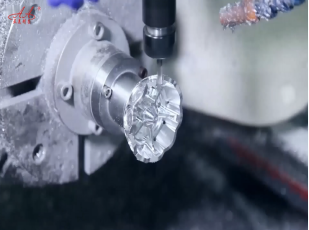
Measuring tools in precision parts processing are tools used to measure the dimensions, angles, radians, etc. of workpieces during the machining process or during inspection after machining is completed. There are many types of measuring tools, commonly used including vernier calipers, spiral micrometers, universal angle rulers, needle gauges, lever dial indicators, gauges, feeler gauges, and coordinate measuring instruments.
The vernier caliper is the most commonly used measuring tool in precision parts processing, which can measure the length, inner and outer diameters, and depth of the workpiece. The vernier caliper consists of two parts: a main ruler and a sliding vernier attached to the main ruler. There is a pair of movable measuring claws on the main ruler and vernier, which measure the inner and outer diameters respectively. The measuring rod at the tail can measure the depth. When reading, take the sum of the readings on the main ruler and the readings on the vernier, with a minimum accuracy of 0.02 millimeters.
Methods for Preventing Deformed Workpieces from Deformation in Precision Parts Processing
What are the common quantities used in mechanical processing at Dongguan CNC Precision Processing Factory
Related Article

Let us go over the foundations of the electroplating procedure. Electroplating involves several phases, and from pre-treatment to post-treatment there are several really significant ones.
The basic principle of surface treatment of precision parts in CNC machining

Audio panels, electronic cigarette shells, nameplateLOG, watch shells, etc. are among the CNC processing of high surface texture needs components.
CNC machining aluminum alloy parts high-quality surface texture process explained in detail

Metallic finishing, sometimes known as metallic finishing, is the process of using several techniques to change the surface of an object in order to improve appearance and performance, such as corrosion resistance, discoloration resistance, chemical resistance, abrasion resistance, and hardness, modify electrical conductivity, remove burrs, or apply a specific color to a machined part.
Metal CNC finishing surface treatment process and its working principle
