
Classification of CNC Machine Tool Faults in Precision Parts Processing
author: Hansheng Automation
2023-05-11
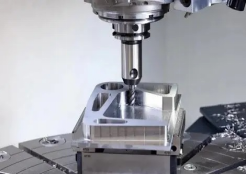
The components of CNC machine tools that malfunction in precision parts processing are classified as (1) common host faults: mechanical transmission faults caused by improper mechanical installation, debugging, and operation, or faults caused by excessive friction in guide rail movement. The main failure phenomena of hydraulic, lubrication, and pneumatic systems are pipeline blockage and poor sealing. (2) Electrical faults are divided into weak current faults and strong current faults. The weak current part mainly refers to electronic circuits such as CNC devices, PLC controllers, CRT displays, servo units, input and output devices, which can be divided into hardware faults and software faults.
Hardware failures in precision parts processing mainly refer to the failures of integrated circuit chips, discrete components, connectors, and external connection components on the printed circuit boards of the aforementioned devices. Common software failures include: errors in processing programs, changes or losses in system programs and parameters, and errors in computer calculations. Strong current components refer to electrical components such as circuit breakers, contactors, relays, switches, fuses, power transformers, motors, electromagnets, travel switches, and their circuits. These faults are particularly common and must be given sufficient attention.
Machine Clamping Indexable Blades in Precision Parts Processing
Networking of CNC Equipment in Precision Parts Processing
Related Article

Let us go over the foundations of the electroplating procedure. Electroplating involves several phases, and from pre-treatment to post-treatment there are several really significant ones.
The basic principle of surface treatment of precision parts in CNC machining

Audio panels, electronic cigarette shells, nameplateLOG, watch shells, etc. are among the CNC processing of high surface texture needs components.
CNC machining aluminum alloy parts high-quality surface texture process explained in detail

Metallic finishing, sometimes known as metallic finishing, is the process of using several techniques to change the surface of an object in order to improve appearance and performance, such as corrosion resistance, discoloration resistance, chemical resistance, abrasion resistance, and hardness, modify electrical conductivity, remove burrs, or apply a specific color to a machined part.
Metal CNC finishing surface treatment process and its working principle
