
Be careful with dry weather and dry materials. Laser cutting machine and water cooling machine
author: Hansheng Automation
2023-05-10
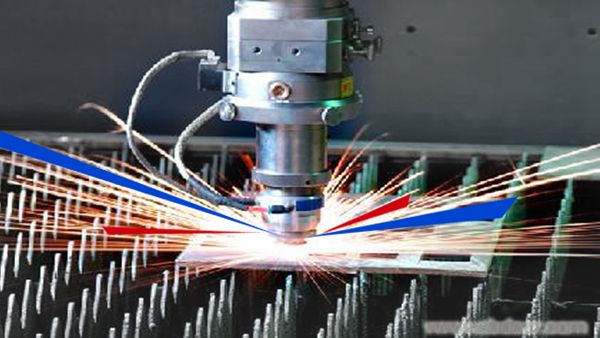
In the hot summer, laser cutting machines need to pay attention to safety at all times when working in this high-temperature environment, especially chillers. Because the water cooler is the core of controlling the temperature of the laser cutting machine, if there is any carelessness, it is easy to cause the temperature to be too high and burn out the laser. So, I would like to remind everyone of the precautions that need to be taken for water chillers.
1. Compressor overload warning light alarm. Poor heat dissipation can cause the condenser condensation temperature and corresponding condensation pressure to be too high, causing the high-pressure part of the pressure controller to operate and the compressor to overload protection. Stopping the compressor can affect the normal use of customers. The chiller should be placed in a location with good ventilation and heat dissipation.
2. The pressure gauge is abnormal. During normal operation of the chiller, the high-pressure pressure should not exceed 2.0MPA. If this pressure is exceeded, it indicates poor heat dissipation of the condenser. The solution is to use high-pressure gas to clean the dust on the condenser fins, and equipment without a pressure gauge should regularly clean the condenser fins; The low-pressure pressure should not be less than 0.2MPA. If it is lower than this pressure, it indicates that there is fluorine leakage in the condenser or dirty blockage in the throttling area.
3. The cooling effect decreases. If the water tank is not cleaned for a long time, the evaporator inside the water tank may produce microorganisms, which can lead to poor cold and heat exchange and affect the cooling effect. Please regularly clean the water tank and frequently change the water. Generally, clean the pure water once a month, and also clean the water tank (using detergent) at the same time to ensure that the water quality of the chiller is clean.
4. Water pressure alarm. When the water pressure is around 0.3MPA, it is normal, and abnormal conditions will cause flow alarm output. To avoid abnormal flow rate of the chiller, please regularly check the filter element and the internal filter of the water tank for dirt and blockage.
Solution to failure of water chiller without cooling:
I The chiller does not cool: observe if there is an overload display of the compressor on the chiller control panel.
1. Display: There are generally three types of compressor overload: high voltage overload, low voltage overload, and current overload.
① By using the reset button of the pressure controller to cancel the compressor overload display, it can be determined as high voltage overload.
There are several reasons for high voltage overload: the fan does not rotate, the solenoid valve cannot be opened, the equipment is not ventilated, the heat dissipation is poor, and the condenser is dirty and blocked.
Troubleshooting: Place the chiller in a well ventilated and heat dissipating location, blow the dust on the condenser fins with about 1MPA of atmospheric pressure, and then observe whether the high-pressure pressure after the compressor is working is lower than 2MPA. If the fan does not rotate and the solenoid valve is stuck, it is a problem with accessories. Replace it once.
② Observing the pressure gauge, if the high and low pressure are below 0.2MPA, it can be determined as low pressure overload.
In this case, the fluorine system of the equipment must have leaked fluorine.
Troubleshooting: Press the equipment to check for leaks. Once the leaks are found, make up for them. Evacuate, pressurize the engine oil, add fluorine, and add fluorine according to the weight marked on the nameplate. Professional personnel can add fluorine according to the pressure.
③ By using the thermal overload reset button to cancel the compressor overload display, it can be determined as current overload.
Fault cause: Current overload refers to the compressor current exceeding the rated current, and overload protection is provided. In general, current overload can only occur when the compressor is out of phase and the ambient temperature is too high.
Troubleshooting: improve the working environment and check the cause of compressor phase loss. First, check whether the three-phase resistance of the compressor is normal (three-phase balance, resistance of about 5 Ω is normal). If it is not normal, the compressor is broken. Then check whether the compressor wire has poor contact and whether the AC contactor has phase loss.
2. Do not display: If the compressor overload is not displayed, observe whether the compressor is working.
① Work: Observe the working pressure. When the compressor is working, the high and low pressure are close to equilibrium. If the fan blows cold or slightly hot air, it can be determined that the solenoid valve is stuck or the compressor is broken; Observing that the high pressure is normal and the low pressure is low, it can be determined that the expansion valve is too small, dirty, blocked, damaged, and the evaporator surface is dirty, resulting in low conversion efficiency.
② Not working: Check all electrical components controlling the AC contactor of the compressor, and check if the output is normal. For example, the AC contactor of the 7HP equipment compressor has a normally open point output to the delay relay 1, which is normally open to the AC contactor of the compressor, and an AC contactor output to the compressor. If any electrical component output is abnormal, it can be determined that the electrical component is damaged.
3. After a few seconds of display, it will automatically reset. This fault is usually caused by the expansion valve being adjusted too small or the expansion valve malfunctioning.
Troubleshooting: Adjust the expansion valve to its maximum position (clockwise adjustment to decrease, counterclockwise adjustment to increase) to see if this fault will still occur. If this fault is eliminated, then observe the low-pressure operating pressure to see if it is normal. Sometimes the pressure may be too high, and if the pressure is too high, then adjust the expansion valve to decrease; If there is no response when adjusting the expansion valve, it indicates that the expansion valve is damaged. Just replace it.
2、 There is no display after the device is powered on
Firstly, observe the working indicator light of the phase sequence relay. If only one light is on, it indicates that the three-phase electrical connection is reversed. Replace any two phases at the power supply. If two lights are on and the controller is still not working, check if the normally open point of the phase sequence has power. If there is no power, it indicates that the phase sequence is broken and needs to be replaced; If there is power, check if there is power at the controller power supply. If the controller is not working, it indicates that the controller is broken. If there is no power, check if there is a problem with the power cord from the phase sequence normally open point to the controller power supply. If there is a problem, replace the power cord.
3、 Flow alarm
The flow alarm is when the flow is insufficient and the flow switch is activated.
There are generally three types of fault causes: 1. The external resistance is too high, the return water flow rate is small, and the alarm setting value is too high. This fault can be solved by adjusting the flow switch; 2. There is air inside the water pump. Troubleshooting: In the event of a power outage, unscrew the drain screw and tighten it again after water overflows. 3. The filter element and the internal filter of the water tank are dirty and blocked. Troubleshooting: replace the filter element and clean the water filter.
4、 Water level alarm
Water level alarm is a type of alarm that occurs when the water level in the water tank is insufficient. When a water level alarm occurs, first observe whether the water in the water tank exceeds the water level switch. If not, top up the water. If the water level exceeds the water level switch and the alarm is triggered, check whether the float of the water level is stuck and move it a few times. If the alarm is triggered again, it means that the water level switch or controller is faulty.
5、 Over temperature alarm
An over temperature alarm occurs, usually when the current temperature is above the upper limit or below the lower limit of the alarm value. After an alarm occurs, first check whether the water temperature in the water tank is consistent with the temperature displayed by the temperature controller. If it is not consistent, it means that the controller or temperature control probe is faulty and needs to be replaced. If it is consistent, then it is necessary to observe whether it is an ultra-high temperature alarm or an ultra-low temperature alarm. The ultra-high temperature alarm should be handled step by step according to the first troubleshooting method of the chiller not cooling. The ultra-low temperature alarm should check the refrigeration condition of the compressor to see if there is something that needs to be disconnected that has not been disconnected. The factory setting for the ultra-low temperature alarm set by the controller is 4 degrees, the ultra-high temperature is 35 degrees, and the ambient temperature is above 35 degrees or below 4 degrees, An over temperature alarm will also appear.
The influence of water quality on cutting fluid during metal processing
Key points of lean production in machining
Related Article

Let us go over the foundations of the electroplating procedure. Electroplating involves several phases, and from pre-treatment to post-treatment there are several really significant ones.
The basic principle of surface treatment of precision parts in CNC machining

Audio panels, electronic cigarette shells, nameplateLOG, watch shells, etc. are among the CNC processing of high surface texture needs components.
CNC machining aluminum alloy parts high-quality surface texture process explained in detail

Metallic finishing, sometimes known as metallic finishing, is the process of using several techniques to change the surface of an object in order to improve appearance and performance, such as corrosion resistance, discoloration resistance, chemical resistance, abrasion resistance, and hardness, modify electrical conductivity, remove burrs, or apply a specific color to a machined part.
Metal CNC finishing surface treatment process and its working principle
