
Analysis of Common Fixture Classification in Machining Plants
author: Hansheng Automation
2022-06-14
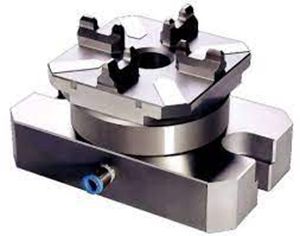
In machining, a fixture is a device used to fix the workpiece to be processed. Fixtures can generally be divided into two types: universal fixtures and specialized fixtures. In addition, types of fixtures such as universal adjustable fixtures, group fixtures, and combination fixtures have also been developed. Below, let the editor of the machining factory introduce them to everyone.
1. Universal fixture: refers to a tool that has been standardized and can be used to clamp different workpieces without special adjustment, such as a three jaw chuck, four jaw chuck, tip, indexing head, flat pliers, and electromagnetic suction cup. Universal fixtures have lower prices and a wide range of applications, but their production efficiency is not as good as specialized fixtures. Therefore, it is generally only applicable to single piece small batch production.
2. Special fixture: refers to a fixture specially designed and manufactured for the processing of a certain part, which can ensure processing accuracy and improve production efficiency, but the fixture requires a certain investment. So it is mainly used in batch and mass production.
3. Universal adjustable fixtures and group fixtures: By adjusting or replacing individual components, multiple workpieces with similar shapes, sizes, and processing techniques can be processed. Under the current conditions of small batch production with multiple varieties, the advantages of these two types of fixtures are even more demonstrated.
4. Combination fixture: A fixture composed of pre prepared universal standard components and components. After use, this type of fixture can be disassembled, replaced with components and assembled into a new fixture for reuse.
What are the nine major errors in machining
How to handle the error measures in precision parts processing
Related Article

Let us go over the foundations of the electroplating procedure. Electroplating involves several phases, and from pre-treatment to post-treatment there are several really significant ones.
The basic principle of surface treatment of precision parts in CNC machining

Audio panels, electronic cigarette shells, nameplateLOG, watch shells, etc. are among the CNC processing of high surface texture needs components.
CNC machining aluminum alloy parts high-quality surface texture process explained in detail

Metallic finishing, sometimes known as metallic finishing, is the process of using several techniques to change the surface of an object in order to improve appearance and performance, such as corrosion resistance, discoloration resistance, chemical resistance, abrasion resistance, and hardness, modify electrical conductivity, remove burrs, or apply a specific color to a machined part.
Metal CNC finishing surface treatment process and its working principle
