
A comprehensive guide to gasket types
What is Gasket?
A gasket is a common mechanical component that is used to secure and connect different components in various industries, including household appliances and building structures. Usually, it consists of a circular metal or plastic ring with a hole in the middle that can be placed around a bolt or screw. Moreover, it can prevent parts from loosening and improve the overall stability and reliability of the system.
Gaskets are important in fastening systems because they help distribute the load evenly, prevent damage to the mating surface, and maintain the tension needed in the connection. In addition, gaskets are available in a variety of materials, sizes, and shapes to suit different applications and requirements
Type of washer
Different industries and applications have different requirements, which has driven the development of various types of gaskets. Here are some common types:
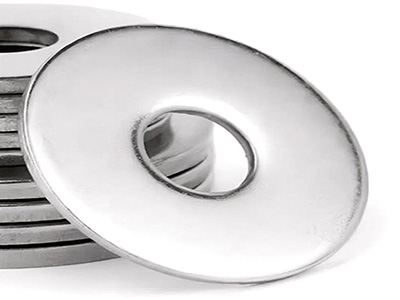
The flat washer has a flat, rounded shape with a center hole. This is the most common type of washer and is used to increase the contact area between the bolt head and the connecting part. In addition, it helps prevent surface damage and ensures a secure fit.
Flat washers:
Flat washers represent a simpler and more basic type. Similar to a flat washer, it has a flat round shape with a hole in the center. However, flat washers lack the special features or coatings found in flat washers.
Lock the washer
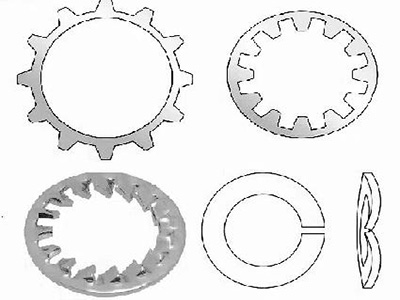
Lock washers are typically split type, coiled, or star designs to create friction. It maintains the tightness of the connection in high-vibration environments. In addition, there are various types such as internal lock washers, external lock washers, and split lock washers.
Fender washers
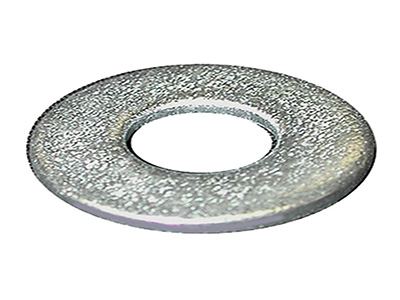
It is also known as a finishing washer or penny washer and has a larger diameter than a standard flat washer. Typically, it works to distribute the load over a larger area and is often used in applications where the material is soft or thinner.
Tapered washers
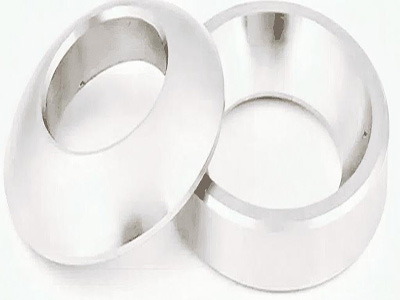
Also known as a disc washer or spring washer, it has a conical or disc shape that provides spring-like action. In addition, it helps to maintain tension and compensate for thermal expansion or compression.
Countersunk washers
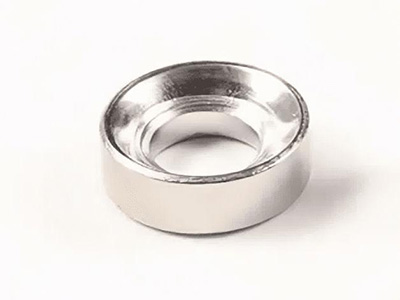
The outer diameter of the washer is smaller than the inner diameter, forming a tapered countersink shape. As a result, it allows the bolt head or nut to sit flush with or below the surface of the joining material, minimizing protrusion height.
Insulating washers
Insulating washers, also known as shoulder washers, provide electrical isolation between two connected elements, preventing short circuits.
Wave spring washer
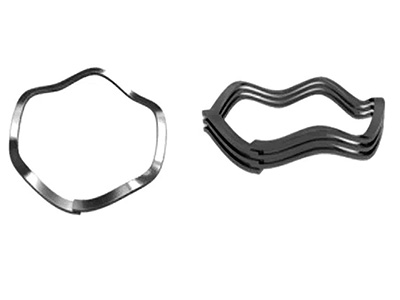
This washer has a wavy, undulating shape that allows it to act as a spring, absorbing shocks and vibrations.
Spherical washers
Spherical washers have a curved spherical surface that accommodates angular misalignment between bolts and surfaces.
Square washers
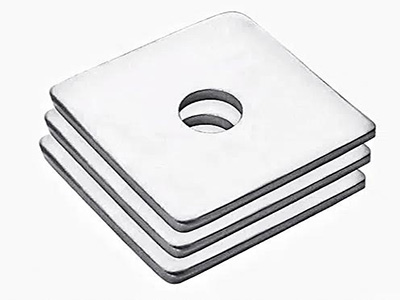
As the name suggests, square washers are square in shape rather than the typical round design. In addition, it allows for better torque distribution due to the larger surface area.
Gaskets
It is made of gasket or sealant material to form a tight, leak-proof connection.
What is Fit Tolerance? How is it Related to Tolerance?
CNC machining of fuel cell metal bipolar plates
Related Article


