
Analysis of the gap between domestic five axis machining centers and imported five axis machining centers by the five axis machining center factory
author: Hansheng Automation
2023-05-01
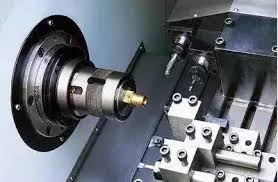
What are the differences between domestically produced five axis machining centers and imported five axis machining centers? Although domestically produced five axes are much cheaper than imported five axes, why do most customers buy imported five axes instead of domestically produced five axes? Below, I will mainly elaborate on the gap between domestically produced five axles and imported five axles from three aspects.
1. The gap in history
Five axes were widely used abroad as early as the last century, especially in the heavy industry. Major foreign brands such as BACCI, MULTIAX, CMS, DMG, etc. have a production history of over 60 years and mature production technology experience. Due to the blockade of China's five axis production technology by Western European countries, China's five axis production has only recently started research and development this year, and is currently in the research and development stage. Even some large processing center production enterprises in China have problems with their production of five axes.
2. Equipment performance and safety
No matter in which industry, or even in military enterprises, the five axis machining center has a crucial low position. Why can't China produce some high-end aircraft and warship engines, impellers, etc. from abroad? That's because there is no advanced manufacturing equipment in China. The advantages of foreign five axis machining centers are mainly manifested in high machining accuracy and efficiency, which can process both large and small workpieces.
Imported five axis equipment has high safety, such as BACCI five axis, which is equipped with PITAGORA software. This software can check programming and simulate actual machining, thereby ensuring the safe operation of the equipment.
3. Equipment post maintenance
Many people mistakenly believe that purchasing an imported five axis machining center would make maintenance more difficult in the later stage, but in fact, this is not the case. The safety performance of imported five axis equipment is much higher than that of domestically produced ones. Domestic five axis machines are prone to damage and require frequent maintenance in the later stages. The imported five axis not only has a high level of safety, but also has mature foreign technology and is able to handle problems with ease.
Therefore, if the same issue is handled simultaneously by domestic and foreign technicians, then foreign technicians must complete the repair service first! Foreign five axis systems are now open to China and are equipped with after-sales engineers in China. Therefore, I believe we can purchase imported five axles with confidence.
Five axis linkage CNC machine tools are key processing equipment urgently needed by civil and military industries such as power generation, shipbuilding, aerospace, molds, and high-precision instruments. Currently, China is in the research and development stage. It is estimated that there is still a gap of 10 years between the domestic five axis and the imported five axis. It is only after 10 more years of research and development that we can catch up with the current level of imported five axis machining centers.
What are the commonly used equipment for precision parts processing
How should precision mechanical parts be inspected during processing
Related Article

Let us go over the foundations of the electroplating procedure. Electroplating involves several phases, and from pre-treatment to post-treatment there are several really significant ones.
The basic principle of surface treatment of precision parts in CNC machining

Audio panels, electronic cigarette shells, nameplateLOG, watch shells, etc. are among the CNC processing of high surface texture needs components.
CNC machining aluminum alloy parts high-quality surface texture process explained in detail

Metallic finishing, sometimes known as metallic finishing, is the process of using several techniques to change the surface of an object in order to improve appearance and performance, such as corrosion resistance, discoloration resistance, chemical resistance, abrasion resistance, and hardness, modify electrical conductivity, remove burrs, or apply a specific color to a machined part.
Metal CNC finishing surface treatment process and its working principle
