
What are the issues related to precision parts processing, machining accuracy, and surface quality
author: Hansheng Automation
2023-05-26
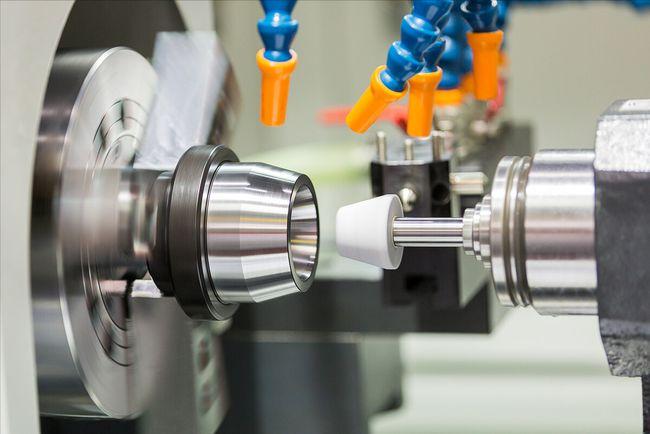
The performance and service life of precision parts processing are directly related to the processing quality and assembly accuracy of product components. The processing quality of parts is the foundation of the entire product quality, and the processing quality of parts includes two aspects: processing accuracy and surface quality.
1. Processing accuracy: The so-called processing accuracy refers to the degree to which the geometric parameters (size, geometric shape, and mutual position) of the processed part conform to the ideal geometric parameters of the part, and the degree of deviation between them is the processing error. The size of machining error reflects the level of machining accuracy, which includes the following three aspects.
(1) Dimensional accuracy limits the dimensional error between the machining surface and its reference plane to a certain range.
(2) Geometric shape accuracy limits the macroscopic geometric shape errors of the machined surface, such as roundness, cylindricity, flatness, and straightness.
(3) Mutual positional accuracy limits the mutual positional errors between the machined surface and its reference, such as parallelism, verticality, coaxiality, and position.
2. Surface quality: The surface quality of precision parts processing includes the following two aspects.
(1) Surface roughness. Refers to the micro geometric shape error on the surface of a part.
(2) Surface waviness. Refers to the periodic geometric shape error on the surface of a part.
3. Physical and mechanical properties of the surface layer
(1) Cold work hardening refers to the phenomenon where the surface layer hardness increases due to plastic deformation during processing.
(2) Residual stress. The internal stress generated by the surface layer due to strong plastic deformation and possible changes in metallographic structure caused by mechanical processing. According to the nature of stress, it is divided into tensile stress and compressive stress.
(3) Surface layer metallographic structure changes. The change in metallographic structure of the surface layer caused by cutting heat during machining.
Therefore, there is a certain relationship between machining accuracy and surface quality. If the roughness is too poor, high-precision tolerances cannot be measured at all. Even if a high degree of accuracy is achieved, it cannot be used due to poor roughness.
High speed cutting in precision parts machining
What are the relationship issues between precision parts processing errors and accuracy
Related Article

Let us go over the foundations of the electroplating procedure. Electroplating involves several phases, and from pre-treatment to post-treatment there are several really significant ones.
The basic principle of surface treatment of precision parts in CNC machining

Audio panels, electronic cigarette shells, nameplateLOG, watch shells, etc. are among the CNC processing of high surface texture needs components.
CNC machining aluminum alloy parts high-quality surface texture process explained in detail

Metallic finishing, sometimes known as metallic finishing, is the process of using several techniques to change the surface of an object in order to improve appearance and performance, such as corrosion resistance, discoloration resistance, chemical resistance, abrasion resistance, and hardness, modify electrical conductivity, remove burrs, or apply a specific color to a machined part.
Metal CNC finishing surface treatment process and its working principle
