
Leading enterprise ABB is taking action again, and industrial robots are never stopping their expansion path
author: Hansheng Automation
2023-05-19
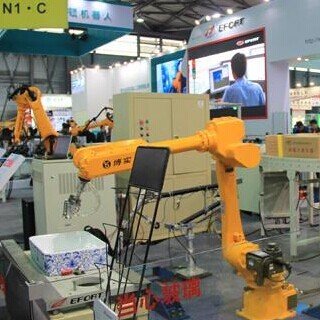
ABB Expands US Factory
Swiss industrial robotics giant ABB announced today that its customers in the automotive, packaging, and machinery industries are moving their production lines back to the United States to meet the demand stimulated by the Biden government's large-scale industrial stimulus plan, facing a tight labor market. The company will spend $20 million to expand its existing North American robotics headquarters and manufacturing plant in Auburn Mountain, Michigan, To increase the production capacity of its Auburn Mountain, Michigan factory. The project is expected to be completed in November 2023, and the expansion will create 72 highly skilled new jobs in the region, supported by a $450000 Michigan Business Development Program performance-based grant. This will be another heavy expansion project after the outbreak of COVID-19 in 2020. Since 2010, ABB has invested $14 billion in the United States, and the latest investment in its robot headquarters and factories will benefit customers in the Americas, especially in growth areas such as electric vehicles, healthcare, packaging, and logistics. According to a survey conducted by ABB Robotics in the United States and Europe in June, with the expansion of factory capacity, it has responded to the growing demand for automation by 70% of American companies.
ABB is accelerating its development globally
This is not the first time ABB has made significant investments in important markets. Last December, ABB invested $500 million to establish a giant factory in China, which has the world's largest market for industrial robots, further enhancing its leading position in the field of robotics and automation in China. Just over three months later, ABB once again invested in expanding its factory in the United States, which ranks third in the industrial robot market. Our investment is an important step in accelerating ABB Robotics' global leadership in developing and manufacturing cutting-edge robot solutions in the United States and the Americas, "said Sami Atiya, President of ABB Robotics and Automation. After experiencing the most severe impacts of industries such as COVID, semiconductor shortages, and the Ukrainian war, companies are hoping to become more resilient. With global labor shortages, uncertainty, the proximity and return of production, and the desire for more sustainable operations accelerating, more and more companies are turning to automation to establish resilience while improving efficiency and flexibility. Our expanded facilities will help us better serve the United States and Customers across the Americas provide services that enable them to access innovative automation solutions
The Impact of Industrial Robot Development on China
The 2023 Report on the Work of the Government also points out that the GDP will grow by 3% in 2022, and the GDP target for the next year will be 5%. Throughout the world, few countries have been able to maintain growth during the three years of the pandemic. The stagnation of manufacturing caused by the pandemic has affected the development of many countries' physical industries, and some countries that rely on manufacturing have experienced significant negative economic growth. But these negative factors have not had a fatal impact on China, which ranks first in the manufacturing industry. In addition to benefiting from excellent epidemic prevention and control measures, a large number of intelligent industries such as industrial robots have also played a crucial role in assisting.
According to research by the International Robotics Association (IFR), China and Japan, the two largest robot markets, will grow at a rate of around 8%. ABB expects global robot sales to increase from the current $80 billion to $130 billion by 2025. China is the world's largest robot market. As early as 2021, China's robot installation accounted for 51% of the global total installation volume, and the operating stock of robots exceeded the 1 million mark.
After three years of the impact of the COVID-19 epidemic on the economy, the Chinese government has jointly issued relevant documents to promote manufacturing and intelligent industries, aiming to recover the manufacturing industry severely affected by the epidemic in a shorter time, so as to drive consumption and promote economic growth. Industrial robots will once again play a driving role in the physical manufacturing industry. In recent years, more and more overseas brand industrial robot giants have been building factories to produce. Industrial robots produced by Chinese factories will have a price advantage over imported robots produced overseas, while bringing healthy competition to domestic brands and promoting the innovative development of industrial robots. Manufacturing enterprises also benefit from this by purchasing more advanced industrial robots at lower prices, increasing factory production capacity, ensuring product quality, and better contributing to industrial development.
How to take effective measures to reduce thermal deformation in CNC machining centers
What are the inspection methods for precision machining
Related Article

Let us go over the foundations of the electroplating procedure. Electroplating involves several phases, and from pre-treatment to post-treatment there are several really significant ones.
The basic principle of surface treatment of precision parts in CNC machining

Audio panels, electronic cigarette shells, nameplateLOG, watch shells, etc. are among the CNC processing of high surface texture needs components.
CNC machining aluminum alloy parts high-quality surface texture process explained in detail

Metallic finishing, sometimes known as metallic finishing, is the process of using several techniques to change the surface of an object in order to improve appearance and performance, such as corrosion resistance, discoloration resistance, chemical resistance, abrasion resistance, and hardness, modify electrical conductivity, remove burrs, or apply a specific color to a machined part.
Metal CNC finishing surface treatment process and its working principle
