
Three major difficulties encountered in CNC programming during Dongguan turning and milling compound machining
author: Hansheng Automation
2023-05-17
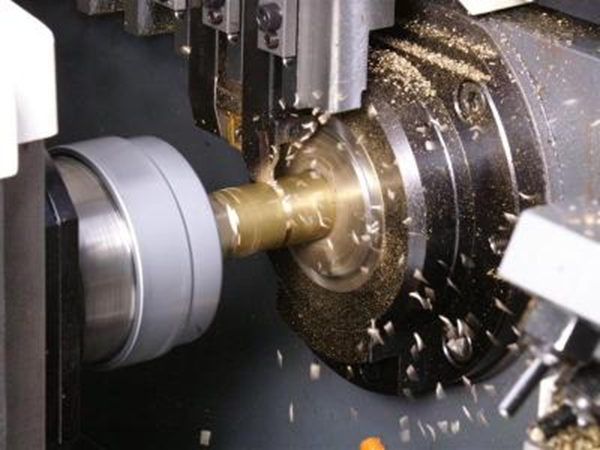
With the rapid development of Dongguan Turning and Milling Composite Machining Center technology, some machining programs are usually written by general CAM software, and then manually integrated by technical personnel to meet the requirements of composite machining machines for machining processes. However, this solution places high demands on technical personnel. Compared with traditional CNC programming technology, the programming difficulties of turning milling composite machining can be roughly reflected in the following aspects.
1. Integration of processing programs.
At present, after the completion of the general CAM software, the NC programs are independent of each other. To achieve complex automated and complete machining such as turning and milling composite, it is necessary to integrate and integrate these independent machining programs. And this integration must be guided by the process route of the parts. Therefore, it is necessary to first determine which programs are parallel, and then determine the processing sequence of different process methods, and provide accurate tool replacement, card replacement, benchmark conversion, and tool advance and retreat instructions.
2. The general CAM software for programming turn-milling composite machining is not yet supported.
Compared with conventional machine tool equipment processing, the machine movement and processing functions of Dongguan turning and milling composite processing are much more complex. At present, the commonly used CAM software in the market is not sufficient to fully support programming of advanced functions such as online measurement, sawing, and cutting. Fill in programs such as automatic feeding and tailstock control. Therefore, programs written using general CAM software still require a lot of manual writing, adjustment, integration, and interaction in order to be applied to automated turning and milling composite processing.
3. Determine the process route during the programming process.
Many parts can be processed from rough materials to finished products in one go when processed in a turn-mill composite machining center. Therefore, the results of the processing program must be consistent with the process route. At the same time, in the process of writing CNC machining programs, it is also necessary to comprehensively consider multi-channel parallel processing. From this perspective, in order to achieve efficient Dongguan turning and milling composite processing, an integrated process solution of process programming simulation should be developed.
What is the difference in clamping method between Dongguan turning and milling composite processing and ordinary lathe processing
Types of CNC machine tools in precision parts processing
Related Article

Let us go over the foundations of the electroplating procedure. Electroplating involves several phases, and from pre-treatment to post-treatment there are several really significant ones.
The basic principle of surface treatment of precision parts in CNC machining

Audio panels, electronic cigarette shells, nameplateLOG, watch shells, etc. are among the CNC processing of high surface texture needs components.
CNC machining aluminum alloy parts high-quality surface texture process explained in detail

Metallic finishing, sometimes known as metallic finishing, is the process of using several techniques to change the surface of an object in order to improve appearance and performance, such as corrosion resistance, discoloration resistance, chemical resistance, abrasion resistance, and hardness, modify electrical conductivity, remove burrs, or apply a specific color to a machined part.
Metal CNC finishing surface treatment process and its working principle
