
What are the characteristics of centralized and dispersed machining processes in Dongguan's turn-milling composite processing
author: Hansheng Automation
2023-05-17
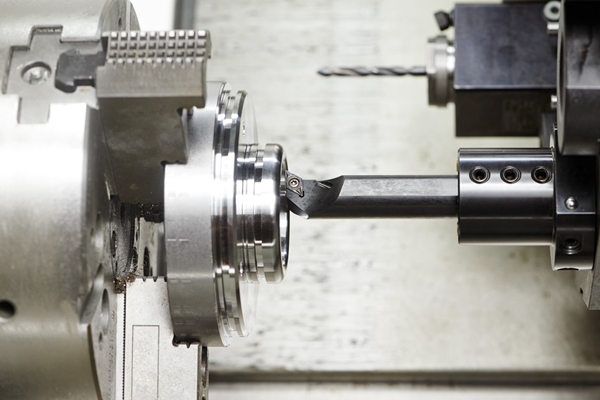
The concentration and dispersion of processes in Dongguan turning and milling composite processing are two different options for formulating the process route. Process dispersion refers to the process of dividing the processing of each surface of a part into very fine parts, with multiple processes and a long process route. Process concentration is the opposite, where the processing of parts is only concentrated in a few processes, and each process contains a lot of processing content.
1. Characteristics of concentrated processes
(1) Facilitate the use of efficient specialized equipment and process equipment to greatly improve productivity.
(2) The number of equipment has been reduced, resulting in a corresponding reduction in the production area of operators.
(3) Reduced the number of processes, reduced transportation workload, simplified production planning work, and shortened production cycles.
(4) Reducing the number of workpiece installations is not only beneficial for improving productivity, but also ensures the accuracy of their mutual positions due to the processing of many surfaces in one installation.
(5) Due to the large and complex number of specialized equipment and process equipment used, the adjustment and maintenance of machine tools and process equipment are time-consuming, and the production preparation workload is significant.
2. The characteristics of dispersed processes
(1) Using relatively simple machine tools and process equipment, it is easy to adjust.
(2) Due to the simple content of the process, it is beneficial to choose a reasonable cutting amount, arrange the process time, and organize flow production.
(3) The production preparation workload is small and it is easy to adapt to product replacement.
(4) Low technical requirements for operators.
(5) There are many equipment, many operators, and a large production area.
In general, in order to simplify production planning work in Dongguan's small batch production of single piece turning and milling composite processing, the principle of process concentration can only be adopted. In mass production, processes can be centralized or dispersed. However, from the perspective of production development requirements, there is a general trend towards selecting the principle of concentrated processes with higher efficiency.
What are the characteristics of Dongguan turning and milling composite processing
The Three Major Processes in Dongguan Turning and Milling Compound Processing
Related Article

Let us go over the foundations of the electroplating procedure. Electroplating involves several phases, and from pre-treatment to post-treatment there are several really significant ones.
The basic principle of surface treatment of precision parts in CNC machining

Audio panels, electronic cigarette shells, nameplateLOG, watch shells, etc. are among the CNC processing of high surface texture needs components.
CNC machining aluminum alloy parts high-quality surface texture process explained in detail

Metallic finishing, sometimes known as metallic finishing, is the process of using several techniques to change the surface of an object in order to improve appearance and performance, such as corrosion resistance, discoloration resistance, chemical resistance, abrasion resistance, and hardness, modify electrical conductivity, remove burrs, or apply a specific color to a machined part.
Metal CNC finishing surface treatment process and its working principle
