
What are the characteristics of linear motion repetitive positioning accuracy in precision parts processing
author: Hansheng Automation
2023-05-16
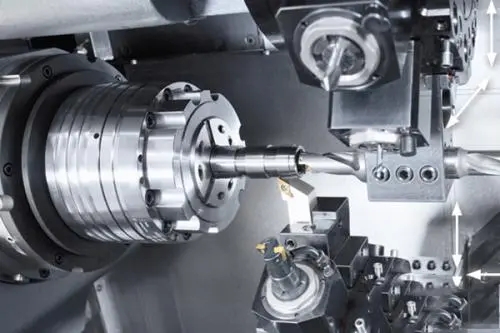
In precision parts processing, the positioning accuracy of CNC lathes is the measurement of the positional accuracy that the moving parts of the machine tool can achieve under the control of the CNC system. Based on the measured positioning accuracy values of a CNC lathe, the best machining accuracy that the workpiece can achieve on the machine can be determined.
The main detection content of positioning accuracy includes: linear motion positioning accuracy, linear motion repetitive positioning accuracy, etc. Today, we need to understand the linear motion repetitive positioning accuracy.
This accuracy is the basic indicator reflecting the stability of coordinate axis motion, and the stability of machine tool motion determines the quality stability and error consistency of precision parts processing.
The general inspection method is to measure at any three positions near the midpoint and both ends of each coordinate stroke. Each position is quickly moved for positioning, and the positioning is repeated 7 times under the same situation. The coordinate value of the positioning point is measured, and the maximum difference in reading is calculated. Take 2/1 of the maximum difference in the three positions and take the ± sign as the repeated positioning accuracy of the coordinate.
What are the characteristics of linear motion repetitive positioning accuracy in precision parts processing
Analysis and Solution of Common Faults in Electrical Connectors
Related Article

Let us go over the foundations of the electroplating procedure. Electroplating involves several phases, and from pre-treatment to post-treatment there are several really significant ones.
The basic principle of surface treatment of precision parts in CNC machining

Audio panels, electronic cigarette shells, nameplateLOG, watch shells, etc. are among the CNC processing of high surface texture needs components.
CNC machining aluminum alloy parts high-quality surface texture process explained in detail

Metallic finishing, sometimes known as metallic finishing, is the process of using several techniques to change the surface of an object in order to improve appearance and performance, such as corrosion resistance, discoloration resistance, chemical resistance, abrasion resistance, and hardness, modify electrical conductivity, remove burrs, or apply a specific color to a machined part.
Metal CNC finishing surface treatment process and its working principle
