
What are the design principles for the cutting route of Dongguan turning and milling composite processing
author: Hansheng Automation
2023-05-16
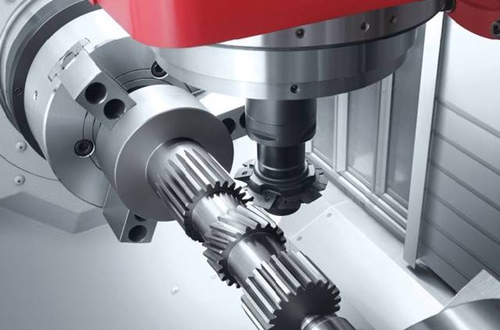
The tool path refers to the motion trajectory and direction of the tool relative to the processed part during the Dongguan turning and milling composite machining process, which refers to the path that the tool passes from the tool alignment point to the point where it returns and ends the machining program, including the cutting path and non cutting empty strokes such as tool introduction and return. The cutting path is one of the important bases for programming.
1. The cutting path should ensure the accuracy and surface roughness of the workpiece being processed. To ensure the surface roughness requirements of the workpiece contour surface processing, the final contour surface should be arranged for continuous machining in the last cutting pass.
2. It should be the shortest possible processing route to reduce idle travel time and improve processing efficiency.
3. Choose a processing route with minimal deformation during workpiece processing. In multiple installation and processing processes, the process that causes less damage to the stiffness of the main component should be arranged first.
4. Simplify numerical calculations and reduce program segments to reduce programming workload.
5. Determine the number of cycles of machining based on the shape of the workpiece, machining allowance, and stiffness of the machine tool system.
6. Reasonably design the direction of tool entry and exit. Avoid positioning errors caused by directional gaps and reduce cutting marks.
7. During the cutting process, the tool must not interfere with the contour of the workpiece.
Before determining the cutting route, it is best to develop a process diagram and draw the planned Dongguan turning and milling composite processing route, including the forward and backward routes of the cutting tools, for easy programming.
What are the tool setting methods for Dongguan turning and milling composite processing
What are the common faults of milling machine fixtures in precision parts processing
Related Article

Let us go over the foundations of the electroplating procedure. Electroplating involves several phases, and from pre-treatment to post-treatment there are several really significant ones.
The basic principle of surface treatment of precision parts in CNC machining

Audio panels, electronic cigarette shells, nameplateLOG, watch shells, etc. are among the CNC processing of high surface texture needs components.
CNC machining aluminum alloy parts high-quality surface texture process explained in detail

Metallic finishing, sometimes known as metallic finishing, is the process of using several techniques to change the surface of an object in order to improve appearance and performance, such as corrosion resistance, discoloration resistance, chemical resistance, abrasion resistance, and hardness, modify electrical conductivity, remove burrs, or apply a specific color to a machined part.
Metal CNC finishing surface treatment process and its working principle
