
Temperature is also an important factor for Dongguan turning and milling composite processing machine tools
author: Hansheng Automation
2023-05-16
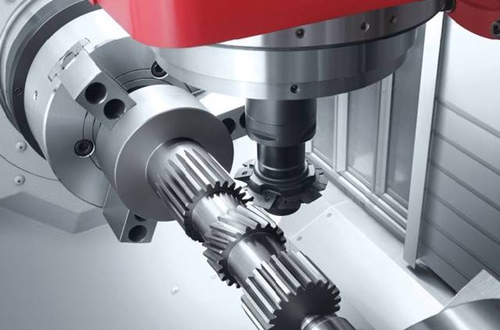
Dongguan turning and milling composite processing machine tools should be kept away from vibration sources, avoid direct sunlight and thermal radiation, and avoid the influence of moisture and airflow. If there is a vibration source near the turning and milling compound CNC lathe, anti vibration grooves should be set around the machining center. Otherwise, it will directly affect the machining accuracy and stability of the turn-milling composite CNC lathe, leading to poor contact of electronic components, causing malfunctions, and affecting the reliability of the turn-milling composite CNC lathe.
The environmental temperature of the turning and milling composite CNC lathe is below 30 degrees Celsius, and the relative temperature is below 80%. Generally speaking, the CNC control box is equipped with an exhaust fan or air cooler inside to maintain the working temperature of electronic components, especially the central processing unit, constant or with minimal temperature difference changes. Excessive temperature and humidity can reduce the lifespan of control system components and lead to more malfunctions. The increase in temperature and humidity, as well as the increase in dust, can cause adhesion on integrated circuit boards and cause short circuits.
Generally, the machining center is installed in the machining workshop. Not only does the environmental temperature change greatly and the usage conditions are poor, but there are also many mechanical and electrical equipment, causing significant fluctuations in the power grid. Therefore, the installation position of the machining center requires strict control of the power supply voltage. The fluctuation of power supply voltage must be within the allowable range and remain relatively stable. Otherwise, it will affect the normal operation of the CNC system of the machining center.
The difference between the implementation of turn-milling composite processing technology and conventional processing equipment is that the turn-milling composite processing center is actually equivalent to the processing of a production line. Therefore, how to develop a reasonable process route, installation method, and select reasonable cutting tools based on the process characteristics of parts and turn-milling composite processing is the key to achieving efficient and precise machining.
The development of CNC programming technology for turn-milling composite machining has put forward higher requirements for the development of CNC programming technology. Due to the relatively short application time of turn-milling composite processing in actual production, in the absence of professional composite processing solutions, a commonly used method is to use general CAM software to plan part of the processing program, and then have technical personnel manually integrate the program to meet the processing program requirements of Dongguan turn-milling composite processing machine tool.
Two minutes to learn about Dongguan Turning and Milling Compound Processing Machine Tool
What are the characteristics of the four basic motion modes of Dongguan turning and milling composite machining machine tools
Related Article

Let us go over the foundations of the electroplating procedure. Electroplating involves several phases, and from pre-treatment to post-treatment there are several really significant ones.
The basic principle of surface treatment of precision parts in CNC machining

Audio panels, electronic cigarette shells, nameplateLOG, watch shells, etc. are among the CNC processing of high surface texture needs components.
CNC machining aluminum alloy parts high-quality surface texture process explained in detail

Metallic finishing, sometimes known as metallic finishing, is the process of using several techniques to change the surface of an object in order to improve appearance and performance, such as corrosion resistance, discoloration resistance, chemical resistance, abrasion resistance, and hardness, modify electrical conductivity, remove burrs, or apply a specific color to a machined part.
Metal CNC finishing surface treatment process and its working principle
