
What Is the Ideal Mechanical Advantage of a Pulley
2025-07-10
What Is the Ideal Mechanical Advantage of a Pulley?
In the realm of mechanics, pulleys are fundamental devices that have been used for centuries to simplify the task of lifting heavy loads. From construction sites to industrial machinery and even household applications, pulleys play a crucial role in transmitting force efficiently. One of the key concepts associated with pulleys is the ideal mechanical advantage (IMA). Understanding what the ideal mechanical advantage of a pulley is, how it is calculated, and its significance in practical applications is essential for anyone working with or studying mechanical systems.
Understanding the Basics of Pulleys
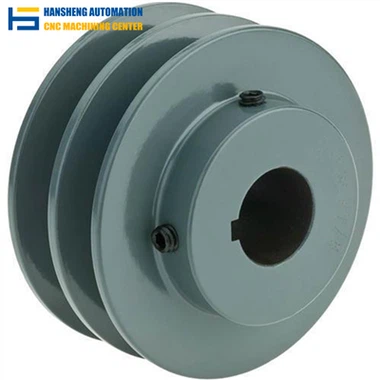
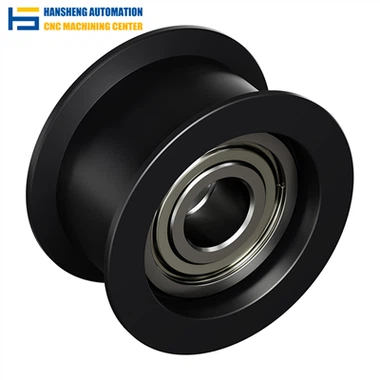
Before delving into the ideal mechanical advantage, it is important to have a clear understanding of what a pulley is and the different types of pulleys. A pulley is a simple machine consisting of a wheel with a groove around its edge, through which a rope, cable, or belt runs. The primary function of a pulley is to change the direction of a force applied to the rope and, in some cases, to multiply the force, making it easier to lift heavy objects.
There are three main types of pulleys:
Fixed Pulley
A fixed pulley is attached to a stationary structure, such as a ceiling or a beam. It does not move when the force is applied. The main purpose of a fixed pulley is to change the direction of the force. For example, when lifting a heavy object with a fixed pulley attached to the ceiling, you can pull downward instead of upward, which is often more convenient.
Movable Pulley
A movable pulley is not attached to a fixed structure. Instead, it is attached to the load being lifted and moves along with the load. Unlike a fixed pulley, a movable pulley is designed to multiply the force applied, making it easier to lift heavy loads.
Pulley System (Block and Tackle)
A pulley system, also known as a block and tackle, consists of a combination of fixed and movable pulleys. This system is used to achieve a greater mechanical advantage than a single pulley, allowing for even heavier loads to be lifted with less force.
Defining Ideal Mechanical Advantage (IMA)
Mechanical advantage (MA) is a measure of how much a simple machine multiplies the force applied to it. It is calculated as the ratio of the output force (the force exerted on the load) to the input force (the force applied to the machine).
Ideal mechanical advantage (IMA) is a theoretical value that assumes there is no friction, no air resistance, and the pulley itself has no mass. In other words, it is the mechanical advantage of a pulley in a perfect, frictionless environment where all the input force is converted into output force. This ideal scenario allows us to focus on the fundamental mechanics of the pulley without the complicating factors of real-world inefficiencies.
The formula for ideal mechanical advantage is:
IMA = Output Force / Input Force
However, for pulleys, there is a more straightforward way to calculate the IMA based on the number of ropes supporting the load.
Calculating IMA for Different Types of Pulleys
The ideal mechanical advantage of a pulley depends on the type of pulley and how it is configured. Let's explore the IMA for each type of pulley:
IMA of a Fixed Pulley
A fixed pulley only changes the direction of the force and does not multiply the force. In an ideal situation, the input force required to lift a load with a fixed pulley is equal to the weight of the load.
For example, if you need to lift a load of 100 Newtons (N) using a fixed pulley, the input force required is also 100 N.
Using the formula for IMA:
IMA = Output Force / Input Force = 100 N / 100 N = 1
So, the ideal mechanical advantage of a fixed pulley is 1. This means that a fixed pulley does not provide any mechanical advantage in terms of multiplying force; it only changes the direction of the force.
IMA of a Movable Pulley
A movable pulley is attached to the load, and as the load is lifted, the pulley moves along with it. In an ideal scenario, a movable pulley allows you to lift a load with half the input force required to lift the load without the pulley.
This is because the movable pulley is supported by two ropes. Each rope supports half of the load's weight.
For instance, if the load weighs 100 N, each rope supports 50 N. Therefore, the input force required is 50 N.
Using the IMA formula:
IMA = Output Force / Input Force = 100 N / 50 N = 2
Thus, the ideal mechanical advantage of a movable pulley is 2. This means that a movable pulley doubles the input force, making it easier to lift the load.
IMA of a Pulley System (Block and Tackle)
A pulley system, or block and tackle, consists of multiple fixed and movable pulleys working together. The IMA of a pulley system is determined by the number of ropes that support the load. Each supporting rope shares the weight of the load, reducing the input force required.
The formula for the ideal mechanical advantage of a pulley system is:
IMA = Number of ropes supporting the load
It is important to note that ropes that are only used to change the direction of the force (i.e., ropes attached to fixed pulleys and not directly supporting the load) are not counted in the number of supporting ropes.
Let's consider some examples:
- A pulley system with 2 supporting ropes: IMA = 2
- A pulley system with 3 supporting ropes: IMA = 3
- A pulley system with 4 supporting ropes: IMA = 4
For example, if a pulley system has 4 ropes supporting a 400 N load, the input force required in an ideal situation is 400 N / 4 = 100 N.
This relationship holds true because each supporting rope carries an equal share of the load's weight. The more ropes that support the load, the greater the mechanical advantage, and the less input force is needed.
Real-World Considerations: Actual Mechanical Advantage vs. Ideal Mechanical Advantage
While the ideal mechanical advantage provides a useful theoretical framework, in real-world applications, the actual mechanical advantage (AMA) is always less than the IMA. This is due to several factors:
- Friction: Friction exists between the rope and the pulley's groove, as well as in the pulley's axle. This friction requires additional input force to overcome, reducing the overall mechanical advantage.
- Pulley Mass: The pulleys themselves have mass, which means additional force is needed to lift the pulleys along with the load.
- Rope Stretch: Ropes can stretch slightly under tension, which also reduces the efficiency of the system.
The efficiency (η) of a pulley system is the ratio of the actual mechanical advantage to the ideal mechanical advantage, expressed as a percentage:
Efficiency (η) = (AMA / IMA) × 100%
In practice, the efficiency of pulley systems can vary. Well-lubricated pulley systems with low-friction bearings may have efficiencies as high as 90%, while poorly maintained or heavily used systems may have efficiencies as low as 50% or less.
For example, a pulley system with an IMA of 4 and an efficiency of 80% would have an AMA of:
AMA = (Efficiency × IMA) / 100% = (80% × 4) / 100% = 3.2
This means that the actual force required to lift a 400 N load with this system would be 400 N / 3.2 = 125 N, which is more than the 100 N required in the ideal scenario.
Practical Applications and Technical Data
Pulleys and pulley systems are used in a wide range of applications, from simple household devices to large industrial machinery. Here are some examples with relevant technical data:
Elevators
Elevators rely on pulley systems to lift and lower the elevator car. A typical elevator system uses multiple pulleys to achieve a high mechanical advantage. For example, a residential elevator may use a pulley system with an IMA of 4 to 6. This allows the motor to lift the heavy elevator car (which can weigh several thousand kilograms) with a much smaller force.
Construction Cranes
Construction cranes use large pulley systems to lift heavy loads such as steel beams and concrete blocks. The pulley systems on cranes can have high IMAs, often ranging from 6 to 12 or more. For instance, a crane with a pulley system that has 8 supporting ropes has an IMA of 8. This means that a 10,000 N load can be lifted with an ideal input force of 10,000 N / 8 = 1,250 N. However, due to friction and other factors, the actual input force required is higher.
Gym Equipment
Many pieces of gym equipment, such as cable machines, use pulleys to provide resistance. These systems often have adjustable pulley configurations to change the mechanical advantage. For example, a cable machine may have settings with IMAs of 1, 2, or 3, allowing users to adjust the amount of force needed to perform exercises.
Sailboats
Sailboats use pulleys (called blocks) to control the sails. The pulley systems on sailboats help sailors adjust the sails with less force. A typical sailboat pulley system may have an IMA of 2 to 4, making it easier to pull in or release the sail ropes, especially in strong winds.
Conclusion
The ideal mechanical advantage of a pulley is a key concept that describes the theoretical force-multiplying capability of a pulley in a frictionless, massless environment. For a fixed pulley, the IMA is 1, as it only changes the direction of the force. For a movable pulley, the IMA is 2, as it doubles the input force. For a pulley system, the IMA is equal to the number of ropes supporting the load.
While the ideal mechanical advantage provides a fundamental understanding of how pulleys work, real-world systems have lower actual mechanical advantages due to friction, pulley mass, and other factors. Despite these inefficiencies, pulleys remain essential devices in numerous applications, from everyday tools to large-scale industrial machinery, because they significantly reduce the force required to lift heavy loads.
Understanding the ideal mechanical advantage of a pulley allows engineers, designers, and users to make informed decisions about pulley selection and configuration, ensuring that tasks are performed efficiently and safely.
How to Make a Pulley System
How Does a Pulley Make Work Easier
Related Article

Gears are the backbone of mechanical transmission systems, converting rotational motion and torque between shafts to power everything from household appliances to industrial machinery.
What are the 4 types of gears

CNC machines (Computer Numerical Control machines) have transformed manufacturing by delivering unmatched precision, repeatability, and efficiency across material types—from metals to plastics and composites.
Which Industries Mostly Use CNC Machines

CNC machining is celebrated for its precision and versatility in shaping metals, plastics, and composites—but its subtractive nature (removing material from a solid workpiece to create parts) raises a critical question: “Is CNC machining wasteful?” At first glance, the piles of metal shavings, plastic chips, and scrapped parts from CNC operations might suggest yes.
Is CNC machining wasteful
