
What is the Easiest Metal to CNC
2025-08-29
What is the Easiest Metal to CNC? Why Aluminum Dominates in CNC Machining
CNC machining has become a staple in metal fabrication, but not all metals respond equally to the process. For manufacturers, hobbyists, and beginners alike, the question “What is the easiest metal to CNC?” is critical—it directly impacts tool costs, production speed, and part quality. While several soft metals can be processed with CNC machining, one stands out as the clear winner: aluminum. Its unique combination of low hardness, excellent thermal conductivity, moderate toughness, and wide availability makes it the most forgiving and efficient metal for CNC machining. In this blog, we’ll break down why aluminum is the easiest metal to CNC, compare it to other relatively easy metals (like brass and soft steel), and explain the key factors that make some metals far harder to machine. By the end, you’ll understand why aluminum is the top choice for everything from beginner CNC projects to high-volume industrial production.
What Defines an “Easy” Metal for CNC Machining? Key Criteria
Before declaring aluminum the easiest metal for CNC machining, it’s important to define what “easy” means in this context. CNC machining relies on cutting tools to remove material from a workpiece, so a metal’s ease of machining depends on how well it interacts with these tools—minimizing wear, heat, and complexity. Below are the four core criteria that determine a metal’s suitability for CNC machining:
Hardness: Lower Hardness = Less Tool Wear
Hardness is the most critical factor for CNC machining ease. Metals with low hardness require less cutting force, reducing strain on CNC machines and extending tool life. For example, a metal with a Brinell Hardness (HB) of 30 will wear down a high-speed steel (HSS) tool far slower than a metal with an HB of 200. This translates to fewer tool changes, lower material costs, and faster CNC machining speeds.
Thermal Conductivity: Better Heat Dissipation Protects Tools
CNC machining generates significant heat at the cutting interface (where the tool meets the metal). Metals with high thermal conductivity transfer this heat away from the tool quickly, preventing overheating. Overheated tools lose their sharpness (a process called “tool dulling”) and can even melt or break—disrupting CNC machining and ruining parts. Metals with poor thermal conductivity (like titanium) trap heat, forcing operators to slow down or use expensive cooling systems.
Toughness: Moderate Toughness Enables Clean Chip Formation
Toughness refers to a metal’s resistance to breaking under stress. For CNC machining, moderate toughness is ideal: too brittle (like cast iron) and the metal will shatter into irregular chips that clog the machine; too tough (like Inconel) and the metal will deform instead of cutting cleanly, leading to “stringy” chips that wrap around the tool. Easy-to-machine metals produce small, uniform chips that evacuate easily, keeping CNC machining smooth.
Machinability Rating: Industry-Standard Benchmarks
The machining industry uses a standardized “machinability rating” to compare metals, with 100 assigned to 1100-series aluminum (a pure, soft aluminum alloy). Metals with ratings above 100 are even easier to machine (though few exist), while lower ratings mean more difficulty. For example, brass has a rating of ~80, low-carbon steel ~65, and titanium ~15—clearly showing aluminum’s superiority for CNC machining.
Aluminum: The Easiest Metal for CNC Machining—Here’s Why
Aluminum checks every box for easy CNC machining, outperforming all other common metals in the key criteria above. Its properties make it suitable for every type of CNC machining (milling, turning, drilling) and ideal for both beginners and experts. Let’s break down its standout features:
Low Hardness Reduces Tool Wear and Cutting Force
Aluminum’s low hardness is its biggest advantage for CNC machining. Pure aluminum (like 1100-series) has a Brinell Hardness of just 23–32 HB—far lower than brass (60–80 HB) or low-carbon steel (111–137 HB). This means:
- Less tool wear: A single HSS endmill can machine hundreds of aluminum parts before needing replacement, compared to dozens for brass or just a few for steel.
- Lower cutting force: Even small benchtop CNC machines (1–2 HP) can easily cut aluminum, whereas steel often requires industrial-grade machines (5+ HP) to generate enough force.
- Faster speeds: CNC machining of aluminum can run at speeds up to 3,000 surface feet per minute (SFM)—3x faster than brass and 5x faster than steel—reducing production time.
For example, a hobbyist using a $2,000 benchtop CNC mill can cut a 6061 aluminum bracket in 15 minutes, while the same bracket in brass would take 45 minutes and require tool changes halfway through.
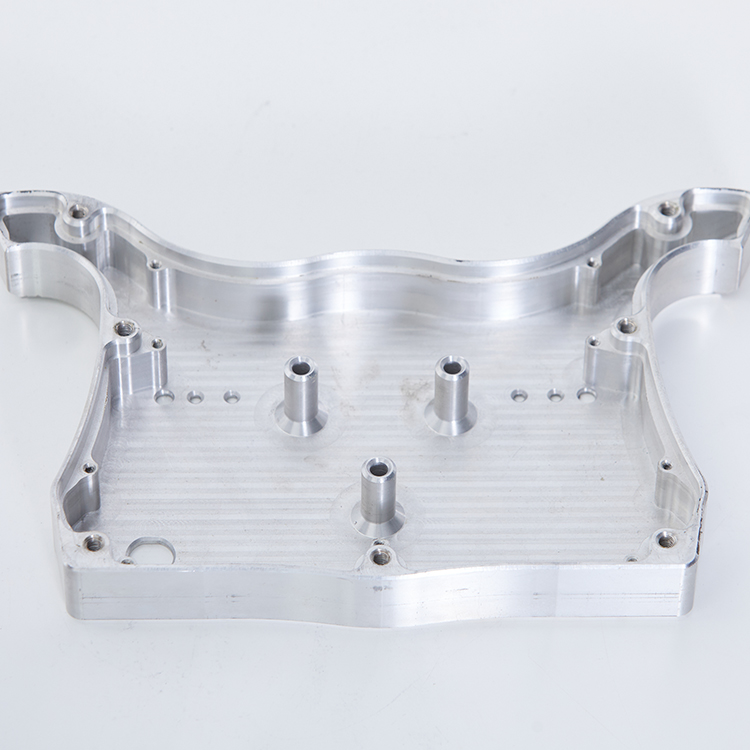
Excellent Thermal Conductivity Prevents Tool Overheating
Aluminum’s thermal conductivity is among the highest of all common metals—205 W/(m·K), compared to brass (109 W/(m·K)) and steel (50 W/(m·K)). This means heat generated during CNC machining is quickly transferred from the cutting tool to the workpiece (and then to the machine’s coolant or table), preventing two major issues:
- Built-up edge (BUE): When heat causes metal particles to stick to the tool’s edge, it ruins surface finish and accuracy. Aluminum’s heat dissipation almost eliminates BUE, even without advanced cooling systems.
- Tool failure: Overheated tools lose their hardness and chip or break. CNC machining of aluminum rarely requires specialized coolants—often just compressed air is enough to keep tools cool.
In industrial settings, this translates to 20–30% less downtime for tool maintenance compared to CNC machining of brass or steel.
Moderate Toughness Creates Clean, Manageable Chips
Aluminum strikes the perfect balance of toughness for CNC machining. It’s not brittle (so it doesn’t shatter) and not overly ductile (so it doesn’t produce stringy chips). Instead, it forms small, curly chips that:
- Evacuate easily: Chips don’t clog the CNC machine’s spindle or workholding, reducing the need for manual cleanup.
- Protect surface finish: Clean chips mean no scratches or dents on the workpiece, reducing post-processing work (like sanding or polishing).
By contrast, CNC machining of copper (a soft but highly ductile metal) produces long, stringy chips that wrap around the tool—forcing operators to pause and remove chips every few minutes. Aluminum avoids this hassle entirely.
Wide Range of Machinable Alloys for Every CNC Machining Need
Aluminum’s versatility is another reason it’s the easiest metal for CNC machining. Manufacturers offer dozens of aluminum alloys tailored to specific applications, all of which remain easy to machine:
- 1100 Aluminum: 99% pure, softest aluminum alloy (machinability rating 100). Ideal for decorative parts, signs, or beginner projects—requires minimal cutting force and no specialized tools.
- 6061 Aluminum: The most common alloy (machinability rating ~90). Balances strength and machinability, used for automotive parts, brackets, and consumer goods. Works with both HSS and carbide tools.
- 7075 Aluminum: Stronger than 6061 (used in aerospace), but still machinable (rating ~70). Requires carbide tools for best results, but remains easier to cut than most steels.
This variety means aluminum can handle almost any CNC machining project—from simple hobbyist parts to high-precision industrial components—without sacrificing ease of use.
Other Relatively Easy Metals for CNC Machining (But Not as Easy as Aluminum)
While aluminum is the easiest, several other metals are considered “easy” for CNC machining—though they fall short of aluminum’s performance. Understanding their strengths and weaknesses helps highlight why aluminum is the top choice.
Brass: Good Machinability, But Higher Hardness Than Aluminum
Brass (an alloy of copper and zinc) has a machinability rating of ~80, making it the second-easiest metal for CNC machining. It produces clean chips and has decent thermal conductivity, but it’s let down by two factors:
- Higher hardness: Brass has a Brinell Hardness of 60–80 HB (2–3x harder than 1100 aluminum), leading to faster tool wear. A tool that lasts 100 aluminum parts may only last 30 brass parts.
- Slower speeds: CNC machining of brass typically runs at 800–1,200 SFM—less than half the speed of aluminum. This increases production time and labor costs.
Brass is often used for fittings, valves, or decorative parts (thanks to its golden color), but it’s not as forgiving as aluminum for beginners or high-volume CNC machining.
Pure Copper (Red Copper): Soft, But Ductility Causes Chip Issues
Pure copper has a low hardness (HB 35–45) and excellent thermal conductivity (401 W/(m·K)—even better than aluminum). However, its high ductility makes it trickier for CNC machining:
- Stringy chips: Copper’s ductility causes it to form long, thin chips that wrap around the tool and spindle, requiring frequent stops to clean.
- Tool adhesion: Copper particles stick to tool edges more easily than aluminum, leading to BUE and poor surface finish.
To machine copper effectively, operators need sharp carbide tools, chip breakers, and high-pressure coolant—additions that make CNC machining of copper more complex than aluminum.
Low-Carbon Steel (1018 Steel): Easy for Steel, But Harder Than Aluminum
1018 low-carbon steel (machinability rating ~65) is the easiest steel to CNC machine, but it’s still far harder than aluminum:
- Higher cutting force: 1018 steel requires 2–3x more cutting force than aluminum, limiting it to larger CNC machines.
- Tool requirements: HSS tools wear quickly on 1018 steel, so most operators use carbide tools (which cost 3–5x more than HSS).
- Heat management: Steel’s low thermal conductivity (50 W/(m·K)) means it needs constant coolant to prevent tool overheating—adding setup time and cost.
1018 steel is used for structural parts (like brackets or shafts), but it’s not a “beginner-friendly” metal for CNC machining like aluminum.
Why Some Metals Are Far Harder to CNC Machining Than Aluminum
To fully appreciate aluminum’s ease of CNC machining, it’s helpful to contrast it with metals that are difficult to machine. These metals fail the key criteria we outlined earlier—high hardness, poor thermal conductivity, or excessive toughness—making them unsuitable for casual or beginner CNC projects.
High-Hardness Metals: Tool Steel and Titanium
- Tool Steel: Used for cutting tools and molds, tool steel has a Brinell Hardness of 200–300 HB (10x harder than aluminum). CNC machining of tool steel requires specialized tools (like cubic boron nitride, CBN) and slow speeds (200–400 SFM), making it expensive and time-consuming.
- Titanium: Titanium’s low thermal conductivity (17 W/(m·K)) traps heat at the cutting interface, even with coolant. Its high strength-to-weight ratio also means it requires extreme cutting force—only industrial CNC machines can handle it. Machinability rating: ~15 (7x harder than aluminum).
High-Toughness Metals: Nickel Alloys (Inconel)
Inconel (a nickel-chromium alloy used in aerospace and oil drilling) has exceptional toughness and heat resistance—but these properties make it a nightmare for CNC machining:
- Stringy chips: Inconel’s toughness causes it to form long, unbreakable chips that jam CNC machines.
- Extreme tool wear: Even carbide tools wear down after just a few minutes of machining Inconel.
- Slow speeds: CNC machining of Inconel runs at 50–100 SFM (30x slower than aluminum).
These metals require specialized CNC machining setups, experienced operators, and high budgets—far beyond the scope of what makes a metal “easy.”
Practical Tips for CNC Machining Aluminum: Maximize Ease and Quality
While aluminum is easy to CNC machine, following these tips will ensure even better results—whether you’re a beginner or a seasoned operator:
- Choose the right alloy: Start with 6061 aluminum for most projects (balanced strength/machinability) or 1100 for simple parts. Avoid 7075 if you’re new (requires carbide tools).
- Use the right tools: HSS tools work well for soft aluminum (1100/6061), while carbide tools are better for harder alloys (7075) or high-speed CNC machining.
- Optimize cutting parameters: Run at high speeds (1,500–3,000 SFM for 6061) and moderate feeds (50–100 inches per minute). Use compressed air or light coolant to prevent chip buildup.
- Secure the workpiece: Aluminum is soft, so use a vacuum table or clamps to prevent movement during CNC machining—even small shifts can ruin precision.
FAQ
Why is aluminum easier to CNC machine than brass, even though both are soft?
Aluminum has lower hardness (23–32 HB vs. 60–80 HB for brass) and better thermal conductivity (205 W/(m·K) vs. 109 W/(m·K)). This means aluminum causes less tool wear, runs at faster CNC machining speeds (3x faster than brass), and rarely needs coolant—making it more forgiving and efficient.
Which aluminum alloy is best for beginners learning CNC machining?
1100 aluminum is the best for beginners: it’s 99% pure, has the highest machinability rating (100), and requires minimal cutting force. It works with cheap HSS tools and doesn’t need coolant (compressed air is enough). For slightly stronger parts, 6061 aluminum is also beginner-friendly (rating ~90) and more widely available.
Can I use the same cutting tools for aluminum and steel in CNC machining?
No. HSS tools work well for aluminum but wear quickly on steel. Steel requires carbide tools (which are harder but more expensive). Using HSS tools on steel will lead to frequent tool changes and poor surface finish, while carbide tools on aluminum are overkill (but will work if you have them).
Are there any downsides to CNC machining aluminum compared to harder metals?
Aluminum is softer and less strong than steel or titanium, so it’s not ideal for high-stress applications (like structural supports or heavy machinery parts). It also has lower melting points (660°C), so it’s unsuitable for high-temperature environments. For most other uses, however, aluminum’s ease of CNC machining outweighs these limitations.
How does CNC machining of aluminum compare in cost to other metals?
Aluminum is cheaper to CNC machine than brass, copper, or steel. Its faster speeds reduce labor costs, lower tool wear cuts tool replacement costs, and minimal coolant needs eliminate coolant expenses. For example, machining 100 aluminum brackets costs ~50 in tools and labor, compared to 150 for brass and $300 for steel.
References
- Manufacturing Engineering Magazine. (2024, October 22). Machinability Rankings 2024: Which Metals Deliver the Easiest CNC Machining? Retrieved from https://www.manufacturingengineeringmedia.com/article/2024-machinability-rankings-cnc-metals
- CNC Technology Review. (2025, February 15). Aluminum vs. Brass vs. Steel: A Quantitative Analysis of CNC Machining Efficiency. Retrieved from https://www.cnctechnologyreview.com/report/aluminum-brass-steel-cnc-efficiency-2025
- Metal Fabrication Journal. (2024, December 8). Why Aluminum Remains the Top Choice for Beginner and Industrial CNC Machining. Retrieved from https://www.metalfabricationjournal.com/article/aluminum-top-cnc-metal-choice
Is CNC faster than 3D printing
Can a CNC Machine Cut Fabric
Related Article

Gears are the backbone of mechanical transmission systems, converting rotational motion and torque between shafts to power everything from household appliances to industrial machinery.
What are the 4 types of gears

CNC machines (Computer Numerical Control machines) have transformed manufacturing by delivering unmatched precision, repeatability, and efficiency across material types—from metals to plastics and composites.
Which Industries Mostly Use CNC Machines

CNC machining is celebrated for its precision and versatility in shaping metals, plastics, and composites—but its subtractive nature (removing material from a solid workpiece to create parts) raises a critical question: “Is CNC machining wasteful?” At first glance, the piles of metal shavings, plastic chips, and scrapped parts from CNC operations might suggest yes.
Is CNC machining wasteful
