
What is a Spur Gear
2025-06-12
What is a Spur Gear?
In the intricate realm of mechanical engineering and power transmission, spur gears, often known as straight gears, hold a fundamental and indispensable position. These unassuming yet crucial components are integral to a vast spectrum of machinery, from everyday household appliances to complex industrial equipment. But what precisely is a spur gear, and why, especially in its customized form, is it so widely sought after? This blog post will take you on an in - depth journey to uncover the nature, characteristics, and significance of spur gears, with a particular emphasis on their customization capabilities.
Defining the Spur Gear: A Basic Overview
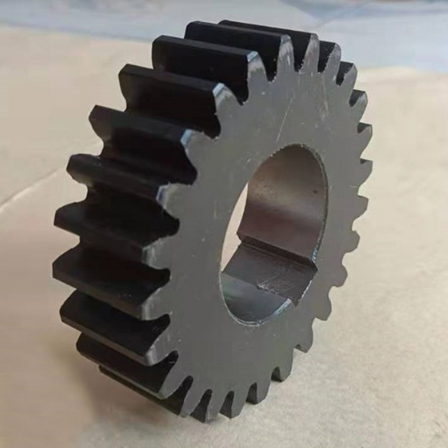
A spur gear is characterized by its cylindrical shape and straight teeth that run parallel to the gear's axis of rotation. This straightforward design forms the basis of its functionality in power transmission, allowing it to transfer rotational motion and torque between parallel shafts. When two spur gears mesh, the teeth of one gear engage with those of the other, enabling the driven gear to rotate as the driving gear turns. Industry data indicates that spur gears account for around 30% of gear applications in general - purpose machinery, a testament to their prevalence. However, what sets many spur gears apart is their custom - made nature, tailored to meet specific operational requirements rather than adhering to standard specifications.
Structure and Design Elements of Custom Spur Gears
Teeth Geometry: Tailored to Perfection
The teeth of a spur gear are a critical aspect, and in custom - made versions, their geometry is carefully crafted to suit unique needs. While the standard involute curve is often used as a starting point, custom spur gears can have teeth profiles adjusted for factors such as load distribution, speed, and noise reduction. For instance, in high - speed applications where minimizing vibration is crucial, the tooth profile might be modified to ensure smoother meshing.
The number of teeth, pitch, and tooth thickness can all be customized. Smaller custom - designed spur gears for precision instruments might have as few as 10 teeth, while large - scale industrial gears for heavy - duty machinery can exceed 100 teeth. Custom pitches can range from ultra - fine pitches of 0.2 mm for micro - mechanical devices to extra - coarse pitches of 15 mm for massive industrial equipment, far beyond the typical standard ranges.
Gear Materials: Selected for Specificity
Custom spur gears offer the flexibility to choose from a wide array of materials based on the application's exact demands. Metals like steel, cast iron, and aluminum are common choices, but the selection goes further in custom cases. High - strength alloy steels can be heat - treated to achieve tensile strengths of up to 1800 MPa for gears in extreme industrial environments. In aerospace applications where weight and corrosion resistance are paramount, specialized aluminum - lithium alloys might be used.
For applications where noise reduction and chemical resistance are key, custom plastic spur gears made from materials like acetal or peek can be designed. These materials can be formulated with additives to enhance specific properties, such as self - lubrication or increased wear resistance, making them ideal for custom - tailored solutions.
Gear Ratios: Engineered for Efficiency
Custom spur gear systems allow for highly precise gear ratio adjustments. Instead of relying on standard pre - set ratios, engineers can calculate and design gear ratios that optimize performance for a particular application. For example, in a custom - designed conveyor system for a unique manufacturing process, the gear ratio might be set to 2.3:1 to achieve the exact speed and torque requirements, ensuring seamless material handling. This level of customization ensures that power transmission is as efficient as possible, reducing energy consumption and enhancing overall system performance.
How Custom Spur Gears Work: The Mechanics of Tailored Power Transmission
The basic working principle of custom spur gears remains the same as standard ones: the driving gear applies force to the driven gear through tooth meshing. However, the custom - designed elements, such as tooth profiles and gear ratios, enhance the efficiency and performance of this power transfer.
In well - designed custom spur gear systems, the power transmission efficiency can reach up to 98.5%, surpassing many standard gear setups. The customized tooth design reduces impact forces during engagement and disengagement, minimizing noise and vibration. Proper alignment and lubrication, tailored to the specific gear design, further enhance the smooth operation of custom spur gears, ensuring they meet the exact performance expectations of the machinery they are integrated into.
Applications of Custom Spur Gears
Industrial Machinery: Meeting Diverse Demands
Custom spur gears are invaluable in industrial machinery. In specialized manufacturing equipment, such as custom - built CNC machining centers, spur gears are designed to precisely control the movement of cutting tools. These gears are customized to handle the high speeds and heavy loads associated with machining various materials, ensuring accurate and efficient production.
In the mining industry, custom - made spur gears are used in unique extraction equipment. For example, in a mine with specific ore - handling requirements, spur gears for conveyor systems can be customized to withstand the abrasive nature of the ore, the extreme temperatures, and the high torque demands of continuous operation. Gears with diameters exceeding 1.5 meters and made from super - tough alloy steels are not uncommon in such custom - designed setups.
Automotive Industry: Precision in Performance
In the automotive sector, custom spur gears play a crucial role in high - performance vehicles and specialized automotive applications. For racing cars, custom - designed spur gears in the transmission system can be optimized to achieve faster gear shifts and higher power transfer efficiency, giving the vehicle a competitive edge on the track.
In electric vehicles with unique drivetrain requirements, custom spur gears can be engineered to match the specific characteristics of the electric motor, ensuring seamless power delivery to the wheels. These gears are customized for factors like torque density, noise reduction, and compact packaging, contributing to the overall performance and efficiency of the vehicle.
Consumer Electronics: Tailored for Innovation
Even in consumer electronics, custom spur gears have a place. In advanced camera systems, custom - made plastic spur gears are used to precisely control the movement of lenses for autofocus and zoom functions. These gears are customized to be lightweight, quiet, and highly accurate, meeting the strict performance and design requirements of modern cameras.
Similarly, in smart home devices with unique motion - control needs, custom spur gears can be designed to ensure smooth and reliable operation. For example, in a custom - built robotic vacuum cleaner, spur gears are customized to handle the specific power and speed requirements of the cleaning mechanism, providing efficient and effective cleaning performance.
Advantages of Custom Spur Gears
Precision - Matched Performance
The ability to customize spur gears means that they can be precisely matched to the performance requirements of a particular application. Whether it's achieving a specific gear ratio, handling unique loads, or operating within certain speed ranges, custom spur gears offer unparalleled performance optimization.
Enhanced Compatibility
Custom spur gears can be designed to fit seamlessly into existing or new machinery designs. This compatibility ensures that they integrate smoothly with other components, reducing the need for extensive modifications to the overall system and saving both time and costs during the manufacturing process.
Long - Term Cost - Effectiveness
While custom spur gears may have a higher initial cost compared to standard ones, their tailored performance often leads to longer service life, reduced maintenance requirements, and improved overall system efficiency. In the long run, this results in significant cost savings for manufacturers and end - users alike.
Disadvantages of Custom Spur Gears
Higher Initial Investment
The design, engineering, and manufacturing of custom spur gears require specialized expertise and resources, which translates to a higher initial cost. This can be a barrier for some projects with limited budgets, especially for small - scale manufacturers or startups.
Longer Lead Times
Custom spur gears typically have longer lead times compared to standard gears. The design process, material selection, and manufacturing all take time, which can delay the production schedule of machinery or products that rely on these gears.
In conclusion, custom spur gears are a testament to the adaptability and innovation in mechanical engineering. Their ability to be tailored to specific needs makes them a powerful solution in a wide range of industries. While they come with certain challenges, the benefits they offer in terms of performance, compatibility, and long - term cost - effectiveness make them an essential component for applications where standard gears simply won't suffice. As technology continues to evolve, the demand for custom spur gears is only expected to grow, driving further advancements in their design and manufacturing.
What Are Spur Gears Used For
How a CNC Milling Machine Works
Related Article

Gears are the backbone of mechanical transmission systems, converting rotational motion and torque between shafts to power everything from household appliances to industrial machinery.
What are the 4 types of gears

CNC machines (Computer Numerical Control machines) have transformed manufacturing by delivering unmatched precision, repeatability, and efficiency across material types—from metals to plastics and composites.
Which Industries Mostly Use CNC Machines

CNC machining is celebrated for its precision and versatility in shaping metals, plastics, and composites—but its subtractive nature (removing material from a solid workpiece to create parts) raises a critical question: “Is CNC machining wasteful?” At first glance, the piles of metal shavings, plastic chips, and scrapped parts from CNC operations might suggest yes.
Is CNC machining wasteful
