
What is a Helical Gear
2025-06-18
What is a Helical Gear?
In the intricate world of mechanical engineering, gears are the unsung heroes that enable the seamless transfer of motion and power in countless machines. Among the various types of gears, helical gears stand out for their unique design and numerous advantages. In this comprehensive blog post, we will explore in detail what a helical gear is, its structure, working principles, and the differences between plastic and metal helical gears.
The Basics of Helical Gears
Definition and Structure
A helical gear is a type of cylindrical gear whose teeth are cut at an angle to the gear's axis, rather than being straight and parallel like those of spur gears. This angled tooth design gives the gear a helical or spiral - like appearance, hence the name. The angle at which the teeth are cut is known as the helix angle, and it can vary depending on the specific requirements of the application, typically ranging from 15 to 30 degrees, but it can be adjusted to suit different needs.
The structure of a helical gear consists of a cylindrical body with the helical teeth machined on its outer surface. The gear has an inner bore that allows it to be mounted on a shaft. When two helical gears mesh, the angled teeth ensure a gradual engagement, which is a significant departure from the sudden contact of spur gears. This gradual meshing is what endows helical gears with their distinctive performance characteristics.
Working Principles
The working principle of helical gears is based on the meshing of their angled teeth. As two helical gears rotate, the contact between the teeth starts at one end and gradually progresses across the entire tooth surface. This sequential engagement distributes the load more evenly compared to spur gears, where the teeth engage and disengage abruptly. The even load distribution reduces stress concentrations on the teeth, allowing helical gears to handle higher torque and power - transmission requirements.
However, the angled tooth design of helical gears also generates an axial thrust force along the gear's axis. This thrust force must be carefully considered during the design of the mechanical system. In many cases, thrust bearings are employed to counteract this force and ensure smooth and stable operation of the gears.
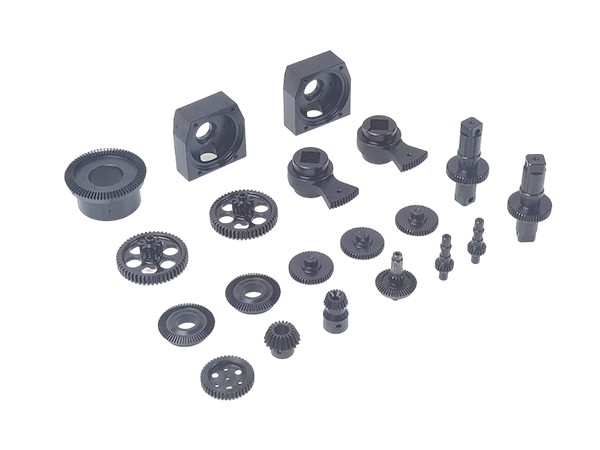
Plastic Helical Gears: Characteristics and Applications
Material Properties
Plastic helical gears are fabricated from various types of engineering plastics, such as nylon, polyoxymethylene (POM), and polycarbonate. These materials offer several unique advantages. Nylon, for example, is known for its excellent abrasion resistance, self - lubricating properties, and good chemical resistance. POM has high stiffness, low friction, and good dimensional stability, while polycarbonate provides high impact strength and transparency in some applications.
Plastic helical gears are lightweight, which is a significant advantage in applications where minimizing weight is crucial, such as in consumer electronics, small - scale robotics, and portable devices. Their low density reduces the overall inertia of the mechanical system, allowing for faster acceleration and deceleration. Additionally, plastic gears are non - conductive, making them suitable for use in electrical and electronic equipment where electrical interference needs to be avoided.
Applications
Plastic helical gears find extensive use in a wide range of applications. In consumer electronics, they are commonly used in devices like printers, scanners, and digital cameras. In these applications, the gears need to operate quietly and smoothly, and the low - noise and vibration - dampening properties of plastic gears make them an ideal choice. For instance, in a printer, plastic helical gears are used to drive the paper - feed mechanism and the movement of the print head, ensuring precise and silent operation.
In the realm of small - scale robotics, plastic helical gears are often employed in the joints and drive systems. Their lightweight nature helps to reduce the overall weight of the robot, enabling it to move more efficiently. The self - lubricating properties of some plastics also eliminate the need for frequent lubrication, reducing maintenance requirements. Moreover, plastic gears can be cost - effectively produced in large quantities using injection - molding techniques, making them a popular option for mass - produced robotic components.
Advantages and Limitations
One of the main advantages of plastic helical gears is their low cost, especially when produced in large volumes. The injection - molding process allows for rapid and precise manufacturing, reducing production costs. They also require minimal maintenance due to their self - lubricating properties and resistance to corrosion. However, plastic gears have limitations. Their load - carrying capacity is generally lower compared to metal gears, which restricts their use in high - torque applications. They are also more susceptible to wear and deformation under high - temperature conditions, limiting their operational temperature range.
Metal Helical Gears: Characteristics and Applications
Material Properties
Metal helical gears are typically made from materials such as steel, stainless steel, aluminum alloys, and brass. Steel is one of the most commonly used materials due to its high strength, durability, and excellent load - carrying capacity. Heat - treated steel gears can withstand high torque, high - speed operation, and harsh environmental conditions. Stainless steel gears offer superior corrosion resistance, making them suitable for use in applications where exposure to moisture, chemicals, or corrosive substances is a concern.
Aluminum alloy gears are lightweight yet strong, making them a good choice for applications where weight reduction is important without sacrificing too much strength, such as in aerospace and automotive industries. Brass gears are known for their good machinability, low friction, and resistance to wear, and they are often used in applications where smooth operation and minimal noise are required.
Applications
Metal helical gears are widely used in heavy - duty industrial applications, automotive transmissions, and aerospace systems. In industrial machinery, such as manufacturing equipment, construction machinery, and mining equipment, metal helical gears are essential for transmitting high power and torque. For example, in a large - scale conveyor system in a mining operation, metal helical gears are used in the gearbox to transfer power from the motor to the conveyor belt, enabling the transportation of heavy loads of ore.
In the automotive industry, metal helical gears play a crucial role in transmissions. They are used to transfer power from the engine to the wheels, allowing for smooth gear shifting and efficient power delivery. The high strength and durability of metal gears ensure that they can withstand the high torques and speeds associated with automotive applications. In aerospace, metal helical gears are used in aircraft engines, landing gear systems, and flight control mechanisms, where reliability and performance under extreme conditions are of utmost importance.
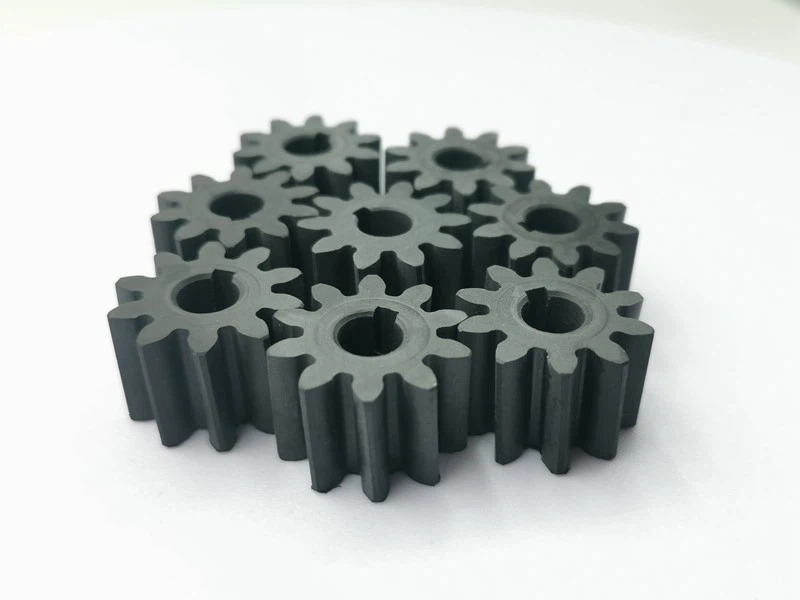
Advantages and Limitations
The primary advantage of metal helical gears is their high load - carrying capacity and durability. They can operate under heavy loads, high speeds, and extreme temperatures, making them suitable for demanding applications. Metal gears also offer high precision and can be manufactured to tight tolerances, ensuring accurate meshing and efficient power transmission. However, metal gears are generally more expensive to produce compared to plastic gears, especially for complex designs. They also require regular lubrication to reduce friction and wear, and they are heavier, which may be a drawback in some weight - sensitive applications.
Conclusion
Helical gears, with their unique angled - tooth design, offer significant advantages in terms of smooth operation, load distribution, and power - transmission capabilities. Whether it's plastic helical gears, which are ideal for lightweight, low - noise, and cost - effective applications, or metal helical gears, which excel in heavy - duty, high - torque, and high - precision scenarios, each type has its own set of characteristics and applications. Understanding the differences between these two types of helical gears is crucial for engineers and designers when selecting the most suitable gear for a particular mechanical system. As technology continues to advance, we can expect further improvements in the design, materials, and manufacturing processes of helical gears, opening up new possibilities for their use in a wide range of industries.
What is a Worm and Wheel Gear
Can Helical Gears Be Used at Any Angle
Related Article

Gears are the backbone of mechanical transmission systems, converting rotational motion and torque between shafts to power everything from household appliances to industrial machinery.
What are the 4 types of gears

CNC machines (Computer Numerical Control machines) have transformed manufacturing by delivering unmatched precision, repeatability, and efficiency across material types—from metals to plastics and composites.
Which Industries Mostly Use CNC Machines

CNC machining is celebrated for its precision and versatility in shaping metals, plastics, and composites—but its subtractive nature (removing material from a solid workpiece to create parts) raises a critical question: “Is CNC machining wasteful?” At first glance, the piles of metal shavings, plastic chips, and scrapped parts from CNC operations might suggest yes.
Is CNC machining wasteful
